News
- Details
Number of mutations cannot determine safety of new GM plants
- Details

Scientists call for halt on work to develop mirror bacteria that would evade immune response
- Details

“Unbelievable but true: If a GMO in food causes harm, the food sector would be held liable” – Wolfgang Ahammer, Oils For Life
- Details
Our latest Review brings you news of the battles over GMOs raging around the world.
GMO FAILURES
GM salmon company AquaBounty shuts down operations

The troubled biotechnology company AquaBounty has announced it will stop production of all genetically modified salmon and is closing its last working facility, at Bay Fortune in Prince Edward Island (PEI), Canada. AquaBounty released the world’s first GM food animal – a GM salmon – onto the market in 2017 but is now culling the last of its fish. The company announced that it does not have sufficient liquidity to maintain its “only remaining operating farm” at Bay Fortune and its chief executive officer, David Melbourne, has resigned. Lucy Sharratt, coordinator of the Canadian Biotechnology Action Network, said, “This struggling company has survived largely due to investor hype along with decades of government funding and the support of the federal policy to deny consumers mandatory labelling of GM food. The company couldn’t make producing GM salmon viable even with all the government subsidies and supportive policies.” AquaBounty’s announcement comes just weeks after the Canadian federal and PEI governments announced $231,095 in funding for the company. For background, see this and this.
Pakistan: Food exports halt as authorities act against officials over GMO contamination of rice
Pakistan’s food exports and imports came to a standstill recently following the Federal Investigation Agency’s (FIA) action against the Department of Plant Protection (DPP) and the arrest of several officials. The issuance of phytosanitary certificates – mandatory for exporting or importing plants and plant products – has been suspended, effectively halting the movement of goods. These certificates confirm that the consignments are pest- and disease-free. The crackdown follows an inquiry ordered by prime minister Shehbaz Sharif after a consignment of organic basmati rice to the EU earlier this year was found to contain GMOs, violating EU regulations. Director General of DPP Tariq Khan has been suspended. Sources said that around nine officials have been arrested. The suspension of certificates has severely disrupted rice exports. There’s background on this story here.
Nigeria: GMO seeds fail to revive dying cotton industry
Cotton farmers in Nigeria were excited in 2018 when GM cotton seeds were introduced for cultivation, raising hopes of bumper harvests and pest-free cotton regimes. Six years later, however, the introduction of the GM seeds failed to increase the cotton yield per hectare and revive the dying industry. According to Anibe Achimugu, president of the National Cotton Association of Nigeria (NACOTAN), farmers who cultivated the two GM strains did not record any significant increase in yields compared to the local seed varieties – “and it is difficult for farmers to be able to cope due to how expensive it is... when we did a comparison, no farm could get up to four tons per hectare while local seeds produced up to four to five tons per hectare.”
GM corn and soy responsible for massive volume of pesticides used in US
GMOs were hyped as the way for farmers to drastically cut pesticide use. But in the most GMO-friendly country in the world, US agriculture uses more than 1.1 billion pounds of pesticides annually (one country – 15% of the global total). And a report from Friends of the Earth shows that just two crops which are overwhelmingly GMO – soy and corn – account for almost half (46%) the volume of all the pesticides used in the US annually.
India: Indigenous non-GMO cotton can replace stagnant GMO Bt cotton
Sustainable practices and innovation using desi (indigenous) cotton has the potential to replace the stagnant GMO Bt cotton grown in 90% of Northern India, according to a farmer and his daughter-in-law in Haryana. They say desi varieties provide high yields and a solution to the challenges posed by pests and climatic unpredictability.
India: Course correction needed
In India, writes policy analyst Devinder Sharma, “Something is going wrong. At a time when India is committed to net-zero emissions by 2070, the policy response should focus on laying out a roadmap for chemical-free farming practices. But it is baffling to find senior officials of the Ministry of Agriculture and Farmers Welfare hobnobbing instead with industry echelons to see how to permit widespread application of the harmful herbicide, glyphosate, in cotton farming. It does not stop here. Reports say a dedicated committee is also examining the implications of approving the next generation of herbicide-tolerant genetically-modified cotton (HTBt). This comes at a time when the area under Bt cotton – the only approved genetically modified (GM) crop for commercial cultivation in India – has collapsed in Punjab, Haryana and Rajasthan. With a decline of 46 per cent in cultivation, the cotton debacle in the northwest regions should have come as an eye-opener. On the contrary, it is bewildering to find that more of the same (in this case with an additional herbicide-tolerant gene) is being pushed as a possible solution.”
MEXICO-US TRADE AGREEMENT
US wins controversial ruling in GM corn dispute with Mexico
A tribunal of trade arbitrators has ruled in favour of the United States in its complaint that Mexico’s restrictions on GM corn violate the terms of the US-Mexico-Canada trade agreement (USMCA), reports Timothy A. Wise. The long-awaited ruling in the 16-month trade dispute is unlikely to settle the questions raised by Mexico about the safety of consuming GM corn and its associated herbicide. Mexico’s Economy Department said it disagreed with the ruling but said it would abide by it. But Mexico’s president has reiterated her support for constitutionally enshrining a ban on GM corn growing or use in tortillas. A law already mandates GMO food labelling and, according to Wise, no tortilla seller wants such a label on their products because Mexican consumers are clear they don’t want GMOs in their tortillas. Read another good article on the ruling here. More background and links to multiple documents here. Prof Michael Antoniou’s expert submission on the toxicity of GMO corn and the health risks associated with its consumption is here.
Scientific analysis underpins Mexico’s attempted restrictions on GM corn and glyphosate due to health risks
A scientific analysis prepared by CONAHCYT, Mexico’s National Council for Humanities, Science and Technology, argues there are unacceptable health risks for Mexican people who consume GM corn and glyphosate, the world’s most widely used herbicide. The 200-page document with 1,200 references underpins Mexico’s 2023 decree attempting to restrict the use of GM corn in tortillas and other minimally processed corn products, and to phase out the use of glyphosate.
OPPOSITION TO GMOs
Victory! US federal court strikes down lax GMO rules, halts genetically engineered crop introductions without USDA oversight
In a precedent-setting victory for food and environmental safety, a federal district court in the US has ruled that GMOs must be regulated. The Court’s ruling overturns the 2020 rule overhaul by the first Trump administration that had eliminated most government oversight over GMO crops, trees, and grasses. “This is a critical victory on behalf of farmers, the planet, and scientific integrity,” said George Kimbrell, legal director for the lead plaintiff Center for Food Safety, and counsel in the case. “USDA tried to hand over its job to Monsanto and the pesticide industry and the Court held that capitulation contrary to both law and science.” The ruling is a rebuke of the first Trump administration’s efforts to practically eliminate oversight of novel GMOs and instead let industry self-regulate. For an analysis of the ruling and its implications, see this.
South Africa: Court ruling sets aside commercial approval of GM drought-tolerant maize
A precedent-setting ruling by the South African Supreme Court of Appeal (SCA) in favour of African Center for Biosafety (ACB) vs Monsanto/Bayer has set aside the commercial approval of GM drought-tolerant maize. ACB said: “South Africa's Supreme Court has agreed that the regulators merely rubber-stamped Monsanto’s application for authorisation, uncritically accepting its paucity of evidence that the GMO poses no threat to human health or the environment and ignoring the contrary expert evidence.”
Science played crucial role in South African court ruling

ENSSER (European Network of Scientists for Social and Environmental Responsibility) members Prof Jack Heinemann and Dr Angelika Hilbeck played a crucial role in the court ruling in South Africa (see above). The expert opinions of the two ENSSER members concerned scientific issues listed in the unanimous verdict of the five SCA judges, which triggered the application of the precautionary principle. For example, the Cartagena Protocol requires that claims of scientific certainty be substantiated with evidence to prove a lack of potential for scientific hazards, yet Monsanto’s risk assessment was inadequate in identifying plausible hazards. Also, Monsanto’s claims of lack of allergenicity were unsubstantiated and the allergenicity testing that was done was inadequate.
Biosafety group warns of GM wheat contamination risk from South Africa
The African Centre for Biodiversity (ACB) has warned that trials of GM wheat in South Africa could contaminate the food supply and find its way into neighbouring importing countries. ACB has registered objections to plans for GM wheat field trials, which it says could lead to below-threshold contamination of wheat products in Botswana, Zimbabwe, Lesotho, Zambia, and Namibia, none of which have approved GM wheat.
EU Parliament votes against further import approvals for genetically engineered plants
The European Parliament has adopted eight resolutions against further import approvals for GM maize and cotton. Most of the plants are resistant to herbicides and some produce insecticidal proteins that were not part of the food chain prior to the introduction of genetic engineering. The European Parliament has used the resolutions to both address the environmental effects in countries where they are cultivated and uncertainties regarding health risks of food and feed produced from the crops. Around 100 different GM crops are already approved for import into the EU. These include soybeans, maize, cotton, oilseed rape and sugar beet, which are often engineered to be resistant to several herbicides. In addition, GM maize, cotton and soybeans may also produce insecticidal toxins.
France: Tractors head to European Parliament as farmers demand explanations over GMOs
Farmers in Burgundy-Franche-Comté are taking a stand. In November 2024, an impressive convoy of tractors headed to the European Parliament in Strasbourg. The farmers were denouncing EU decisions perceived as threatening to French agriculture. Florian Dirant, president of the Rural Coordination of Haute-Saône, said: “We want to obtain explanations on measures which, although rejected by the European Parliament, end up being validated by the European Commission.” In the crosshairs is a decision concerning the import of more GMO corn seeds, rejected by MEPs but finally approved by the Commission.
Kenya court lifts ban on GM crops
The Kenyan High Court has dismissed a case challenging the government's reversal of a ban on genetically modified crops, effectively allowing for their import and open cultivation. The East African nation lifted a decade-long ban on GM crops in 2022 but the decision has been the subject of court challenges and protest from consumer and biodiversity groups. Paul Mwangi, a lawyer who is close to the opposition and the main petitioner in the case, said they were challenging the ruling at the higher Court of Appeal. The Kenyan Peasants League responded to the ruling on X here and here. Kenyan farmers and food sector workers voiced their dissatisfaction with the ruling in video reports here and here.
GMO push sows discord in East African Community partner states
The East African Community partner states have failed to strike consensus on the growing and use of GM crops, with only Kenya, Rwanda and Uganda vouching for the use of GM technology to boost food security and industrial development. In a meeting of the EAC Committee on Agriculture, Tourism and Natural Resources, Tanzania, South Sudan and Burundi declared their opposition to GMOs in the region. The remaining member countries, Democratic Republic of Congo and Somalia, have tended towards opposition too.
Nigerians firmly reject GM crops
A coalition of over 100 civil society members, farmers, scientists, legal practitioners, and academics representing 100 million Nigerian consumers have demanded that the Nigerian government discontinue plans to introduce GM potatoes and ban GMOs in the country, stating they violate fundamental human rights and threaten Nigeria’s food system. This demand followed the announcement that the government will soon release a report on trials of GM potatoes. Similar reports indicate that GM potatoes will be commercially released in 2025.
A dangerous gamble: The threat of GMOs to Nigeria’s future
Nigeria stands on a dangerous precipice, writes Mariann Bassey-Orovwuje – a lawyer and Deputy Executive Director at Environmental Rights Action/Friends of the Earth, Nigeria. She writes: “The National Biosafety Management Agency (NBMA), tasked with safeguarding our nation’s health and environment, has instead become a promoter of GMOs… approving virtually every application brought to it without consideration of science-based objections sent by groups of concerned Nigerians.”
Nigeria: Centre for Food Safety and Agriculture Research calls for critical dialogue on GMOs
The Centre for Food Safety and Agriculture Research (CEFSAR) has called for a critical and inclusive dialogue on the future of GMOs. Prof Qrisstuberg Amua, executive director of CEFSAR, proposed a long-term moratorium on the introduction of new GMOs in Nigeria until comprehensive long-term studies can be conducted to fully understand their impacts on health, the environment, trade protections, and food sovereignty.
West African lawyers, activists rally against GMOs
Legal activists from Nigeria and Ghana have called on the governments of both countries to ban GMOs from their nations’ agricultural systems. The lawyers made the call at a meeting organised by the Health of Mother Earth Foundation (HOMEF) and hosted by Food Sovereignty Ghana (FSG). The lawyers called on the governments of both nations to reject the introduction of GMOs and adhere to the precautionary principle in dealing with biosafety issues. The experts stressed that concerns about GMOs are not only about food, health and environmental safety, but also about the systematic appropriation of the right to seeds by transnational corporations that deprive farmers of their traditional rights, in favour of their patents.
India: farmers’ associations oppose GM crops
In view of India’s Supreme Court recently directing the central government to formulate a national policy on GM crops, farmers’ associations from south India demanded that the government hold democratic consultations as a first step and urged the state government to shun gene technologies in the food and farming sector. Kisan Congress state chairman S. Anvesh Reddy said: “Introduction of genetic engineering technologies in our food and farming systems is a concern for all citizens... It is about our environment, health, livelihoods and sovereignty. Farmers do not want those technologies and GM crops, both as producers and as consumers. They want a biosafety policy and not a promotional policy for GM crops.” Sustainability expert Kavitha Kuruganti warned that the Ministry of Agriculture, under pressure from industry, may bypass the democratic consultative processes recommended by the Supreme Court. It has already appointed a panel of “experts” to draft the policy, and information about it is being kept secret.
Pakistan: Import of GMO soybeans okayed
In a surprising development, the federal government of Pakistan has allowed the import of GMO soybeans from the United States without conducting risk assessments on 47 gene events in Pakistan’s local conditions, as required by the Cartagena Protocol. This decision effectively changes Pakistan's non-GMO status to GMO, despite previous objections by former prime ministers. The exemption from risk assessments for local conditions appears to have been influenced by powerful industry players, allegedly including a politician from the ruling party. The decision has sparked widespread concerns among civil society and agricultural experts.
Pakistan: Concerns over GMO soybeans’ impacts on local agriculture, environment
The Pakistan Poultry Association (PPA) welcomed the government's move to allow the import of GM soybeans (see above). However, the decision was criticised by several business organisations, which expressed concerns about the potential impact on local agriculture and the environment. Several government agencies, including the Ecology Ministry, fiercely opposed the withdrawal of the ban.
PATENTS
Bayer, Corteva control vast majority of GMO seed patents
Just two companies — Bayer and Corteva — control the vast majority of patents related to genetically engineered crops. They own just under 80% of these patents, according to US Department of Agriculture research. Bayer and Corteva both own thousands of patents related to seed. With their grip on the industry’s intellectual property, Bayer and Corteva also control the majority of the market for corn and soybeans and large swathes of pesticide markets. Syngenta also owns many corn and soybean patents.
Opposition against patent on maize rejected
The European Patent Office (EPO) has rejected an opposition against a patent held by the company, KWS, on cold-tolerant maize. The international coalition of No Patents on Seeds! filed the opposition because patents on conventionally bred plants and plant varieties are not permitted in Europe.
20 new European patents on conventionally bred seeds

No Patents on Seeds! has published a report on patents covering conventionally bred plants. Although Europe only permits patents on genetically engineered plants, the European Patent Office (EPO) has granted hundreds of patents on conventionally bred plants, affecting over 1300 European plant varieties. The development threatens to block conventional plant breeding in Europe. “The EPO and the industry are destroying the basis of European plant breeding by granting these kinds of patents. Access to conventionally bred plant varieties has never been so severely restricted by patents as it is at present,” said Johanna Eckhardt of No Patents on Seeds!
WIPO opens more widely the door to biopiracy
Adopted in May 2024 after nearly 25 years of negotiations, the WIPO Treaty on Intellectual Property, Genetic Resources, and Traditional Knowledge aims to regulate the use of natural and cultural resources through mandatory disclosure of origin in patent applications. While intended to ensure fair benefit-sharing, loopholes in the disclosure requirements allow circumvention, raising concerns about the potential legitimisation of biopiracy.
AstraZeneca “said it could cut UK jobs” if drug levy on nature’s genetic codes is introduced
AstraZeneca has said it may cut jobs at its UK operation if the government enforces a global push to make companies share profits derived from nature’s genetic codes.
RESEARCH
GM soybean oil damages liver and kidneys

A diet containing GM soybean oil damaged the liver and kidney of rats in a 90-day feeding study. The study provides further proof that GM soy is not substantially equivalent to non-GM soy, meaning that regulatory authorisations given on the assumption of equivalence are invalid. The study was conducted on male rats in three groups. One group was fed a diet containing 10% GM soybean oil for 90 days, while the other two groups served as control groups, receiving either non-GM soybean oil or a standard lab diet, respectively. The scientists carried out biochemical analysis of the blood and microscopic tissue analysis (histopathology) of the liver and kidneys. GM soybean oil caused histological abnormalities in the liver, including congestion, necrosis, and bile duct hyperplasia (increased cell production, which may indicate a pre-cancerous state). Similarly, congestion, haemorrhage, and glomerulosclerosis (scarring of small blood vessels) were found in the kidney analysis. Moreover, GM soybean oil significantly increased gamma-glutamyl transferase (a possible sign of liver disease or damage) and insulin (often associated with type 2 diabetes) levels compared to a standard diet.
REGULATORY FAILURES
India: Experts on GM crop committees to declare conflict of interest
India’s Ministry of Environment, Forest and Climate Change has amended the rules governing the selection of experts to the Genetic Engineering Appraisal Committee (GEAC), the technical body regulating GM seeds in India. Under the new rules, an “expert member” has to disclose any “interest” that could conflict with their duties. The expert is also expected to take all steps necessary to ensure that any conflict of interest does not affect any decision of the GEAC. All selected members would also have to fill out a form detailing their professional affiliations to a decade prior to joining the committee. However, GMWatch cautions that it is not enough to have experts in committees responsible for decision making on GMOs declare their conflicts of interest; steps must be taken to exclude such conflicted people altogether from the committees. They can still be invited to give evidence or comments, as with any stakeholder.
Through its silence, the European Commission has been keeping MON810 maize authorised for 15 years
MON810 maize is the only transgenic GM plant authorised for commercial cultivation in the European Union. This authorisation was initially granted, via France, almost 30 years ago, in 1998, for an initial period of 10 years. A renewal application was submitted in 2007. Since then, no decision has been taken by the European authorities. How can this maize, for which the authorisation theoretically expired in 2008, still be grown legally in Europe? Simply because EU law accepts that, as long as the European Commission has not responded to a request for renewal, the initial authorisation remains valid. The Commission has failed to respond to Bayer/Monsanto’s request for the past 15 years.
GMO TRIALS
Making GM salmon sterile… and able to reproduce
In Norway, the Institute of Marine Research (IMR) has filed a trial application, in 2023, for GM VIRGIN® salmon. These salmon, bred in cages in the open sea, would be sterile to prevent them from interbreeding with wild populations in the event of accidental dissemination. However, sterile fish cannot reproduce. This first manipulation would have to be repeated for each generation… hence the idea of using a complementary method that would allow some fish to be fertile, while retaining the initial genetic modification (sterility): a sort of temporary, non-inherited fertility rescue that would allow the sterile trait to be passed on. The Norwegian Environment Agency asked the Norwegian Scientific Committee for Food and the Environment (VKM) to assess the associated environmental risks. VKM’s opinion was highly critical, stating that there was insufficient evidence to consider the trial safe. In April 2024, after having considered new data, VKM reiterated its negative opinion.
CORPORATE CRIMES
Brazil: Genetically modified cotton was planted in a Mato Grosso exclusion zone
For five years, GM cotton was planted in an illegal area in Mato Grosso state, Brazil, openly disregarding a biosafety measure created by the Ministry of Agriculture, Livestock and Food Supply (MAPA). Until early May 2024, GM cotton plantations were banned from 31 municipalities in Mato Grosso, in an area considered an exclusion zone under Ministry of Agriculture Ordinance 437. The protection, lifted with strong support from Embrapa, a government corporation that holds GM cotton patents, was aimed at preventing contamination of native cotton, a natural seed used by family farmers as well as Indigenous communities.
SUSTAINABILITY
Time to rethink sustainability
Everybody talks about “sustainability” these days – but what does that actually mean? As the concept of “sustainability” has inched up the political agenda, the way we define it has become distorted and compromised. Today many of our ideas about sustainability – sometimes even those espoused by environmentalists – are more about political expediency, corporate interests and market creation than rooted in sustaining life on Earth. A report from A Bigger Conversation - Rethinking Sustainability – Life-centric Agriculture in a Techno-centric World – argues that today, the concept of sustainability has become over-focussed on political expediency, corporate interests and market creation.
Four myths the food industry wants you to believe... and why they are wrong
A new report from CAFOD (Catholic Agency for Overseas Development) debunks some of the myths spread by agribusiness and reminds us that agroecology, small farmers and local markets are at the heart of sustainable and just food systems. The four myths that are demolished are:
* “Intensive industrial agriculture is always more efficient than the alternatives”
* “Agroecology can’t feed the world so there is no alternative to corporate agriculture”
* “Local farmers need global markets to escape poverty”
* “We need cheap food to feed poor people”.
GM INSECTS
Oxitec wants to infest America with GM mosquitoes
Oxitec, a UK-based biotech corporation specialising in genetically engineered insects, has submitted an application to the US Environmental Protection Agency (EPA) for the approval to commercially sell GMO mosquitoes directly to consumers across every state in America. In 2021, after years of public resistance, Oxitec was given the green light by the EPA, the Florida Department of Agriculture and Consumer Services (FDACS), and the Florida Keys Mosquito Control District (FKMCD) to conduct an uncontrolled experimental release of their GMO Aedes aegypti mosquitoes in the Florida Keys. The mosquitoes are categorised as a “biopesticide”.
Oxitec wants to release GM mosquitoes in Australia
Oxitec has also applied for commercial release of its GM mosquitoes in Australia, with a consultation in April. The claimed goal is to reduce dengue fever. The application says, “Eggs of the GM mosquitoes would be packed into mosquito rearing boxes and would be available for sale to pest control professionals, businesses and the general public in Queensland.” GeneEthics comments that the local Wolbachia programme (a non-GM approach) already reduced acquired dengue fever to zero in 2022 and ’23.
Male mosquitoes to be genetically engineered to poison females with semen
Toxic male mosquitoes will poison females with their semen in a new population control method developed by Australian researchers. The method involves genetically engineering males to produce spider and sea anemone venom proteins, which they inject into females during mating, reducing their lifespan. See a research paper here. GeneEthics comments: “An ideal solution would be to control the insects without eradicating them, given that mosquitoes are pollinators and an important food source for fish and bats.”
HUMAN GENETICS
South Africa amended its research guidelines to allow for heritable human genome editing
A little-noticed change to South Africa’s national health research guidelines, published in May this year, has put the country on an ethical precipice. The newly added language appears to position the country as the first to explicitly permit the use of genome editing to create genetically modified children. Heritable human genome editing has long been hotly contested, in large part because of its societal and eugenic implications. In 2018 the media reported on a Chinese scientist who had created the world’s first gene-edited babies using CRISPR technology. In the aftermath, the organising committee of the Second International Summit on Human Genome Editing joined the global uproar with a statement condemning this research. At the same time, however, the committee called for a “responsible translational pathway” toward clinical research. Safety thresholds and “additional criteria” would have to be met, including “independent oversight, a compelling medical need, an absence of reasonable alternatives, a plan for long-term follow-up, and attention to societal effects”. Notably, the additional criteria no longer included the earlier standard of “broad societal consensus”.
Home DNA testing has lost its lustre and personal genetics has largely failed
More than 20 years after the Human Genome Project was completed, the promise of personal genetics hasn’t panned out for the average person. “Genetics was supposed to be this thing that unlocked all this information and cured disease. It ended up being way more complicated than that,” says Christina Farr, a health tech investor and former journalist who covered the genetic testing company 23andMe for many years. In August, 23andMe shuttered its in-house drug discovery unit and now the company is in trouble, as home DNA testing has lost its lustre. Valued at $6 billion when it went public in 2021, 23andMe’s stock has plummeted and it has never made a profit in the 18 years since it was founded.
Biden is about to hand over a vast and unconstitutional DNA database to Trump
Outgoing US president Joe Biden is set to transfer control of a vast DNA database to the next administration, raising concerns about privacy, security, and civil rights under Trump’s potential use of the programme.
Genetic discrimination is coming for us all
Insurers are refusing to cover Americans whose DNA reveals health risks. It’s perfectly legal.
..................................................................
We hope you’ve found this newsletter useful. Please support our work with a one-off or regular donation. Thank you!
- Details
"A handful of biotech and pesticide corporations will reap the benefits and profits, while farmers, consumers and nature face significant risks and losses" – Friends of the Earth Europe
- Details
Welcome to Review 578, which covers the latest developments regarding new GMOs, including the industry’s global push to remove regulatory safeguards from these products.
For why deregulating GMOs is a bad idea that’s not supported by the science – and why it doesn’t make sense to set an arbitrary figure for the number of modifications that a plant can have and still be exempted from safety assessment and regulation (see this for an example), see our resources on the problems with gene editing here and here.
GMO safety is not a numbers game. Even a single small modification can fundamentally alter a plant’s biochemistry so that it becomes toxic or allergenic. It’s not just the number of modifications that matter, it’s what they do. And only a detailed case-by-case risk assessment based on hard data can begin to investigate that question. Regulatory safeguards remain vital.
CRISPR gene editing causes large-scale genetic damage while correcting mutant genes

CRISPR-based gene-editing tools are being developed to correct specific defective sections of the genome to cure inherited genetic diseases, with some applications already in clinical trials. However, there is a catch: under certain conditions, the repair can lead to large-scale deletions and rearrangements of DNA – as in the case of targeting the NCF1 gene in chronic granulomatous disease (CGD). This was reported by a team of researchers and physicians. Their findings have important implications not just for gene editing-based therapy, but also for CRISPR-mediated gene editing of animals and plants, where the same types of large-scale genetic damage could be triggered. Indeed, because such editing is carried out with much less caution in non-human organisms, the likelihood of such large-scale damage occurring is hugely increased. The study also shows that attempts to avoid these problems by using adaptations of CRISPR gene editing technologies, such as prime and base editing, may not succeed.
EU deregulation plans set to move forward
The EU Commission’s proposal to deregulate new GMOs has been stuck for months in the Council of the EU, which is made up of EU government ministers who meet to discuss, amend and adopt laws. This is because agreement has not been reached among member states. Over the past six months, the Hungarian Presidency of the Council has tried to open discussions on the proposal’s lack of scientific rigour, as well as the importance of proper risk assessments and labelling for the consumer. However, those discussions did not happen, as pro-deregulation member states have pushed to avoid them, choosing instead to rely on EFSA opinions that new GM plants don’t pose any greater risk than conventional plants (for why these opinions are at odds with the evidence, see this). Opposition to the pro-GMO push has been weak, in part due to the technical complexities of the topic and the limited understanding of many member state representatives, as well as an unwillingness to challenge EFSA as an authority on “The Science”.
Now that Poland has taken over the Presidency of the Council, it is keen to progress the deregulation plans, though it has concerns about the impact of patents on farmers and breeders (all GMOs, including new GMOs, are patented and this will restrict access to seeds and germplasm). Poland is determined to find a solution to the patents issue and conclude the file. Accordingly, the Commission will conduct a study on the impacts of patents, to be published by 2026.
A video recording of a discussion on these topics in the EU Agrifish Council is available here, giving an idea of the different positions of member states. You can jump straight to the section, “AOB: New genomic techniques” by using the menu below the video.
What can be achieved at EU level against patents on seeds?
The international coalition No Patents on Seeds! has welcomed the publication of an expert opinion commissioned by the Green parliamentary group in the German Bundestag, even though it does not agree with some important points in it. The expert opinion, by Prof Dr Axel Metzger of Humboldt University, Berlin, questions whether the proposals put forward by the EU Parliament and the EU Council of Ministers with regard to a possible ban or restrictions on the patenting of plants derived from new GM techniques could actually be implemented. No Patents on Seeds! agrees with the expert opinion that the proposals would have hardly any effect because in order to prohibit patents on GM plants, international treaties such as the European Patent Convention (EPC) would need to be amended – a complex process that would take around ten years and that would involve countries outside the EU which might not wish to see patenting restrictions. This, of course, means that if Poland persuades the EU to push ahead with deregulation of new GMOs on the basis that the EU will ban patents on them, this may never happen or, at best, not for a very long time. For more on the expert report, as well as on No Patents on Seeds!'s concerns about some of its content, see the article here.
Corn seeds sprayed with GM gene-edited bacteria already being used on 5% of American corn crops
Corn seeds sprayed with GM gene-edited bacteria are already being used on 5% of American corn crops. An alliance of Bayer, Corteva, Ginkgo, Novozymes and the manufacturer Pivotbio persuaded the US goverment that these bacteria need no safety review by regulators. Yet Pivot’s own advisers concede there are unanswered questions. And Kendra Klein, deputy director for science at Friends of the Earth US, said, “We are engineering organisms to do things that nature has not designed them to do and releasing them, in the billions, into incredibly complex ecosystems.”
International Non-GMO industry calls for transparency on new GMOs
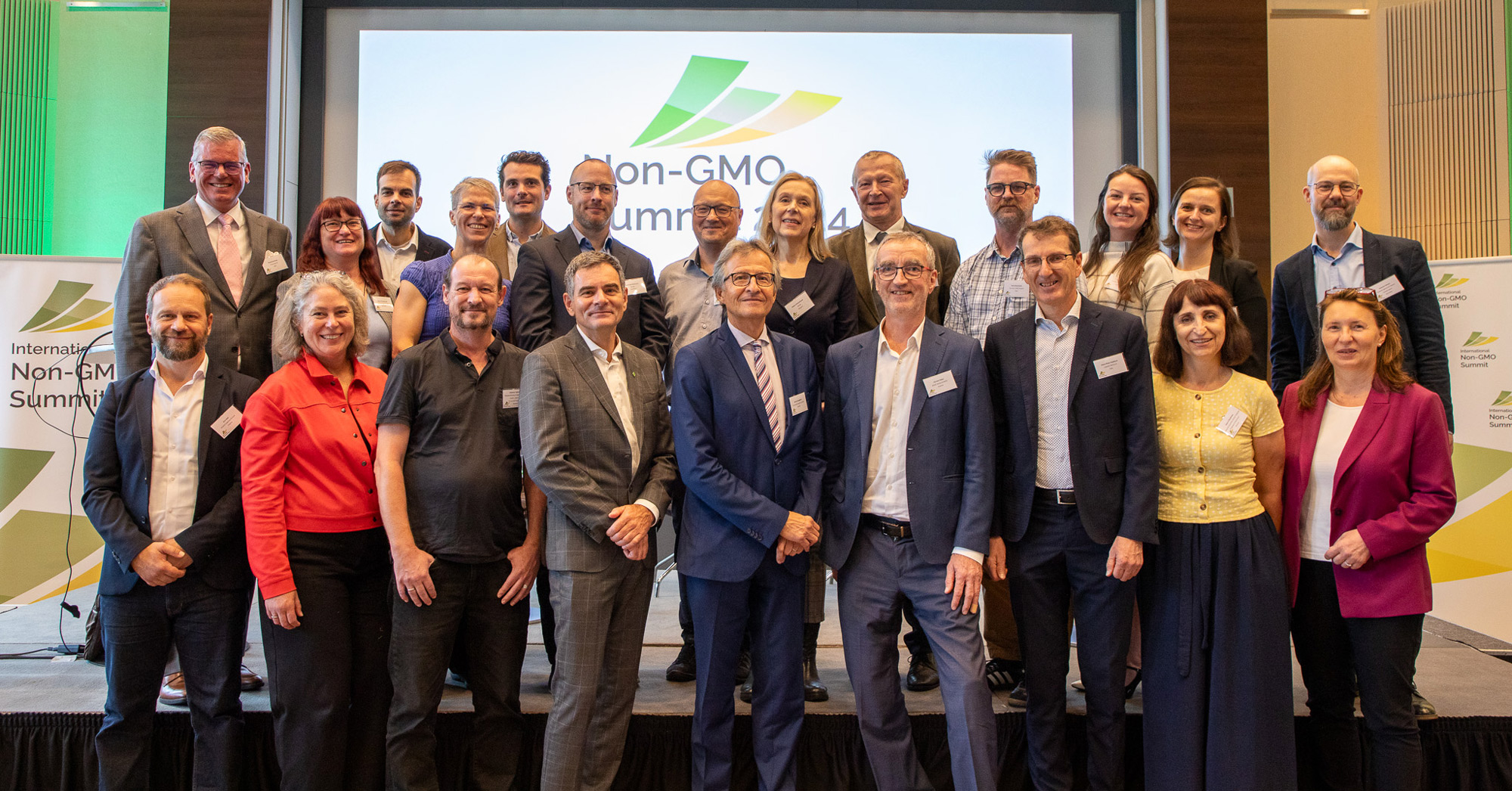
More than 160 representatives from a thriving international Non-GMO industry and leading European associations from 23 countries met in October 2024 at the International Non-GMO Summit 2024 in Frankfurt. Operators across the full Non-GMO value chain are united in battling the current challenges posed by the planned deregulation of new genomic techniques, as proposed by the EU Commission. The participants at the summit gave a clear message for freedom of choice and transparency. On behalf of the organisers, Alexander Hissting, managing director of the Non-GMO industry association VLOG, said: “Non-GMO markets are economically very successful and are thriving with strong support from consumers. We are ready and willing to face current political and market challenges.” The organisers are convinced that new GMOs, so-called NGTs, should be strictly regulated, just like all other GMOs. Hissting’s clear message was “The Non-GMO sector is here to stay!” Feed Navigator published a good article on this development.
Food retailers demand labelling of new-generation GM crops
Hundreds of food producers and retailers have handed a petition to Hungary’s agriculture minister István Nagy calling for strict labelling requirements for new-generation GM crops. The GM debate centred around the proposed deregulation, which has split EU governments. In the open letter to Nagy, retailers warned that without labelling requirements for food made from a new class of "GMO-lite" crops, consumers would be deprived of choice and the organic sector could face an existential threat. Negotiations on the proposed new genomic techniques (NGT) regulation had stalled after Hungary reopened a debate on the question of whether gene-edited crops should be treated as equivalent to conventionally bred crops – including the issue of whether food should be clearly labelled, the report said. Nagy accepted an open letter signed by 376 companies – including Spar Austria, Germany’s second-largest supermarket chain REWE, French organic food retailer Biocoop, and health food and cosmetics chain DM – in Budapest on 4 September, five days before agriculture ministers were due to convene in the Hungarian capital for an informal EU Council summit.
Two Nobel Prize winners want to cancel their own CRISPR patents in Europe
The team that earned the Nobel Prize for developing CRISPR is asking to cancel two of their own seminal patents. The decision could affect who gets to collect the lucrative licensing fees on using the technology. The request to withdraw the pair of European patents, by lawyers for Nobelists Emmanuelle Charpentier and Jennifer Doudna, comes after a damaging August opinion from a European technical appeals board, which ruled that the duo’s earliest patent filing didn’t explain CRISPR well enough for other scientists to use it and doesn’t count as a proper invention. The Nobel laureates’ lawyers say the decision is so wrong and unfair that they have no choice but to preemptively cancel their patents, a scorched-earth tactic whose aim is to prevent the unfavourable legal finding from being recorded as the reason. “They are trying to avoid the decision by running away from it,” says Christoph Then, founder of Testbiotech, a German nonprofit that opposed the patents. Testbiotech has published its analysis of the move. Testbiotech says the European Patent Office “is expected to completely revoke the patents”.
Genetic engineering reforms risk making New Zealand an outlier
The New Zealand government’s proposed reforms to GMO regulation suggests the country could be heading into risky, uncharted territory. The proposals are “likely to shift New Zealand from having a high level of precaution to leapfrogging all other global regulatory frameworks to become an outlier with potentially fewer protections than countries with established GMO producers”, said Brendan Hoare, managing director of Buy Pure New Zealand and spokesperson on genetic engineering for Organics Aotearoa New Zealand (OANZ). “These proposed changes aren’t, as touted by proponents, a catch-up to align us with countries that permit GMO production — they’re a leap into the unknown, with no thorough understanding of the science, and no assurance of safety for our ecosystems and communities,” he said. Of particular concern is the fact that no economic assessment of the potential impacts of these regulatory changes has been conducted. Tiffany Tompkins of OANZ said: “It appears that our policymakers have been sold on promises of a ‘magic box of tricks’. Yet, we have more than 30 years of evidence showing that the supposed benefits of GE [genetic engineering] have not been realised, and its risks remain unresolved.”
New Zealand: Farmers want consultation on gene editing changes
The vast majority – 93% – of farmers surveyed think it is important that there is widespread consultation with farmers and growers on changes to New Zealand’s gene editing regulations. Account director at research company Truwind (formerly Research First) Liz Morley said the figure is from its independent research that surveyed farmers across all sectors of the industry about their perceptions of biotechnology. Federated Farmers national president Wayne Langford said he is hearing concerns from a number of farmers about the direction gene editing legislation is taking.
Gene shift could cost exporters billions: report
New Zealand’s primary sector exports could take a $10-$20 billion annual hit if genetically modified organisms are released into the environment, a study by the New Zealand Institute of Economic Research says. The study was commissioned by Organics Aotearoa New Zealand. Co-author of the study Dr Bill Kaye-Blake says in a report that because the Ministry of Business, Innovation & Employment (MBIE) has already highlighted the possible benefits that gene technology may have for New Zealand but has not undertaken a regulatory impact statement, economic assessment or cost-benefit analysis, his study focused solely on the possible negative impacts to the primary industry. The lack of a regulatory impact statement makes it difficult to fully assess the proposed regulatory changes and their impact, the report says.
New Zealand: Market, not scientists, must drive GM stance
Concerned dairy farmers are asking the New Zealand government to slow the process of weakening the GMO laws. They say New Zealand dairy is the gold standard for non-GMO supply, but the government seems determined to wreck that. They add, “The push for law change isn’t coming from our customers overseas. It’s coming from scientists who want to make it easier to release GMOs here. That should worry any business that has to face overseas markets. Consumers mostly don’t think GMOs are safe and don’t want to eat them... We see no market analysis to support the law changes... There’s no plan to protect the supply chain... We dairy farmers tend to farm close together, and preventing GMO ryegrass from contaminating neighbouring operations that supply GMO-sensitive markets will be near impossible.”
UK: Genetic Technology (Precision Breeding) bill criticised
UK Minister of State for Food Security and Rural Affairs Daniel Zeichner told the World Agritech Innovation Summit in London that his government had intentions to push ahead with the Genetic Technology (Precision Breeding) bill. The bill, introduced by the Tories in 2023, would enable agritech businesses to use “precision breeding” (new GM) to develop crops that are more nutritious, resistant to pests and disease, resilient to climate change effects and more beneficial to the environment, Zeichner said. The news was welcomed by some at the summit – but not by everyone. “The announcement was welcomed because [Zeichner] wasn’t talking to a room full of farmers,” one senior farming figure at the event argued. “He was talking to a room full of tech companies who just want to sell their stuff to farmers.” And Leonie Nimmo of GM Freeze said the “intense pressure from the pro-biotech lobby [on Labour] seems to have been working, as the fantastic promises the government is making about the benefits of so-called precision-bred crops could have been cut and pasted straight from a biotech brochure”.
UK: Time to put science and evidence into the new GMO legislation
In September the UK Minister of State for Food Security and Rural Affairs Daniel Zeichner announced that the new Labour government would proceed with issuing the secondary legislation that will implement the Genetic Technology (Precision Breeding) Act. As it stands, the Act would remove a subclass of GMOs, dubbed “precision bred”, from meaningful regulatory oversight in England, in effect aligning the country with weak US standards. New GMOs developed using techniques such as gene editing would no longer be subjected to risk assessment for health and the environment, traceability requirements, or labelling. However, the upcoming secondary legislation is a chance to fill the legal gaps and maintain these important protections. The molecular geneticist and toxicologist Prof Michael Antoniou and GMWatch co-director Claire Robinson wrote to Minister Zeichner, setting out measures that must be included in the secondary legislation to ensure that new GMOs are regulated in a science-based and responsible manner. The Minister's reply confirmed that the government is set to follow the non-science-based and risky course set by its predecessor.
UK government thinks new GM will perform wonders
As suggested by an article in the Farmers Guardian, the UK government appears to be telling the media that new GM will perform all kinds of wonders, from making crops resistant to pests and diseases to increasing food production and reducing pesticide use. Needless to say, there is no evidence that any new GM crop can do any of these things.
UK government raises the GMO stakes: open trials of gene-edited crops
New plans for seed multiplication trials of gene-edited crops in England have been announced. Three experimental GM gene-edited crops – two varieties of wheat and one variety of barley – are due to be planted in open trials on commercial farms in England. This is a first in terms of trials of GM crops and a serious escalation of the government’s plans to push genetically modified gene-edited crops onto the marketplace. The project has received £2.2 million from Defra’s Farming Innovation Programme, which is delivered by Innovate UK (a division of UK Research and Innovation, or UKRI) and is funded primarily through taxes. It will be ongoing from 2024 to 2026 with a goal of producing enough gene-edited seed to start commercial planting at the end of that period. There’s more on the scheme here – and more on the gene-edited wheat crops and traits concerned here and here.
Civil society organisations tell UK government: Regulate new GMOs responsibly
GM Freeze has emailed the UK Minister for Food Security and Rural Affairs Daniel Zeichner urging him to act with caution in relation to new GMOs. In a parliamentary briefing, GM Freeze provided recommendations for how new GMOs can be regulated responsibly. These include labelling, traceability, and environmental and health-related risk assessments. The briefing is supported by civil society organisations including the Civil Society Alliance, Compassion in World Farming, the Landworkers’ Alliance, the Soil Association, and GMWatch. The briefing is available here. A detailed report, “Problems with the planned regulatory framework for new GMOs under the Conservative government”, is available here.
..................................................................
We hope you’ve found this newsletter useful. Please support our work with a one-off or regular donation. Thank you!
- Details
The Green parliamentary group in the Bundestag presents an expert opinion
- Details
Decision ignored substantial scientific evidence on health and environmental risks, sidestepped threats to Indigenous rights
- Details
 Worrying findings in animal feeding trials, flawed safety tests, and incomplete analyses mean public health may be at risk from LegH Prep consumption
- Details
Welcome to our latest LobbyWatch Review, with some stunning examples of the corporate capture of lawmakers (see FREEDOM TO HARM), regulators and experts. And we have all the latest on POISON PR – how the industry’s PR people are tracking and vilifying those with concerns about GMOs and pesticides (see POISON PR).
ASTROTURF
Funders of Monbiot-ally WePlanet profiting not just from world’s worst polluting corporations but those linked to war crimes
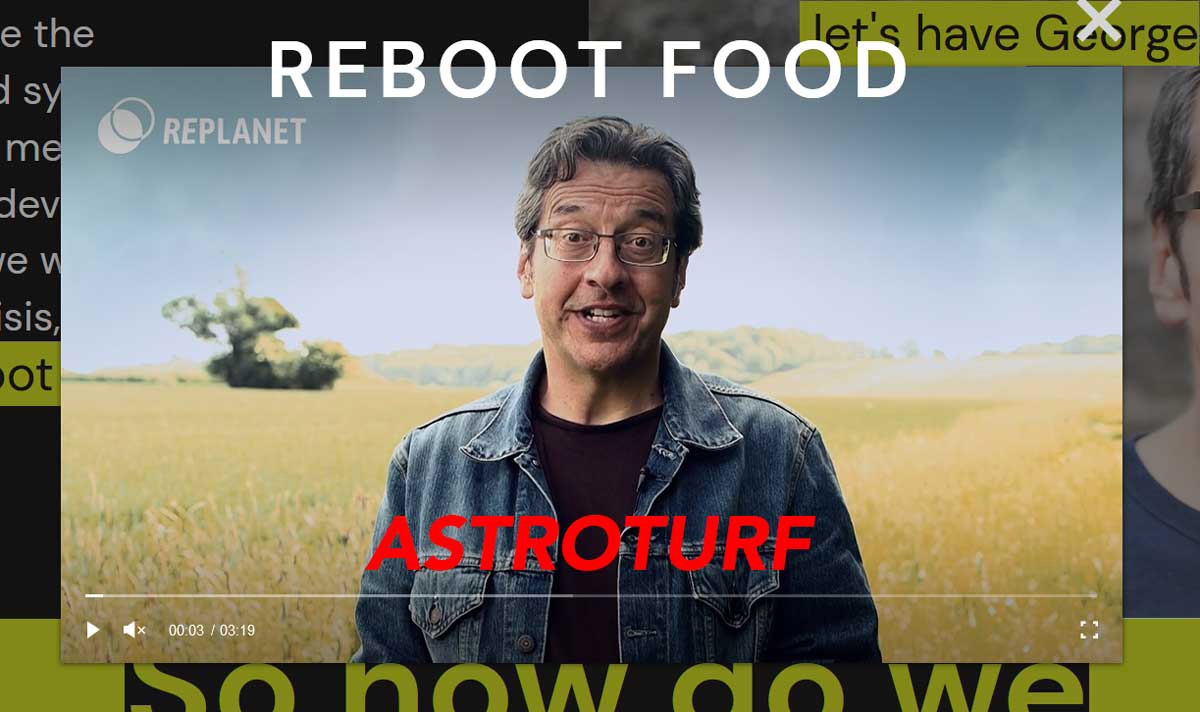
Quadrature Capital, the main funder of the GMO, fake meat, and nuclear power promoting lobby group WePlanet (formerly RePlanet), is at the centre of renewed controversy over a £4 million donation to the British Labour Party. What has caught people’s attention is not just the size of the donation, one of the biggest in British political history and Labour’s largest ever, but that it comes from a tax haven-registered hedge fund with hundreds of millions of pounds invested in fossil fuels and arms manufacturers. Among the latter are a range of arms, tech and logistics firms profiting from Israel’s genocide in Gaza by helping make Israeli fighter jets and bombs, including the F-35 fighter jets, which have been used in devastating airstrikes on a “humanitarian zone”. Over 90% of WePlanet’s funding derives from Quadrature. There’s more on George Monbiot’s involvement with WePlanet, and why this Mark Lynas-directed lobby group has been accused of smelling “like astroturf” here.
FREEDOM TO HARM
Gates gets licence to harm
The Kenyan government is seeking to grant the Bill and Melinda Gates Foundation diplomatic immunity just weeks after farmer organizations and religious leaders across the African continent called on the Gates Foundation to pay reparations for the damage it has caused through its interventions in African agriculture. The granting of this special status has set alarm bells ringing in the country, and the Kenyan Law Society has caused its suspension for the moment with a challenge in the courts. Because Gates’ diplomatic immunity appears to broadly apply to all of its work in Kenya, Daniel Maingi, coordinator for the Kenya Food Rights Alliance, believes it also covers the work of Gates’ affiliates like the Alliance for a Green Revolution in Africa (AGRA) and the African Agricultural Technology Foundation (AATF) – and even the work they do with corporate partners, which has historically included Bayer, Syngenta, and Microsoft. “As we give Gates these privileges and immunities, Africa is going to be – not food sovereign, not seed sovereign – we’re going to be slaves and masters of the big corporations,” Maingi told Tim Schwab, author of the book The Bill Gates Problem.
Bayer says innovation requires freedom to harm
The CEO of Bayer – the German multinational that supplied heroin, Zyklon B, HIV-tainted Factor VIII, Baycol, Essure, and bee-killing neonicotinoids and which, with its Monsanto takeover, also took on liability for the likes of PCBs, Agent Orange, Roundup, and dicamba – says the company being held accountable in the courts for its products’ harm represents the biggest threat to innovation.
US Congress could take away protections from dangerous pesticides
More than 40 US states have taken measures to limit dangerous pesticides, like restricting spraying near schools or playgrounds. The House Farm Bill could eliminate all those rules in one fell swoop. A provision in the 2024 Farm Bill, promoted by Bayer, would override every state’s pesticide rules and replace them with far weaker federal rules. This proposed provision in the Farm Bill also shields pesticide producers from lawsuits relating to the effects of their products. That’s important because lawsuits are one of the main ways US citizens can hold big agricultural companies accountable. TAKE ACTION: The US Public Interest Research Group (PIRG) is calling on US citizens to tell Congress to remove these pro-pesticide provisions from the Farm Bill.
Pesticide-related money surges into US state legislatures as companies seek to limit damage awards in court
In the US, as pesticide companies struggle to cap legal payouts to plaintiffs who claim they were injured by Roundup and other products, money from two political action committees (PACs) affiliated with major pesticide manufacturers has surged into state-level politics. In recent years, total contributions to state legislators have reached hundreds of thousands of dollars. By contrast, in 2016, the two leading agrochemical companies gave less than 5 percent of contributions to candidates at the state level. This year, however, state candidates received about 30 percent of contributions to candidates from PACs for employees of Bayer, headquartered in Leverkusen, Germany, and Corteva, based in Indianapolis.
Bayer’s Iowa campaign for freedom to harm moves forward
Bayer is also lobbying US state legislatures to shield it from future lawsuits and to annul at least some of the 50,000 claims that are currently active. The latest development in Bayer’s campaign comes in Iowa, a state with the second highest cancer rate in the US, where a House of Representatives subcommittee has recommended passage of HSB737, which would give pesticide companies immunity for citizens trying to file lawsuits against them for harm. Commenting on X, Robert F Kennedy Jr said, “This is the apogee for corporate socialism. It’s a license for chemical companies to poison Americans with no liability. It removes any incentive (f)or them to behave responsibly.”
Farm state attorneys general target California cancer labels on glyphosate
Nebraska’s attorney general is taking aim at California’s cancer labelling laws in a dispute over the weedkiller Roundup. Attorney General Mike Hilgers has announced he’s leading a multistate effort to standardise pesticide labels, preventing California’s Proposition 65 requiring warning labels on certain agricultural chemicals.
Bayer’s toxic trails
Bayer is one of the biggest pharmaceutical and agricultural companies in the world, employing over 100,000 people globally. In a new report, Corporate Europe Observatory examines the toxic trails left behind by Bayer throughout its long history, as well as its plans to stay afloat in a volatile future – from pushing glyphosate and new GMOs, to claiming its agricultural model is “climate smart”. The company’s modus operandi is to cosy up to different political regimes or carefully generate political pressure to push through its products and its monopoly model, using market power, size, financial assets and lobbying as key tools.
Toxic sludge firms want freedom to harm too
It’s not just Bayer and the pesticide makers. Toxic sludge firm Synagro, which has been poisoning farmland with polluted sewage sludge, wants legal immunity too. And there are senators happy to help them stop farmers suing to clean up their polluted fields. The New York Times reports on this in relation to PFAS, but forever chemicals are not the only reason the sewage sludge farmers spread on their fields is toxic. So-called “biosolids” can also contain high concentrations of a wide range of mutagenic and neurotoxic chemicals, as well as pathogens, thanks to the extraordinarily lax policy of the Environmental Protection Agency. The Bioscience Resource Project hosts a valuable resource page on sewage sludge.
CORPORATE CAPTURE – REGULATORS
Nigeria’s GMO regulators have become GMO promoters
Nigeria’s National Biosafety Management Agency (NBMA), “tasked with safeguarding our nation’s health and environment, has instead become a promoter of genetically modified organisms (GMOs),” writes Mariann Bassey-Orovwuje – a lawyer and environmental, human and food rights advocate. The conflict of interest inherent in the National Biosafety Management Agency’s administration of biosafety in Nigeria is reflected in the National Biotechnology *Development* Agency sitting both on the board of the NBMA and having requested two GMO permits from the NBMA jointly with Monsanto. Bassey-Orovwuje also says that NBMA has consistently showcased active GMO promoters as allies in its promotional materials and at a press conference, even when they come from organisations it is meant to regulate. This promotional bias is reflected in NBMA’s decision making. NBMA approved Monsanto’s Bt cotton, which failed woefully in neighbouring Burkina Faso and had to be completely phased out. Today Nigerian farmers who grew the GMO Bt cotton that NBMA approved are experiencing poor harvests and damaged soils.
Canada’s pesticide and food safety regulators’ deep links with industry lobby
Six out of 11 key executives for Canada’s largest GMO and pesticides lobby group, CropLife Canada, previously held senior government positions with the country’s pesticide and food safety regulators for years, a new investigation has revealed. The findings, reported by Quebec-based environmental group Vigilance OGM, follow investigations by Canada’s National Observer (CNO) and Radio-Canada that exposed how pesticide producers and federal officials closely collaborated to protect industry interests. Among the key lobbyists highlighted in the report is Pierre Petelle, CropLife Canada’s President and CEO, who spent five years as a senior policy analyst with Canada’s Pest Management Regulatory Agency (PMRA) – an agency accused of being so completely captured by industry that it has adopted its goals of promoting pesticides and GMOs at the expense of scientific and regulatory integrity and the public interest.
Health Canada probes claim that government officials helped pesticide company overturn a ban
Health Canada is investigating after Canada's National Observer revealed that government officials supported efforts by the pesticide industry to discredit a researcher’s findings and overturn a proposed ban on a class of pesticides harmful to bees, the environment and human health. Yasir Naqvi, parliamentary secretary to the health minister, said the ministry takes the allegations seriously and the department’s pest management regulator will examine the concerns raised. The researcher confirmed she has been summoned to a meeting with the senior directors general of Canada's Pest Management Regulatory Agency (PMRA). She said, “None of this is in a timely manner. It has taken three years and a media story to get them to address it.”
Canada’s pesticide regulator was captured by industry from day one
More than 20 years ago, the inaugural report by Canada's newly-formed parliamentary committee on the environment slammed the country’s pesticide regulator for its lax pesticide laws and a too-cosy relationship with the pesticide industry. The report, released in 2000, critiqued the Pest Management Regulatory Agency (PMRA), a quasi-independent body within Health Canada formed five years earlier to regulate and police pesticide use in Canada. “The PMRA is already a captive of the pesticide industry,” the committee noted in the report. The problem has not gone away, as shown in a recent investigation that found Canada’s regulators are predisposed to working with producers to keep pesticides in use, despite evidence the chemicals are causing harm.
We need to investigate links between chemical industry, governments
Canada’s regulators see industry and its trade secrets as more worthy of protection than the health of Canadians and their environment, says Dr Trevor Hancock, retired professor and senior scholar at the University of Victoria’s School of Public Health and Social Policy.
US EPA thought industry-funded scientists could support its conclusion that a pesticide is not a cancer risk
The US’s National Toxicology Program (NTP) reported “clear evidence” that the agricultural fumigant 1,3-D causes cancer in both rats and mice. The finding led the US EPA to classify the chemical as “likely to be carcinogenic to humans” in the same year, 1985. So it wasn’t a surprise when UCLA researchers reported in 2003 that people who’d lived at least two decades in areas with the highest applications of 1,3-D faced a higher risk of dying from pancreatic cancer. Yet EPA’s Office of Pesticide Programs’ Cancer Assessment Review Committee (CARC) concluded in 2019 that 1,3-D isn’t likely to cause cancer after all. In doing so, EPA rejected the human evidence, calling the UCLA study “low quality”. It also dismissed the NTP study and studies in lab animals that showed 1,3-D’s ability to damage DNA, a hallmark of cancer. Instead, EPA’s CARC relied on studies provided by Dow AgroSciences (now Corteva), a manufacturer of 1,3-D, and proposed a review of evidence linking the fumigant to cancer by SciPinion, a consulting firm hired by Dow, as an external peer reviewer of its work. The decision to entrust external review to a Dow contractor has drawn criticism, including from the agency’s watchdog, the Office of Inspector General (OIG).
Glyphosate approval challenged in European Court of Justice
On 11 December, Pesticide Action Network (PAN) Europe and its member organisations challenged the European Union’s approval of glyphosate before the European Court of Justice. The organisations presented a scientific and legal analysis to the European Court of Justice, highlighting serious shortcomings in the assessment of glyphosate in Europe, which they say was biased to suit industry interests. PAN Europe said, “The Commission and EU’s scientific agencies either systematically excluded critical scientific studies reporting adverse effects caused by glyphosate, using scientifically unsound arguments, or downplayed these effects… In doing so, they violated their own guidelines and international protocols. Their conclusion that glyphosate is safe is scientifically unfounded and results from a risk assessment that does not comply with key legal requirements. Therefore, the NGOs are requesting the Court’s intervention.” The groups say peer-reviewed evidence has been dismissed in favour of industry-funded studies downplaying evidence on genotoxicity, neurotoxicity, and environmental impacts.
POISON PR
US government paid PR firm to track and vilify critics of GMOs and pesticides
Covert PR operations involving the secret profiling of over 3,000 people and organisations considered “critics” of the pesticide industry recently made headlines around the world. The secret dossiers, including ones on GMWatch and its co-directors, are said to include private and personal, even intimate, information that lawyers say violate privacy laws in several countries and regions. They also include false, misleading and malicious claims, designed to damage the reputations of those targeted. This was uncovered during an investigation led by the non-profit newsroom Lighthouse Reports in collaboration with the world’s leading media. The main breakthrough came when the investigators managed to penetrate the private social network, known as Bonus Eventus, where the profiles were being shared. This enabled them to not only access the secret dossiers, but to identify the network’s members, who turned out to include government officials as well as people who hold or have held influential positions in expert groups at, for instance, the World Health Organization and the European Food Safety Authority (EFSA). In response to the news, Reporters Without Borders (RSF), which defends independent journalism and fights propaganda and disinformation, has called for those involved in the profiling to be brought to justice.
The lowdown on the Poison PR operation
GMWatch has done a deep dive into the reporting on this issue by multiple news outlets, including in a series of highly informative but paywall-protected articles in Le Monde, that drew on court records, emails and other documents obtained by Lighthouse Reports. Our piece pulls together much of what is so far known about the secret profiles, who was behind them, who had access to them, and how the whole operation was funded. At the heart of the tracking and vilifying of industry critics is former Monsanto executive Jay Byrne and his PR firm v-Fluence, who have been involved in dirty tricks ops against GMO critics for decades. Among the hundreds of individuals from around the world they have been profiling, the main target has been scientists, but others deemed a threat to industry interests include journalists and food writers like Michael Pollan and Mark Bittman, environmentalists like Vandana Shiva and Nnimmo Bassey, UN human rights experts, politicians, lawyers, and even musicians. Le Monde says that the scale and detail of the profiling is “unprecedented”. Some of the files on individuals contain information on their families, including in some cases not just spouses but the identities of their children and other relatives, aspects of their private lives, income and assets, including estimated house values, their home addresses, mobile phone numbers, criminal records, and even political opinions. That’s quite apart from the more malicious and misleading content. And this Poison PR operation was part-financed with hundreds of thousands of US taxpayer dollars.
European Parliament urged to call for immediate investigation into Poison PR
The Poison PR firm v-Fluence, founded and led by former Monsanto director Jay Byrne, was also hired by the US Department of Agriculture, together with another PR firm – the White House Writers Group – to assist them in torpedoing the EU’s Farm to Fork policy of aiming to cut pesticide use by 50% by 2030. Now multiple European civil society organisations have written to Members of the European Parliament calling for an immediate investigation into this clear-cut example of foreign interference in crucial EU policy, as well as into clear breaches of European privacy laws in the secret profiling of critics of GMOs and pesticides. They also direct the MEPs’ attention to other telling examples that “clearly point in the direction of manipulation of science and the political and societal debate by agrochemical companies”.
Poison PR firms saw Brexit as chance for US to push GMOs and pesticide-laden products into UK
Early on in the Poison PR project, not just v-Fluence but another PR firm was also involved in managing the project: the White House Writers Group (WHWG). And both WHWG and v-Fluence were hired by the first Trump administration (see item above) to help them torpedo the EU’s Farm to Fork policy’s ambition of radically cutting pesticide use. Now it has emerged that the White House Writers Group also worked with v-Fluence and the US government to turn Brexit into “a major opportunity for US agriculture and the nation as a whole” by lowering the UK’s environmental standards from EU levels, facilitating the entry of American GMOs and pesticide-contaminated products. And guess who they were working with on this? Owen Paterson, who had long lobbied for GMOs and later resigned as an MP after being at the centre of a major lobbying scandal.
Poison PR firm sued along with Syngenta by pesticide users
Jay Byrne and his firm v-Fluence are named as co-defendants in a lawsuit against the agrochemical giant Syngenta. They stand accused of helping the company suppress information about risks that the company’s paraquat weed killers could cause Parkinson’s disease and helping to “neutralize” Syngenta’s critics. The Guardian and the New Lede have the best coverage of this. The New Lede also has a Poison-PR related document library that includes the plaintiffs’ Statement of Claim for the lawsuit filed against Syngenta, Byrne and v-Fluence.
Bonus Eventus and Childless Cat Ladies
The anthropologist and environmental scientist Glenn Davis Stone, who specialises in food production and agriculture, has a typically witty and incisive piece on the Poison PR scandal. Here’s an extract: “Jay Byrne, a former Monsanto comms flack – turned media hitman. Jay fashions himself as a ‘public relations executive.’ This is technically true, although in the world of PR he’s like the enforcer on an NHL team – the toothless thug who can’t pass or score but lives to smash opponents into the boards. What’s amazing is how many of the people they smash into the boards are scientists or science writers – given that industry’s long-standing insistence that agrichemical and GMO controversies pit science against anti-science activists. Industry claims to be the scientists, the ones trying to feed the world with safe and effective modern agricultural technologies; the critics are the activists, ignorant dreamers, stooges for Big Organic, yoga teachers. They have been beating this drum for years, but the recent revelations about Bonus put it in a new light.” Stone follows this with a couple of particularly telling examples from the deep and ugly history of pesticide industry attacks on its critics.
Resources on Poison PR
At the end of our most in-depth article on Poison PR is a resource section with links to the main coverage of what v-Fluence and its associates has been up to, as well as its damaging impact in different parts of the world. This includes links to articles from British, French, US, Australian, Indian and African media outlets, as well as v-Fluence’s response to the coverage and the Poison PR library of related documents hosted by the New Lede. There are also links to video reports and interviews about the scandal.
CORPORATE CAPTURE – EXPERTS
Wageningen University said it regrets collaboration with pesticide lobby
Wageningen University & Research (WUR), a leading centre for biotech and agricultural research in the city of Wageningen in the Netherlands, has admitted in the Dutch daily newspaper Trouw that it regrets its paid collaboration with pesticide makers’ lobby CropLife Europe, which helped to destroy the EU Farm to Fork initiative and, in particular, its pesticide reduction policy. Nina Holland of Corporate Europe Observatory (CEO) commented on X: “Important, but too late. Huge damage to environment, farmers’ health, is done.” For how WUR studies formed part of CropLife’s strategy see CEO’s report, A loud lobby for a silent spring. WUR researchers’ involvement in CropLife’s PR activities was also exposed in a Dutch TV programme. WUR researchers have been to the fore in lobbying for the deregulation of new GMOs.
Dutch approval of glyphosate was influenced by US expert who made big money working for Bayer
The Dutch approval of glyphosate was influenced by a controversial US expert who made big money working for Bayer and previously worked for the asbestos, diesel, and lead industries, an investigation by Dutch TV documentary makers ZEMBLA reports. “This is a man who has previously defended benzene and asbestos,” says Harvard professor of history of science Naomi Oreskes about Kenny Crump. “Those are established carcinogens.” Oreskes says, “It is not that difficult to find scientists who want to do your dirty work”. Crump worked for Bayer 2021-2023. He acted as an expert witness for the chemical company in an Australian lawsuit over glyphosate. With that work, Crump says he earned “five hundred dollars an hour” and a total of “hundreds of thousands of dollars”.
Controversial pesticide research returns to major entomology conference after exposé of corporate funding
In the last decade, as pesticide companies like Bayer and Syngenta gave hundreds of thousands of dollars to the Entomological Society of America (ESA), scholarly research on the harmful effects of neonicotinoid pesticides on bees vanished from the society’s annual conference. This year, the research returned, and several scholarly papers on the topic were presented at the organization’s meeting in Phoenix. The development came after US Right to Know (USRTK) documented the disappearance of that research from the conference, which is hosted by the largest organisation dedicated to entomology in the world. The ESA is far from the only professional body impacted by corporate capture. See, for instance, USRTK’s profile of the Academy of Nutrition and Dietetics – the world’s largest organisation of food and nutrition professionals.
..................................................................
We hope you’ve found this newsletter useful. Please support our work with a one-off or regular donation. Thank you!
- Details
Company announced that it does not have sufficient liquidity to maintain its “only remaining operating farm”
- Details
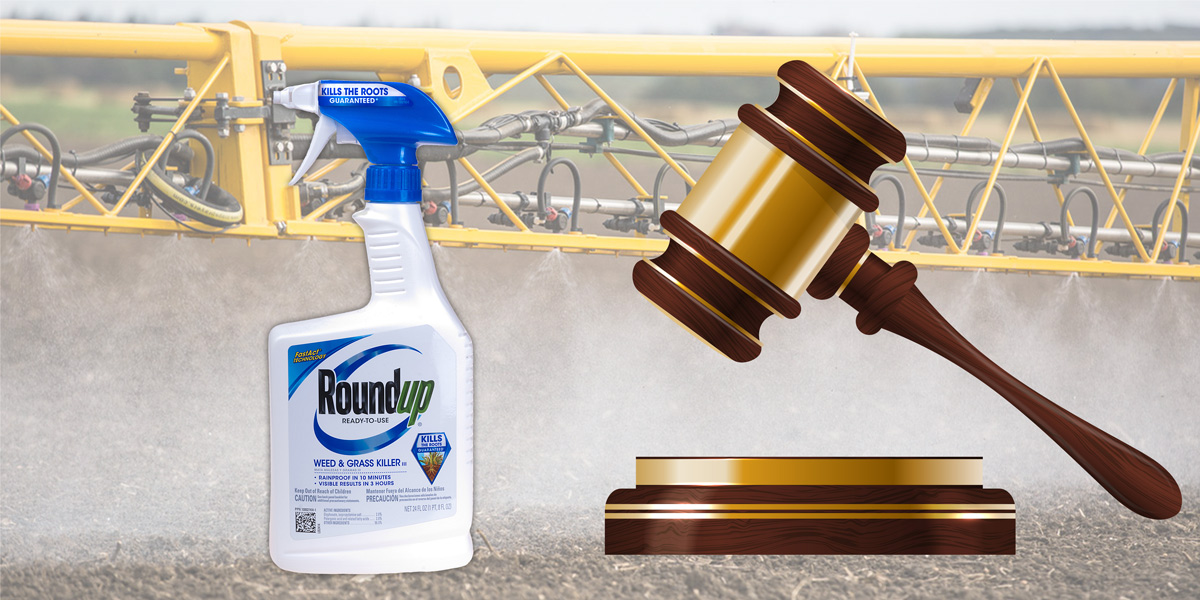 EU Commission and scientific agencies systematically excluded critical scientific studies reporting adverse effects caused by glyphosate – PAN Europe
- Details
Court ruling holds 2020 regulations exempting most genetically engineered crops from oversight contradicted the agency's own prior conclusions and are unsupported by science
- Details
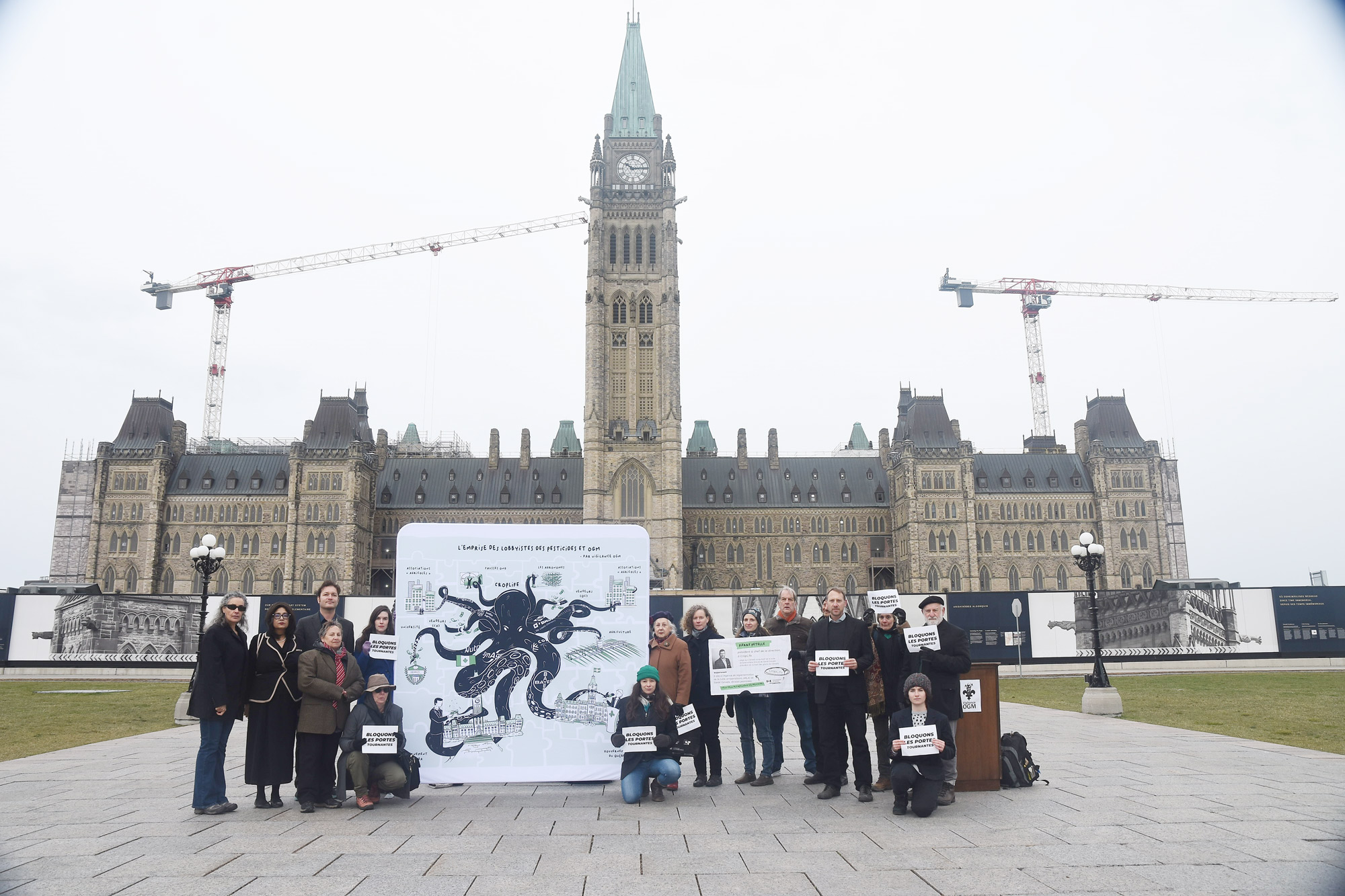
The lobbying practices of the pesticide and GMO industry in Canada revealed. By Claire Robinson and Jonathan Matthews
- Details
$231,095 handout comes after AquaBounty shuts down its facilities in Prince Edward Island, Canada and Indiana, US
- Details
In our latest Review we have a roundup of NEW RESEARCH on glyphosate, including the latest on how it can increase blood pressure, cause intestinal damage, and trigger other serious diseases, not to mention causing malformations in frogs. We also have more on the mysterious brain disease cluster in Canada and the aggressive cancers hitting women farmers in Brazil, both of which are being linked to glyphosate exposure (see THE AMERICAS). We cover the problems with glyphosate contamination of not just food, water, and public spaces, but even the manure used to help grow food – and the damaging results (see CONTAMINATION). We also have the latest on two lots of lawsuits weighing on Bayer-Monsanto – the Roundup ones costing the company billions and the PCB ones that just keep coming. We finish with a section on OTHER PESTICIDES that includes the latest on dicamba and neonicotinoids.
ROUNDUP LAWSUITS
Bayer reports heavy drop in profits amid ongoing Roundup cancer lawsuits

Bayer cut its forecast for 2024 operating earnings after a poor performance in its agrochemicals division hit quarterly profits. The group reported a net loss of 4.18 billion euros ($4.45 billion) in the third quarter, with revenues in its agricultural unit down 3.6 percent. A heavy drop in sales of its key glyphosate-based Roundup weedkillers – at the centre of long-running legal fights over claims they cause cancer – weighed particularly heavily. Bayer shares have lost more than three-quarters of their value since its Monsanto takeover.
NGOs to take EU Commission to court over re-approval of glyphosate
A group of European NGOs announced in June that they will take the European Commission to the European Union’s top court over the 10-year re-authorisation of the weedkiller chemical glyphosate. The move comes after the EU’s executive rejected a request by Pesticide Action Network (PAN) Europe and five other NGOs for an “internal review” of the decision to re-authorise the controversial herbicide. In November 2023, EU member states failed to reach a majority decision on whether to extend the authorisation of glyphosate beyond its expiry date in December. Under EU law, the Commission can decide on the authorisation renewal in such cases, and it opted to allow the substance to be sold on the EU market for another ten years. A PAN Europe press release said, “Findings from independent science were systematically discarded or given much less weight than sometimes decade old industry studies.”
Monsanto Roundup trial win overturned by Oregon court
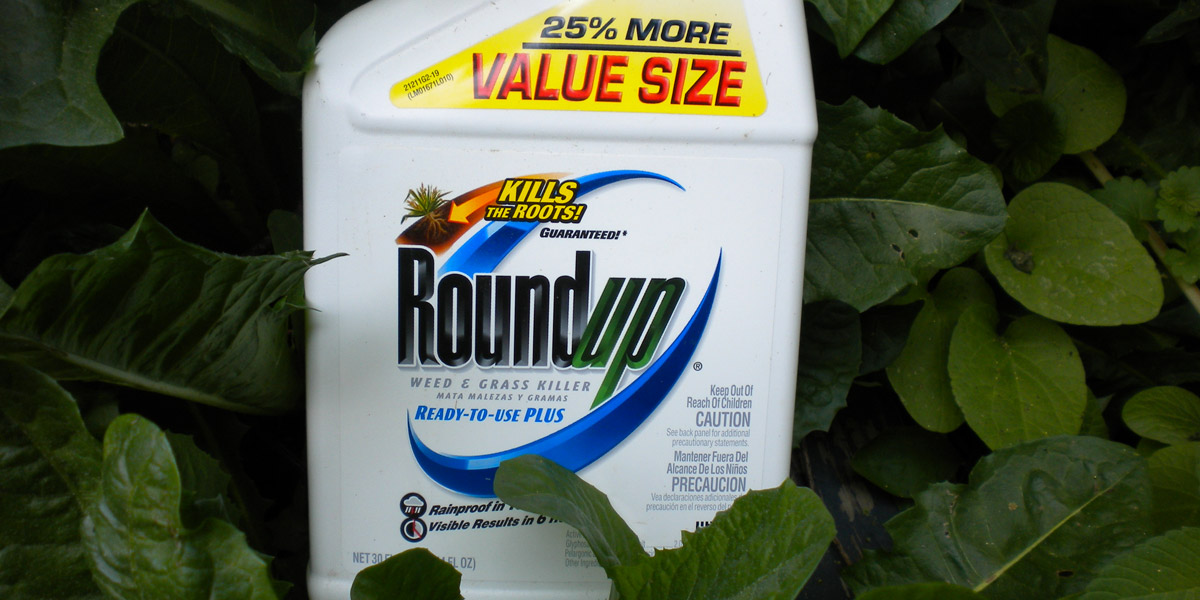
An Oregon appeals court has overturned a trial victory by Monsanto owner Bayer in a decision that adds to an ongoing debate over the company’s efforts to create a nationwide legal and legislative shield from lawsuits alleging Roundup weedkiller causes cancer. The court found that the trial judge in the case improperly barred key evidence about the US Environmental Protection Agency (EPA) from being presented to the jury, which could have led the jury to find in favour of the plaintiff. And notably, the court rejected arguments by the company that claims about the dangers of its products should be barred because those products carry the EPA’s stamp of approval.
Bayer wins surprise appellate victory in fight to limit legal liability
The 3rd US Circuit Court of Appeals in Philadelphia rejected plaintiff David Schaffner’s claim that Bayer’s Monsanto unit violated state law by failing to put a cancer warning on the label for Roundup, concluding that federal law shields the German company from a lawsuit by the Pennsylvania landscaper. The Court said the Federal Insecticide, Fungicide, and Rodenticide Act requires nationwide uniformity in pesticide labels, and prevented Pennsylvania from adding a cancer warning because the EPA does not require one. The 3rd Circuit’s finding is an outlier that directly conflicts with rulings from federal appeals courts in San Francisco and Atlanta in similar cases, where judges found that states can require additional warning requirements beyond federal regulations. But lawyers think Bayer’s surprise 3rd Circuit win may now provide some judges, who are inclined to look for ways to protect corporations like Bayer/Monsanto, with a legal leg to stand on. Bayer also hopes the 3rd Circuit’s conflicting opinion may encourage the US Supreme Court to become involved to settle the dispute, as if they came down in Monsanto’s favour that could potentially reduce Bayer’s enormous liabilities.
Philadelphia jury awards $78 million to man who said Roundup weedkiller gave him cancer
A Philadelphia jury has delivered a $78 million verdict against Monsanto, finding that the company’s Roundup weedkiller was a reason a man developed blood cancer. William Melissen, 51, used Roundup frequently for nearly three decades starting in 1992. He was diagnosed in 2020 with non-Hodgkin’s lymphoma, which he argued in legal filings was the result of his exposure to chemicals in the product. He and his wife Margaret sued Monsanto and its parent company Bayer in 2021 in the Philadelphia Court of Common Pleas. The lawsuit is one of thousands of cases nationally, and dozens in Philadelphia, in which people who developed cancer accuse Monsanto of negligence and of failing to include adequate warnings about its weedkiller. Philadelphia juries have returned verdicts for and against Monsanto in previous trials. For all the latest updates on Monsanto Roundup lawsuits see this news page of the Lawsuit Information Center.
CONTAMINATION
Glyphosate in manure-based fertiliser ruins tomato crops – study
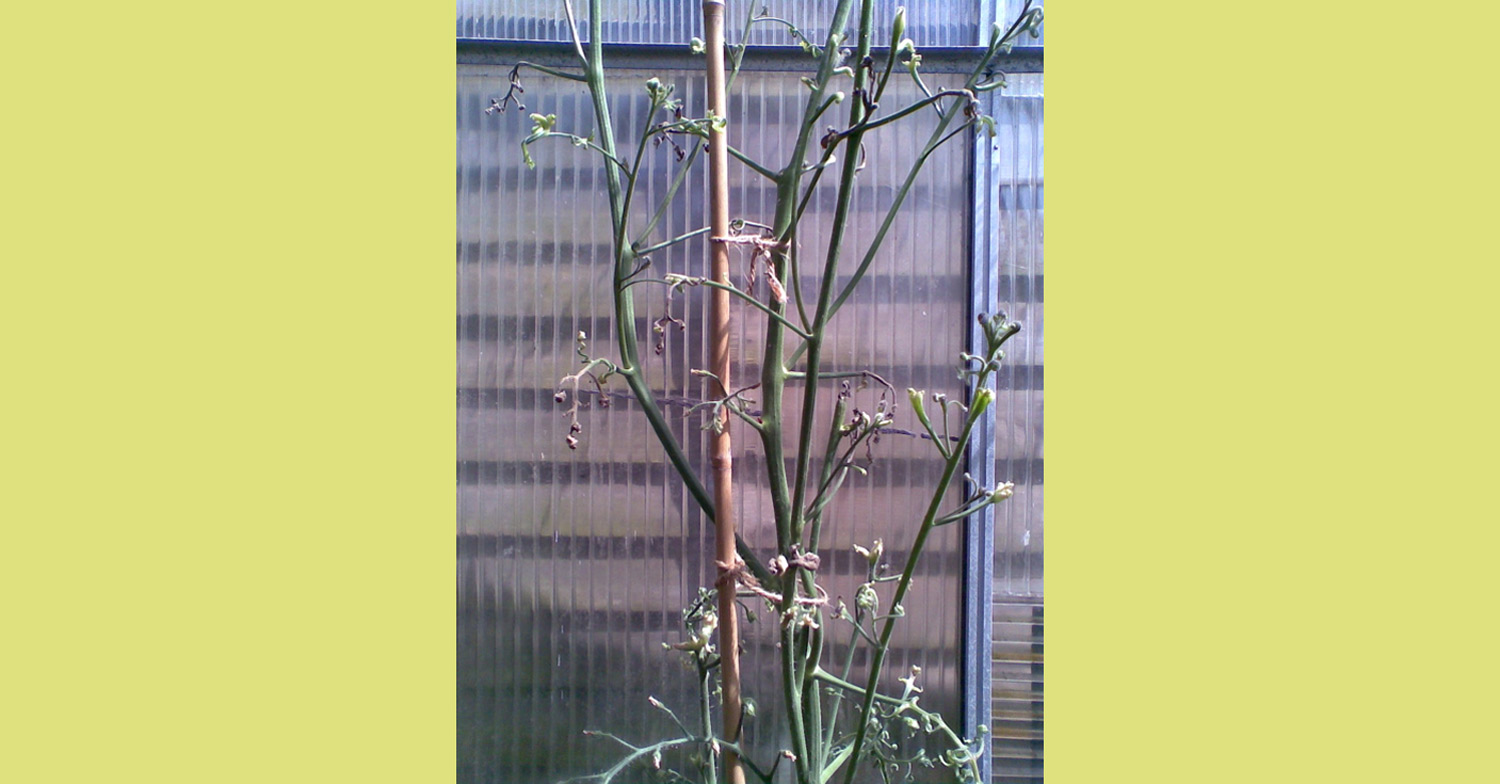
Glyphosate is turning up in manure-based fertiliser used by gardeners and organic and conventional growers and the residues can ruin yields of tomatoes and other sensitive crops, research from Finland shows. For the research, the scientists compared results from two manure-based fertilisers marketed for professional horticultural use. The first was the original fertiliser tested by the tomato grower and shown to contain glyphosate residue at a level of 0.94 mg/kg. The control fertiliser underwent similar testing and was found to have 0.23 mg/kg glyphosate. As manure-based fertilisers, both products were marketed as suitable for certified organic crop production, but this does not mean the manure is from certified organic livestock. To test the fertilisers, the scientists grew tomato plants for 14 weeks in a greenhouse. The scientists found that the total harvest of tomatoes grown with the fertiliser with the higher level of glyphosate residue was 35% smaller, and the yield of first-class tomatoes 37% lower, than that of the control fertiliser with the lower glyphosate level.
Glyphosate contamination of poultry manure caused soggy sauerkraut

A new research paper reveals that glyphosate residues in poultry manure caused the loss of $1,000,000 worth of organic sauerkraut in 2022 by making the sauerkraut soggy and therefore undesirable. The glyphosate likely came from pre-harvest “desiccation” (dry-down) of feed grains by the spraying of glyphosate-based herbicides – and the spraying of these same herbicides on GM glyphosate-tolerant corn and soy, which is used in poultry feed. The problem was caused by glyphosate’s tendency to tie up vital minerals in the soil, making them unavailable to growing plants, including the cabbage used for the organic sauerkraut.
Glyphosate levels decline in oats
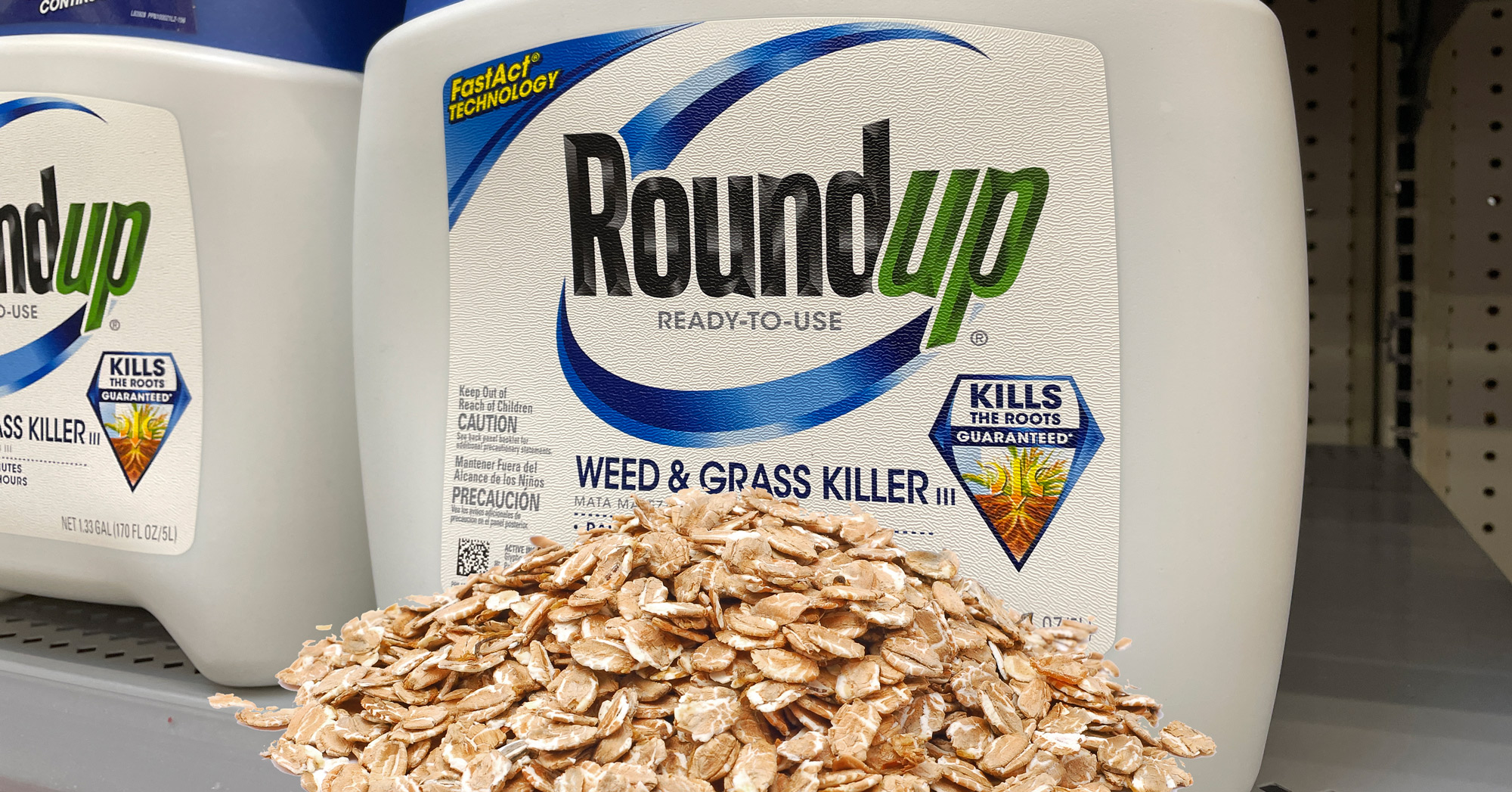
After years of being detected at alarming levels, the pesticide glyphosate is being found at lower levels, on average, in cereal and other oat-based products that children and adults enjoy, according to tests by the American nonprofit Environmental Working Group (EWG). EWG believes its calls for an end to the pre-harvest use of glyphosate on oats may have helped drive change. However, EWG reports that this toxic chemical is still showing up in popular brands of cereals and other oat-based products. Thirty percent of items tested showed high amounts of the pesticide. It’s possible that the decline in glyphosate levels that EWG is seeing is the result of pressure on farmers by grain traders to grow their crops without glyphosate and certain other pesticides of concern. A farmer based in Canada circulated a document that the Canada-based leading agricultural processing and distribution company Adroit is asking its supplier farmers to sign. In signing, the farmer promises not to use certain agrochemicals that, while approved for use in Canada, “may result in residues that are not acceptable in certain export markets”. The banned chemicals include glyphosate when applied to oats. Most US imports of oats come from Canada. So it could be that the drop in glyphosate levels seen in oats bought in the US are being driven by enforced farmer abstinence in Canada.
Glyphosate-based herbicides are now banned for non-professional use in Bulgaria
Glyphosate-based herbicides are now banned for non-professional use in Bulgaria. The use of these chemicals is banned in areas used by the public or by vulnerable groups: public parks and gardens, sports and recreation grounds, school and children’s playgrounds, and near health and educational facilities. Only distributors, consultants and professional users holding a certificate issued by Bulgarian Food Safety Agency (BFSA) can purchase and use these chemicals. Dr Svetla Nikolova, initiator of the campaign to ban the herbicides, said, “Following the European Commission’s decision to extend the use of glyphosate in the EU for another 10 years, the Bulgarian ministry’s action is a good step to reduce the use of this dangerous weedkiller, which is catastrophically damaging human health, biodiversity, soil and water.”
NEW RESEARCH
New Roundup weedkiller 45 times more toxic to human health
On the fiftieth anniversary of the controversial weedkiller’s release, a Friends of the Earth analysis – New Roundup, New Risks – finds that residential Roundup products are more toxic to consumers and the environment than ever before. Not only has manufacturer Bayer failed to remove glyphosate from all Roundup products in the US, contrary to its promise, but new US formulations of Roundup are 45 times more toxic to human health, on average, following long-term exposure. They also pose greater risks to the environment. Roundup products sold to consumers now contain combinations of four new active ingredients as replacements for glyphosate: diquat dibromide, fluazifop-P-butyl, triclopyr, and imazapic. All four chemicals pose greater risk of long-term and/or reproductive health problems than glyphosate based on the EPA’s evaluation of safety studies. They have been linked to a variety of harms to human health, including birth and developmental abnormalities; reproductive dysfunction; kidney or liver damage; and irritation, inflammation, or allergic reactions affecting the skin, eyes, and respiratory system.
Pesticides are potentially as bad as smoking for increased risk in certain cancers
Researchers have found that living in an environment heavily exposed to pesticides could increase the incidence of cancer as much as smoking. The strongest associations were with non-Hodgkin lymphoma, leukemia, and bladder cancer. In these types of cancers, the effects of pesticide exposure were more pronounced than the effects of smoking.
Glyphosate-based herbicides cause intestinal damage and serious diseases
A systematic review on the effects of glyphosate exposure on intestinal microbiota, metabolism, and microstructure finds that glyphosate and its formulations are able to induce intestinal dysbiosis by altering bacterial metabolism, intestinal permeability, and mucus secretion, as well as causing damage to the microvilli and the intestinal lumen. Additionally, immunological, enzymatic and genetic changes were also observed in the animal models. At the metabolic level, damage was observed in lipid and energy metabolism, the circulatory system, cofactor and vitamin metabolism, and replication, repair, and translation processes. The authors conclude that the types of alterations caused by glyphosate-based herbicides can lead to intestinal and systemic diseases, such as Crohn’s and Alzheimer’s.
Frogs exposed to realistic levels of glyphosate-based herbicide suffer malformations
A new study shows frogs (physalaemus gracilis) exposed to glyphosate-based herbicide in early developmental stages suffer malformations of the mouth and intestine, cardiotoxicity, oxidative stress, and impairments in anti-predatory behaviour. The authors comment, “Our findings demonstrate the dangers of unsustainable agriculture, based on chemicals that are highly dangerous and toxic to the environment. The current food production model needs to be rethought, only then we will be meeting the SDGs and preserving life on the earth.” They also write, “(T)he concentrations assessed in this study are within the limits permitted for drinking water worldwide and have already been detected in bodies of water. This raises concerns about the need to review the regulations governing pesticide use and release.”
Glyphosate formulations cause mortality and diverse sublethal defects during embryonic development of frogs
In experiments on African clawed frogs with pure glyphosate and glyphosate-based herbicide formulations, researchers based in Germany found that at sublethal concentrations, the formulations altered embryos’ external appearance, leading to malformations such as reduced eye and head size. In addition, exposure to formulations impaired heart morphology and function, and the expression of heart-specific genes was altered at a molecular level. The results confirmed that glyphosate formulations had a stronger effect on embryo development than pure glyphosate. The researchers concluded that regulatory herbicide approvals should consider studies on both pure glyphosate and glyphosate formulations.
Glyphosate increases blood pressure and alters gut microbiome
In a study conducted at the University of Toledo, rats exposed to glyphosate showed an increase in blood pressure and alterations in the gut microbiome. The researchers concluded, “Our study supports the reasoning that the unabated use of glyphosate could be a contributor to the rising incidence of hypertension in the western society.” In an article about the study, the lead researcher wrote, “This alteration in gut microbiota can lead to changes in metabolites, which are released by bacteria into our bodies... These altered metabolites could play an important role in the increased blood pressure observed in our rat model.”
THE AMERICAS
Drone pesticide spraying in Argentina
In Argentina, the Milei government continues to expand poisoning with pesticides and has just approved the use of unmanned aerial vehicles (drones) for the application of pesticides such as the probable carcinogen glyphosate, reports the investigative journalist Patricio Eleisegui. The government’s intention is to intensify industrial agriculture based on the GM + pesticides + no-till package with greater involvement of companies such as Bayer-Monsanto, Corteva (Dow, DuPont, Pioneer), ChemChina (Syngenta), BASF and India’s UPL.
Film challenges GMO-based agribusiness model in Argentina
The Argentinian movie EL AGRONOMO tells the painful story of an agronomist who moves with his family to one of the many rural areas of Argentina plagued by pesticide spraying (often on GMO crops). Director Martín Turnes says, “For years I’ve been attentive to the questioning of the predominant agribusiness model, the indiscriminate use of pesticides and the consequences that this entails in our society, in our bodies. I felt the need to transform all the questions it generated into a film.” See our GMWatch X thread on the attacks on this film from defenders of big agribusiness.
They all got mysterious brain diseases. They’re fighting to learn why (spoiler: glyphosate is fingered as a possible culprit)
The New York Times reports that doctors in New Brunswick, Canada, have identified dozens of patients with similar unexplained neurological symptoms – a scientific puzzle that has now become a political maelstrom. Initially, official support for a study to find out a potential environmental cause for the illnesses was strong but then it suddenly vanished. Neurologist Dr Alier Marrero believes that New Brunswick is now the centre of one of the most prolific young-onset dementia clusters in the world. Ninety percent of his patients have been found to have high amounts of glyphosate in their blood. Glyphosate is heavily sprayed in New Brunswick’s commercial forestry. For more on New Brunswick’s dementia cluster in young people, see this useful summary.
Glyphosate experts silenced
In connection with the story above, GMWatch’s regular readers may recall that Dr Eilish Cleary, former chief medical officer of health for New Brunswick, was “put on leave” by her employer, the provincial government, while studying glyphosate. Sadly, Dr Cleary died at the age of 60 of cancer, after receiving a sizeable financial payment that has been described as “hush hush money”. And Dr Cleary is far from the only expert to have been muzzled on glyphosate in New Brunswick.
Canada: Nova Scotia and New Brunswick politicians call for federal inquiry into mysterious brain disease
Politicians on both sides of the border between New Brunswick and Nova Scotia are calling for a federal inquiry into a mysterious surge of the brain illness (see above two stories) that has gained international attention. Nova Scotia Independent MLA [Member of the Legislative Assembly] Elizabeth Smith-McCrossin and New Brunswick Green Party MLA Megan Mitton want the Public Health Agency of Canada (PHAC) to step in and lead the investigation into what they’re calling atypical neurodegenerative illness, a disease that was previously thought to be only in New Brunswick. At first, it appeared as if New Brunswick was going to share information with PHAC and cooperate on an investigation into the mystery illness, Mitton said. “It sounds like they started to do that, and then something happened, and they stopped,” she said. The federal government had earmarked $5 million to help with the study, she said.
Banning glyphosate “essential” to protect health and ecosystems – professors
Three professors, whose research involves helping Mexican farmers to use agroecological methods to transition away from the use of glyphosate, write that, “Banning glyphosate is an essential step in protecting the health of humans and our ecosystems.” They add that if Mexico goes ahead with its planned ban on the chemical (currently paused), this will help show how agroecology can lead the way forward.
Research links pesticide exposure to aggressive cancer in women farmers in Brazil
A study links exposure to pesticides to an increased incidence of cancer and risk of metastasis in female farmers in Paraná, Brazil. Carolina Panis, coordinator of the study, said: “Women farmers are disproportionately exposed to pesticides, and therefore may have a greater risk of developing chronic diseases such as cancer... Urine samples from these women showed contamination by glyphosate, atrazine and/or 2,4-D, after unprotected contact with pesticides. We also observed that there is a 58 per cent higher risk of developing breast cancer among women farmers compared to women in urban areas. We also documented a twofold higher risk of developing metastases in women occupationally exposed to pesticides compared to women in urban areas. Our results indicate that women continuously exposed to pesticides have an increased risk of developing breast cancer with a more aggressive profile, highlighting the need for public policies aimed at the prevention and surveillance of these populations.” Paraná is a major producer of GM soy; GM soy has been genetically engineered to tolerate glyphosate and 2,4-D.
PCBs
Buried: The Last Witness – exposé on toxic chemicals (BBC podcast series)
In 1967, Douglas Gowan discovered a deformed calf at a farm in South Wales. The campaigner spent the next five decades trying to blow the whistle on the secret toxic waste dumping he discovered had been taking place for years at a nearby landfill site, and the devastating impact of these “forever chemicals” on the food chain. Gowan died in 2018, but his extensive files form the basis of the BBC’s disturbing 10-part podcast series, “Buried: The Last Witness”. After receiving the tip-off, investigative reporters Dan Ashby and Lucy Taylor teamed up with Welsh actor Michael Sheen to delve into Monsanto’s illegal disposal of polychlorinated biphenyls (PCBs) – fire-resistant chemicals used in everything from paint to paper before eventually being banned in the late 1970s. Before he died, Gowan had given a taped interview to Sheen. The actor had come across an article mentioning Gowan’s work online and was so shocked by the scandal (and lack of coverage) that he travelled to meet him to listen to his story.
England: Judge rules council must disclose water test results
A judge has ordered Telford and Wrekin Council to provide further details about a closed landfill site that may have released chemicals into a waterway near the protected Ironbridge World Heritage Site. Stoneyhill, near Telford, was used by the former international chemical company Monsanto between 1985 and 1991. A tribunal concluded that the authority must release information about the site, after it refused to give it to a local campaigner. Tests done on another of the firm’s former sites found levels of now-banned chemicals more than 12,000 times higher than the recommended UK levels. The tribunal case was brought by Paul Cawthorne, a vicar turned citizen scientist, against the Information Commissioner’s Office (ICO). In July 2023, Mr Cawthorne had asked the council to release the results of tests carried out at the site but the authority refused to respond.
Bayer shares drop after PCB case gets US court review
Bayer shares fell after Washington state’s top court said it will review a case alleging that toxic chemicals from the German company’s Monsanto unit caused brain injuries to three teachers. The case was the first of more than half a dozen verdicts with combined damages of more than $1.5 billion to reach the appeals court over alleged PCB exposure at the Sky Valley Education Center.
East St Louis says Monsanto polluted its land. It could collect billions in fines
East St Louis is alleging the old Monsanto plant in Sauget polluted its town, and it’s seeking what could potentially be billions of dollars in fines. The city is suing Monsanto Company, Solutia, Inc. and Pharmacia LLC in federal court, accusing them of polluting its land with PCBs. Solutia and Pharmacia are successors on the chemical and pharmaceutical side to the original Monsanto organisation, which went on to be bought by Bayer.
Los Angeles settles with Monsanto for $35 million over PCBs in waterways
Contamination of key Los Angeles waterways such as the Santa Monica Bay, Los Angeles Harbor and Echo Park Lake due to the spread of toxic chemicals is at the heart of a $35-million settlement between the L.A. City Council and Monsanto and two smaller companies. The City Council announced the payout by the companies to settle a lawsuit filed in 2022 over damage from long-banned chemicals called PCBs, which have been linked to health problems including cancer.
Judge rules Vermont’s lawsuit against Monsanto can move forward (video)
A judge has ruled that Vermont’s lawsuit against Monsanto over toxic PCBs can move forward. The company wanted the judge to throw out the lawsuit. But Vermont’s Attorney General says, “We’re headed to trial. We’re building our case and we’re going to hold them accountable.” Dozens of Vermont schools have action-level PCB issues. PCB contamination at North Country Union High School means students may have to stay out of school.
OTHER PESTICIDES
Non-GMO farmer forced to grow GMO dicamba soybeans to avoid crop damage
Arkansas farmer Adam Chappell can’t grow non-GMO soybeans any more. That’s because other farmers in his area are growing GMO soybeans that are tolerant to dicamba herbicide. The controversial weedkiller is prone to drift – turning from a liquid to a gas when sprayed, drifting across other farm fields, and killing other crops including Chappell’s non-GMO soybeans. “I can’t grow non-GMO soybeans anymore, and it’s a shame because it’s knocked me completely out of my non-GMO markets,” he says. Instead, Chappell has been forced to grow GMO dicamba tolerant soybeans — just to protect his farm. For the past four or five years, Chappell’s non-GMO soybeans have been increasingly damaged by dicamba drift from neighbouring farms. “All I grow is dicamba tolerant soybeans. I can’t grow anything else,” he says. “Anybody that doesn’t grow dicamba tolerant soybeans has that problem.”
Most common US insecticide may affect brain development similarly to nicotine
Industry research reviewed by independent scientists show that exposure to the nation’s most common insecticides, neonicotinoids, may affect developing brains the same way as nicotine, including by significantly shrinking brain tissue and neuron loss. Exposure could be linked to long-term health effects like ADHD, slower auditory reflexes, reduced motor skills, behavioural problems and delayed sexual maturation in males, the new review found. The industry science will be used by the Environmental Protection Agency (EPA) to set new regulations, but the independent scientists say they found pesticide makers withheld information or did not include required data. They also allege the EPA has drawn industry friendly conclusions from the research.
A haze of pesticides over the land
There is a haze of pesticides all over rural areas. They spread into people’s gardens, houses, playgrounds and even nature reserves. This alarming finding is shown by a one-year monitoring study by the Dutch citizens’ network Meten = Weten in cooperation with PAN Netherlands. Among the many chemicals detected was the Parkinson’s-linked pesticide Folpet. The findings add to evidence from other countries. Research in South Tyrol found that the airborne spread of pesticides is seriously underestimated. They do not remain in the apple orchards in the Alpine valleys but spread to houses and playgrounds – and significant amounts even go up the mountain to nature reserves that should be protected. The EU SPRINT research project already showed that pesticides accumulate in house dust, with the highest levels in the houses of conventional farmers.
Herbicide-tolerant basmati rice launched in India
Lovers of basmati rice – known as the Queen of Rice for its unrivalled taste and texture – will be dismayed to learn that the Pusa Institute of New Delhi, India is selling seed of random mutagenesis-bred herbicide-tolerant versions of basmati called RobiNOweed. The rice, developed by the Indian Council of Agricultural Research (ICAR), is tolerant to the herbicide imazethapyr. It is being touted as non-GMO, labour-saving, water-saving and environmentally friendly. However, the direct seeding method it’s designed to be grown with favours the emergence of weeds, so the rice has to be sprayed with liberal applications of imazethapyr. This chemical damages the DNA of tree frog tadpoles and acts synergistically with glyphosate-based herbicides to damage the DNA of toads. Imazethapyr was banned in the EU in 2002. The European Chemicals Agency says, “This substance is very toxic to aquatic life with long lasting effects... and causes serious eye damage”.
Washing produce doesn’t remove pesticides, study finds
A new scientific report lends weight to consumer concerns about pesticide residues on food, presenting fresh evidence that washing fruit before eating does not remove various toxic chemicals commonly used in agriculture.
UK: Far higher pesticide residues allowed on food since Brexit
The amount of pesticide residue allowed on scores of food types in England, Wales and Scotland has soared since Brexit, analysis reveals, with some now thousands of times higher. Changes to regulations in Great Britain mean more than 100 items are now allowed to carry more pesticides when sold to the public, ranging from potatoes to onions, grapes to avocados, and coffee to rice. For tea, the maximum residue level (MRL) was increased by 4,000 times for both the insecticide chlorantraniliprole and the fungicide boscalid. For the weedkiller glyphosate, classed as a “probable human carcinogen” by the World Health Organization (WHO), the MRL for beans was raised by 750%. The new, weaker MRLs adopted by Great Britain come from the Codex Alimentarius, a set of international food standards produced by the UN Food and Agriculture Organization and the WHO. The Codex has been criticised by campaigners for “a history of setting weaker safety standards than European counterparts due to the influence of US and corporate lobbying”. Strikingly, the UK chose to adopt the Codex MRLs only where they offered lower protection to consumers. Where the Codex standard was stricter, the HSE decided to retain the weaker British MRL.
Field study finds using biodiversity instead of pesticides can reduce crop damage from herbivores
Pesticides are often not necessary. Researchers at the University of Zurich have conducted a comprehensive field study showing that damage from herbivores can be reduced by using biodiversity within a plant species. Different plant genotypes can cooperate to help fend off herbivorous insects. The study is published in the journal Nature Communications. Just like humans, plants interact with the individuals around them. For example, if the people around you are more susceptible to infections, your own risk of getting infected increases, and vice versa. The same is true for plants. When different genetic types of the same plant species are mixed and planted together, some combinations are more resistant to pests and diseases. This positive biodiversity effect is known as associative resistance.
..................................................................
We hope you’ve found this newsletter useful. Please support our work with a one-off or regular donation. Thank you!
- Details
Massive sections of the targeted chromosome went missing. By Prof Michael Antoniou and Claire Robinson
- Details
Scientists say $1,000,000 loss is due to glyphosate-induced deficiency in vital nutrients. Report: Claire Robinson
- Details
White House Writers Group (WHWG) and v-Fluence strategised to lower UK environmental standards to match those of the US. Report: Claire Robinson
- Details

MEPs alerted to clear-cut evidence of foreign interference in critical EU policy making
- Details

PR firm v-Fluence is run by former Monsanto communications chief Jay Byrne. By Jonathan Matthews and Claire Robinson
- Details
Major grain trader has banned its farmer suppliers from using glyphosate and other controversial chemicals. Report: Claire Robinson
- Details
Scientific issues listed in unanimous verdict of the five judges triggered application of precautionary principle