








 Quito, June 2026
We, peasant, Indigenous, Afro-descendant, social, environmental, academic, and civil society organisations from Latin America, gathered at the Latin American Meeting: Gene Editing in Latin America, Threats and Strategies, held at the Universidad Andina Simón Bolívar in Quito on June 1 and 2, 2026, to reflect on the impacts of gene editing on agriculture and food, express our concern and rejection of the advancement of these technologies in our territories.
1. Gene editing is part of a new technological offensive seeking to impose control over life, seeds, knowledge, and the territories of peoples. It is a biotechnological model that disregards biodiversity, ecosystems, and living beings, treating them merely as raw materials that can be manipulated according to the needs of capital accumulation, altering metabolisms, ignoring ecological limits and natural scales, and ultimately disregarding the rights of the communities that have cared for and recreated biodiversity for generations.
These new genetically modified organisms are aimed at manipulating peasant crops and contributing to the disappearance of peasant communities, Indigenous Peoples, and Afro-descendant peoples by undermining the relationship they maintain with crops, seeds, and ways of life in their territories, thereby threatening biodiversity and the future of the planet.
2. Several Latin American regulations refer to gene editing as “a precision breeding technique,” and the industry presents it as a “green and environmentally and consumer-friendly solution,” even though it is not as precise as claimed and entails numerous risks to the health of plants, animals, and humans; to peasant food systems; to food security and food sovereignty; and to biodiversity and the environment.
Various scientific studies show that these technologies can generate unexpected mutations, loss of genetic material, genetic rearrangements, and other unforeseen changes.
3. Whereas genetic modification as we previously knew it involved inserting genetic material from an unrelated species, here the industry disfigures seeds, or even animals or microorganisms, by “editing” their components, which results in the disfigurement of these living organisms. It is important to understand that this manipulation makes them equivalent to transgenic organisms, and they can never be considered conventional.
Gene editing in a species causes changes that differ from those occurring in nature or through conventional breeding, and their consequences are poorly understood. In gene-edited food crops, these changes could alter their biochemical composition and lead to the production of toxins and allergic reactions, with unexpected effects on health.
4. Because these are living beings whose genetic material has been artificially edited and redesigned in a laboratory, they must always be subject to rigorous and independent risk assessments, in accordance with the precautionary principle and the commitments established under the Cartagena Protocol, as well as to the prohibitions or moratoria imposed on genetically modified organisms. Presenting them as conventional organisms conceals their potential risks to biodiversity, food systems, human health, and ecosystems, and limits the right of peoples to make informed decisions about technologies that affect their territories and access to healthy food.
5. It is false to claim that these techniques are equivalent to conventional breeding or to the historical work carried out by peasant women and men, Indigenous Peoples, and local communities. Peasant systems for seed selection and conservation are based on observation, biological diversity, the exchange of knowledge, and continuous adaptation to territories. These are collective processes built over thousands of years, associated with the deep and ancestral relationship communities have with their seeds and crops, which is connected to a spirituality encompassing every aspect of life.
6. The promises of gene editing are the same as those that accompanied transgenic crops: ending hunger, increasing productivity, reducing the use of agrotoxic chemicals, and confronting climate change. After three decades of the expansion of transgenic crops, none of these promises have been fulfilled: hunger persists, environmental degradation is worsening, biodiversity continues to decline, and agriculture is increasingly dependent on external inputs, agrochemicals, and seeds controlled by corporations.
7. The expansion of gene editing directly threatens peasant practices of seed conservation, exchange, and reproduction because it depends on patented technologies and laboratory-based genetic manipulation mechanisms that alter the natural way biological processes occur. They can contaminate and alter the composition of native crops and seeds, lead to the loss of genetic diversity, cause communities to abandon native varieties, and deepen dependence on commercial varieties and the agrotoxic chemicals included in commercial technological packages, contributing to the loss of food sovereignty and autonomy.
8. Its false promise is that it will enable the development of crops that require fewer pesticides and are better adapted to climate change. In reality, these technologies strengthen new forms of intellectual property and the privatization of seeds, allowing a small number of corporations to increase their control over food systems. Free Trade Agreements promote this situation as they continue to expand and/or be renegotiated throughout the region, since they include investment and intellectual property provisions that reinforce corporate control over food.
9. At least ten Latin American governments have promoted deregulation regarding gene editing and opened a new and more dangerous stage in the advancement of genetically modified organisms. Companies have succeeded in having these organisms considered conventional crops and excluded from biosafety assessments and controls, as well as from prohibitions in place in some countries, under the argument that they do not contain foreign genetic material from another species. This has occurred even in countries such as Ecuador and Peru, whose regulations prohibit transgenic and/or genetically modified crops, or in Chile, where such crops are not authorized for the domestic market.
10. We are equally concerned that these technologies are being applied to microorganisms that are authorized for release into the environment, for use as biological inputs and for other purposes, without complying with the prohibitions or regulations required for genetically modified organisms.
11. No technology capable of moving genes from one place to another can replace the complexity of the ecological and cultural processes that sustain agriculture and food systems.
In the face of this new offensive, we reaffirm that the real solutions are found within communities and their intergenerational experience, in agroecology, food sovereignty, and the strengthening of peasant, Indigenous, and Afro-descendant systems of seed production and reproduction.
We call on governments, public institutions, intergovernmental organizations, social organizations, producers’ associations, universities, and citizens to:
• Reject and prohibit gene editing, establish the equivalence of its products with transgenic organisms, recognizing all of them as genetically modified organisms.
• Stop the deregulation of gene editing, guarantee the application of the precautionary principle and the right of producers and consumers to information.
• Guarantee the full realization of the rights of peasants recognized in the United Nations Declaration on the Rights of Peasants and Other People Working in Rural Areas (UNDROP), particularly the rights related to the conservation, use, exchange, and protection of peasant seeds.
We, the communities and peoples, are the ones who will continue working collectively and in an organized manner, defending seeds, knowledge, and peasant territories, with our collective capacity to feed people and care for life. We will do so through an agroecology rooted in peasant traditions as a fundamental tool for defending peasant crops and seeds, food, cooking, food sovereignty, territories, and the autonomy of peoples.
Signed
Acción Ecológica, African Centre for Biodivesrity, AGAPAN-Associação Gaúcho de Proteção ao Ambiente Natural, Aída Castilleja, Alianza Biodiversidad, Alianza por la Agrobiodiversidad-Colombia, Alianza por una mejor Calidad de Vida de Chile, Anaid Segura Cordova, Asamblea Indígena Campesina y Social (ANICS), Asejus-Guatemala, Asociación civil Mano a Mano intercambio Agroecológico, Asociación Nacional de Empresas Comercializadoras de Productores del Campo, A.C. (ANEC), Asociación Nacional para el Fomento de la Agricultura Ecológica (ANAFAE)-Honduras, Asociación para la igualdad y el desarrollo ambiental sustentable (APIDAS AC), Asociación Sustentable por la Mujer de Morelos AC, Asomupes, Aula Verde A.C., Aya Hatariy - Ñawi Kawsay (Mujeres que sostienen la vida), Banco de Semillas Tlaolli de la Comunidad de Popotlan Morelos, México, Base-Investigaciones Sociales-Paraguay, Campaña de la Semilla de Vía Campesina-Anamuri, Campaña Nacional Colombia Libre de Transgénicos, Campaña Nacional Sin Maíz No Hay País, Casa de Abejas, Casa Opuntia, Centro Agroecológico Longavi, CAEL, Centro de Estudios Interdisciplinarios en Agrobiodiversidad, Centro de Estudios para el Cambio en el Campo mexicano (Ceccam), Centro de investigaciones interdisciplinarias para el desarrollo rural integral, Centro de Reflexiones Nim Poqom, Centro Ecológico-Brasil, Centro Internazionale, Crocevia, Chile Mejor sin TLC, Clínica Ambiental-Amazonía Ecuador, Codecyt, Colectivo Agroecologico del Ecuador, Colectivo COMCAUSA, Colectivo de Mujeres Campesinas de la Costa Grande de Guerrero, Mexico, Colectivo Eco creando, Colectivo intercambio de semillas, intercambio de saberes Isis, Colectivo por la Autonomía-México, Colectivo Zacahuitzco, Colegio Nacional Transdisciplinario de Toxicología, Salud y Ambiente (Contratox) – México, Comisión de Derechos Humanos y Laborales del Valle de Tehuacán, Comité Ixtepecano en defensa de la vida y el territorio, Comunidad en Acción-Bolivia, Comunidad indígena maihue, Confederación de campesinos Agroecológicos del Ecuador, Consejo Ciudadano por el Agua de Yucatán, Consorcio Agroecológico Peruano, Contraloría Autónoma del Agua de Yucatán- México, Cooperacción-Perú, Cooperativa Utopía de los Bosques SC de CV. Coordinadora Agraria Nacional Ezequiel Zamora Canez, Coordinadora Ecuatoriana de Agroecología, Coordinadora Latinoamericana de Organizaciones del Campo (CLOC-LVC), Coordinadora Nacional Campesina Eloy Alfaro-Ecuador, ECOCREANDO, Ecofeminismo Río Negro, El Colegio de la Frontera Sur, El jilote, Empalabrando colectivo, Erica L. Hagman Aguilar, Renacer, Contratox, SIIT, FPH- México, Escuela Campesina Agroecológica La Mucuy , Espacio Estatal en Defensa del Maíz Nativo de Oaxaca-México, Estephania Zluhan – México, FASE - Solidariedade e Educação, FIAN México, Red por el Derecho humano a Alimentarse, Frente Emiliano Zapata para la Defensa del Ejido San Gregorio Atlapulco, Fundación Apaztle, Fundación ProDefensa de la Naturaleza y sus Derechos, Fundación Qhapaq Ñam, Fundación Semillas de Vida, Fundación Tierra Vermelha– Venezuela, GE Free New Zealand (Tai Tokerau), GRAIN, Grupo Alternativa por la Soberanía Alimentaria (GASA), Grupo de Apoyo para el Desarrollo de las Comunidades Mixes del Estado de Oaxaca, A. C., Grupo de Estudios Ambientales (GEA), Grupo de Trabajo Agroecologia Política CLACSO, Grupo ETC, Grupo Semillas-Colombia, GT Biodiversidade da Aliança Nacional de Agroecologia-Brasil, Guardianes de semillas nativas de Coyuca de Benítez, Guerrero – México, Huerta Polakas, Huerto de la UNACH, Huerto Toprak, Iniciativas para el Desarrollo de la Mujer Oaxaqueña (IDEMO), Instituto de Altos Estudios Transdisciplinarios, Instituto de Estudios para la Democracia, Derechos Humanos y Sustentabilidad del Sur, Instituto de Investigación para el Desarrollo Social de Jujuy – Argentina, Instituto de Salud Socioambiental UNR Rosario Argentina, Instituto Superior Intercultural (AYUUK), Jardín Etnobiologico de Oaxaca, La mayordomía del agua, Laura Manavella, Leticia López Zepeda Integrante CNSMNHP, Ma Elena Álvarez-Buylla Roces, MAELA-Colombia, Mano a mano intercambio Agroecológico, Maria Cristina Gumí Zepeda, María Solís Sánchez egresada del INBAL México, Maríangela Petrizzo, Marisa Lanteri, Mateo Mier y Terán Giménez Cacho, Modatima Chile, MOSACAT, Movimento Ciência Cidadã-Brasil, Movimento do Pequenos Agricultores – MPA, Movimiento Agroecológico Colombiano (MACO), Movimiento de mujeres campesina agrourbana y pescadora, Multisectorial Paren de Fumigarnos-Santa Fé-Argentina, Mundo y conciencia AC, Museo del Hambre-Argentina, Nancy Serrano Silva -Secihti -México, Nido de Aguilaa - Jardin Botanico, No al puerto espacial. Grupa Ambiente y cultura la Esmeralda-Rocha, Núcleo Patagónico de Agroecología GESAF (Grupo de estudio de sustentabilidad en agroecosistemas frutihortícolas, OLRAD olive land for rural and agricultural development, ONG WE KIMÜN, Organización Campesina Nuevo Lechugal-Ecuador, Organización mapuche Lakutun, Partido verde de Venezuela, Pierre.ùbeaucage-Montréal, Plan pueblo a pueblo, Plataforma América Latina y el Caribe Mejor sin TLC, Plataforma Gastronómicas, Productos Artesanales Oly, Propuesta Sur-Rosario (Argentina), Qu4nt, Raíces Nativas, Red Agroecológica del Austro-Ecuador, Red Agroecológica Loja, Red Construyendo Paz Latinoamericana -CoPaLa-, Red de Acción en Plaguicidas y sus Alternativas de América -RAP-AL, Red de Acción sobre Plaguicidas y Alternativas en México (RAPAM) A.C., Red de alternativas sustentables agropecuarias de Jalisco , Red de Coordinación en Biodiversidad de Costa Rica, Red de Escuelas Populares Agroecológicas Ezequiel Zamora (REPAEZ) -Estado Carabobo -Venezuela, Red de Guardianes de Semillas del Ecuador, Red de Instituciones de Educación con programas y procesos de formación en Agroecología y afines en Colombia- IESAC, Red de Semillas Libres de Colombia, Red en Defensa del Maíz-México, Red Huertera La Paz, Red Iberoamericana de Seguimiento a la Agenda 2030, Red Mexicana de Acción frente al libre comercio RMALC, Red Nacional de Agricultura Familiar (RENAF-Colombia), Red Nacional de Comunidades Envenenadas en Resistencia (Renacer) – México, Red Nacional en Defensa de la Soberanía Alimentaria en Guatemala (REDSAG), Red Plurinacional de Pueblos Fumigados- Argentina, Red por la Tierra, Red por una América Latina Libre de Transgénicos (RALLT), Red Socioambiental Amealco, REDES-Amigos de la Tierra-Uruguay, REEP Red por la Estructura Ecológica Principal, RENACER, Réseaux de jeunes engagés dans le changement climatique, biodiversité,flore et la protection des zones humides, Revolución de las conciencias, ROJECF RDC, Semillas de Mujeres para la Esperanza, la vida y la Paz (SER-PAZ), Seminario de Investigación e Incidencia Transdisciplinaria, Simon Fraser University, Sintragritol, Sociedad Argentina de Agroecología, Sociedad Científica Latinoamericana de Agroecología (SOCLA), Taller de Comunicación Ambiental (Rosario), Tanya Romero, Tianguis Agroecológico de Xalapa, Tlalli Tierra Fertil, Tonalli de los Pochtecas de México A.C., Tribunal Internacional de Conciencia de los Pueblos en Movimiento (TICPM), UACO Ixtepec, UCP, UNAM, Unidad y semillas naturales, Unión de Científicos Comprometidos con la Sociedad y la Naturaleza en América Latina (UCCSNAL), Unión de Colonias Populares – Ecatepec, Unión de Colonos de San Miguel Teotongo, Unión de Comités Autónomos de Agua del Oriente del Estado de México, Unión de Pochtecas de México A.C., Union de Vecinos, Unión Nacional de Organizaciones Regionales Campesinas Autónomas (UNORCA), UNORCA CN, UNORCA YUCATÁN, Uprez -Slp.
GMWatch note:
The Spanish original version of this declaration is here.
See also: Gene Editing in Latin America: Dangers, Traps, and Problems
A newly released (Spanish language) book from Alianza Biodiversidad – co-authored by a broad coalition of scientists and environmental advocates – provides a useful handbook on how gene editing is acting as a corporate trap designed to bypass Latin America’s existing GM safety laws and so evade risk evaluation – and keep consumers in the dark. The book also maps out exactly where experimental and commercial trials are taking place across the continent. Available to download for free at the link above. There are also accompanying multimedia materials.
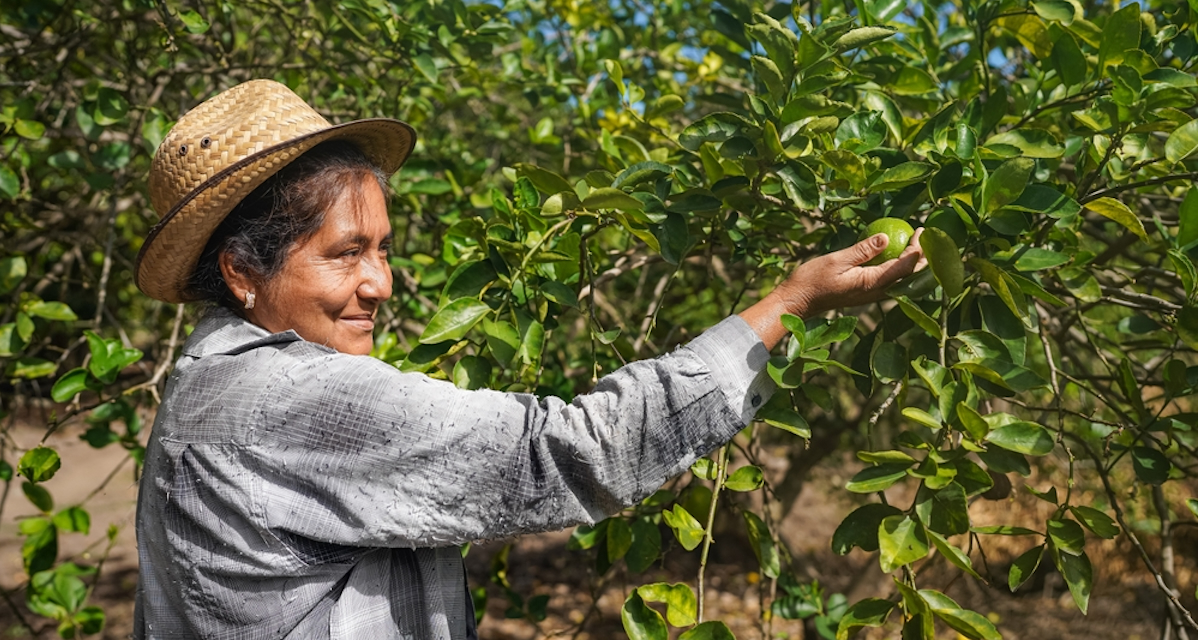
Image: Shutterstock (licensed purchase)