








Calls for suspension amid judicial and public concerns
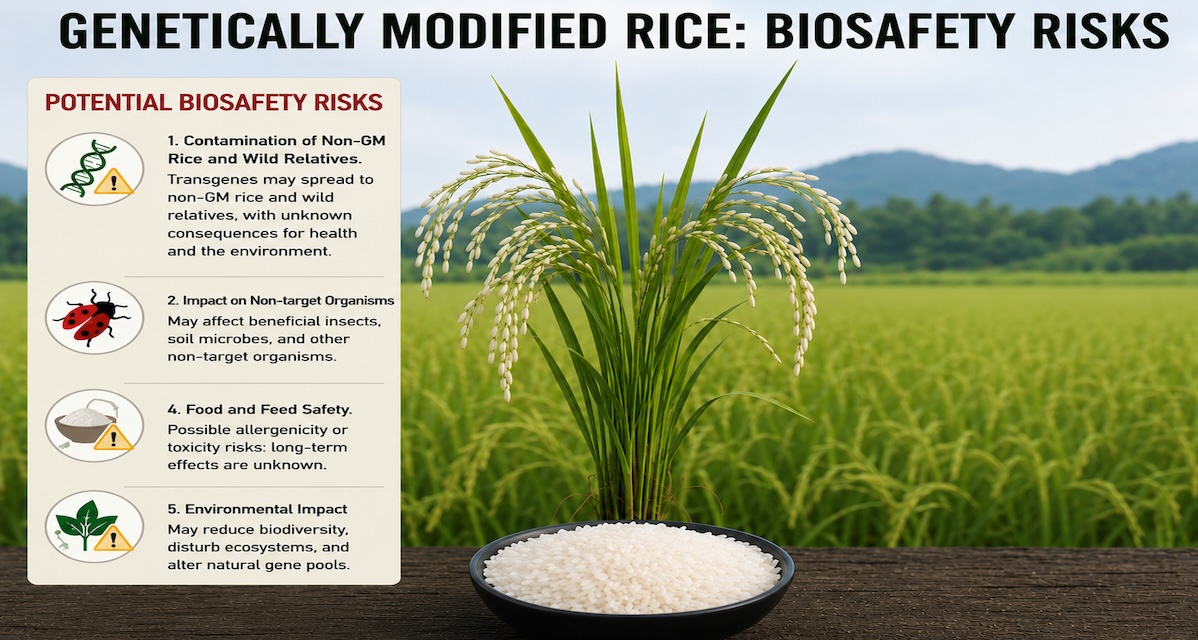
In the Philippines, the farmer-scientist network MASIPAG has “strongly and unequivocally” condemned the government’s approval of HIZ039 iron-zinc genetically modified rice, “which was issued under a biosafety regulatory system already found by the Court of Appeals to be deficient in upholding constitutional environmental safeguards and the precautionary principle”.
MASIPAG writes in a press release that the Court’s ruling on the Golden Rice and Bt eggplant cases found serious gaps in the government’s approval of these crops for commercial release, including weak risk assessment procedures, inadequate monitoring systems, and insufficient biosafety safeguards. MASIPAG says, “These deficiencies remain unresolved and are subject to continuing mandamus [court order], imposing a legal duty on regulatory agencies to undertake substantive reforms before further approvals are issued.”
MASIPAG continues: “The approval of HIZ039 [rice] raises serious legal and regulatory concerns, as it proceeds under the same contested framework without clear, independent, and verifiable structural reforms. Even more troubling, PhilRice has indicated that once biosafety approvals for HIZ039 are completed, the plan is to stack the already banned Golden Rice under the grounds of lack of comprehensive risk assessment, with HIZR traits to create a ‘3-in-1’ biofortified rice variety enriched with vitamin A, iron, and zinc. MASIPAG stresses that such actions risk undermining judicial directives and may be subject to legal challenge.
“More critically, the inadequacy of the current biosafety regulatory framework places the Filipino people’s constitutional right to adequate and safe food, as well as their right to a balanced and healthful ecology, in serious jeopardy. When regulatory safeguards are weak, fragmented, or inadequately enforced, the state fails in its duty to ensure that food entering the public system is subject to rigorous, transparent, participative, and science-based risk assessment. This exposes consumers to potential health uncertainties, undermines public trust in food governance, and erodes the precautionary protections guaranteed under the Constitution. In effect, regulatory failure becomes not merely an administrative gap, but a direct threat to public welfare and food safety.”
MASIPAG also cautions against the continued framing of malnutrition as a problem that can be solved through genetically engineered biofortified crops. It says, “This narrative obscures the structural causes of hunger and poor nutrition, including poverty, inflation, declining real incomes, and a food system shaped by long-standing agricultural liberalisation and corporate concentration. In reality, studies show that iron and zinc deficiency stem from several factors such as nutritional deficiencies, infections and diseases, socioeconomic factors among others. This implies that the problem is a systemic issue that cannot just be solved through technocratic solutions.
“At a time when Filipino farmers and consumers are facing rising production costs, volatile food prices, and increasing import dependence, the primary drivers of malnutrition are economic and structural – not the absence of engineered traits in rice. Technological fixes such as GM crops fail to address these underlying conditions and risk diverting attention from urgent systemic reforms.
“Rather than resorting to genetically modified rice, there are already abundant natural sources of iron such as meat, fish, poultry, and green leafy vegetables, among others. Similarly, zinc can be obtained from accessible and safe plant-based staples and highly bioavailable animal-source foods. Clearly, the focus should be on strengthening and promoting these existing solutions, instead of pursuing alternatives that risk creating even greater problems.
“We reiterate that genuine food and nutrition security cannot be achieved through isolated technological interventions. It requires a fundamental shift toward agroecological food systems that strengthen local production, reduce dependence on chemical inputs, protect seed and farmers’ rights, and build resilient and democratic food systems.”
MASIPAG is calling for the immediate suspension or review of the approval of HIZ039, full public disclosure of all biosafety and risk assessment documents, and strict compliance with the Court of Appeals ruling on Golden Rice and Bt eggplant.
MASIPAG is also calling on regulatory agencies to refrain from any further releases of genetically modified organisms while biosafety governance remains under judicial correction and public scrutiny. MASIPAG says it remains committed to advancing agroecology as the viable pathway toward genuine food sovereignty and long-term nutritional well-being.
Source: MASIPAG