



"A sad day for democracy and science"
1. A sad day for democracy and science – Save Our Seeds
2. IFOAM Organics Europe re-affirms commitment to produce without NGTs and warns of threats on European seed sovereignty – IFOAM
3. NGT plants: The EU fails to take the right decisions – Testbiotech
4. AbL: An irresponsible decision – AbL
---
1. A sad day for democracy and science
Save Our Seeds, 17 June 2026
Before the European Parliament voted today on the deregulation of new genetically modified crops, our team spent two days on the ground in Strasbourg.
Monday’s meeting of the Environment Committee (ENVI) already gave a hint of the direction the debate would take. Under the watchful eyes of numerous lobbyists from the agricultural and biotech industries, a compromise was rushed through that reduces transparency, weakens protection standards, and further increases the influence of patents on seeds.
Numerous committee members were replaced by alternates at the last minute, and key amendments were not put to a separate vote. Instead of an open political debate, the impression was one of a process designed primarily to conceal conflicts within the major political groups.
On Tuesday, we demonstrated in front of the Parliament alongside 200 farmers, beekeepers, breeders, environmental organizations, and consumer groups against the planned deregulation. Our team delivered the demands of more than 600,000 citizens from across Europe: Maintain labeling, ensure transparency, and limit patents on seeds!
Despite these warnings and despite continued strong public support for labeling and safety testing of new genetic engineering, the European Parliament voted today in favor of far-reaching deregulation.
Comment by Benedikt Haerlin, Coordinator of Save Our Seeds
Following today’s vote in the European Parliament, after a two-year transition period, there will no longer be any specific safety assessments, labelling requirements for food and animal feed, or traceability in the environment for most genetically modified crops. Exclusive patents can gradually undermine plant variety rights and their open-source rules regarding the free use of varieties for further breeding.
The genetic engineering lobby’s most recent successes at EU level in 1996 and 2008 have ultimately gone down in history as milestones in the public rejection of genetic engineering in food and agriculture. We will be working towards that outcome again this time. What today’s vote makes legally possible – the marketing of genetically modified crops without labelling and without further safety testing – has by no means been accepted by farmers and consumers.
It's the law, bro — but does it sell?
Over 90 per cent of the population wants new genetically modified organisms to be labelled and safety-tested just as the old GMOs. Today’s disregard for the wishes and concerns of the vast majority of the EU-population could therefore once again prove to be a decisive mistake. Save Our Seeds and many other organisations will continue to inform farmers and consumers – including the retail sector – which products contain GMOs. Clandestinity has never been a successful strategy for persuasion. The ‘GMO Brothers’ at Bayer, BASF, ChemChina-Syngenta and Corteva therefore still face the biggest hurdle to marketing their new, patent-protected genetically modified varieties.
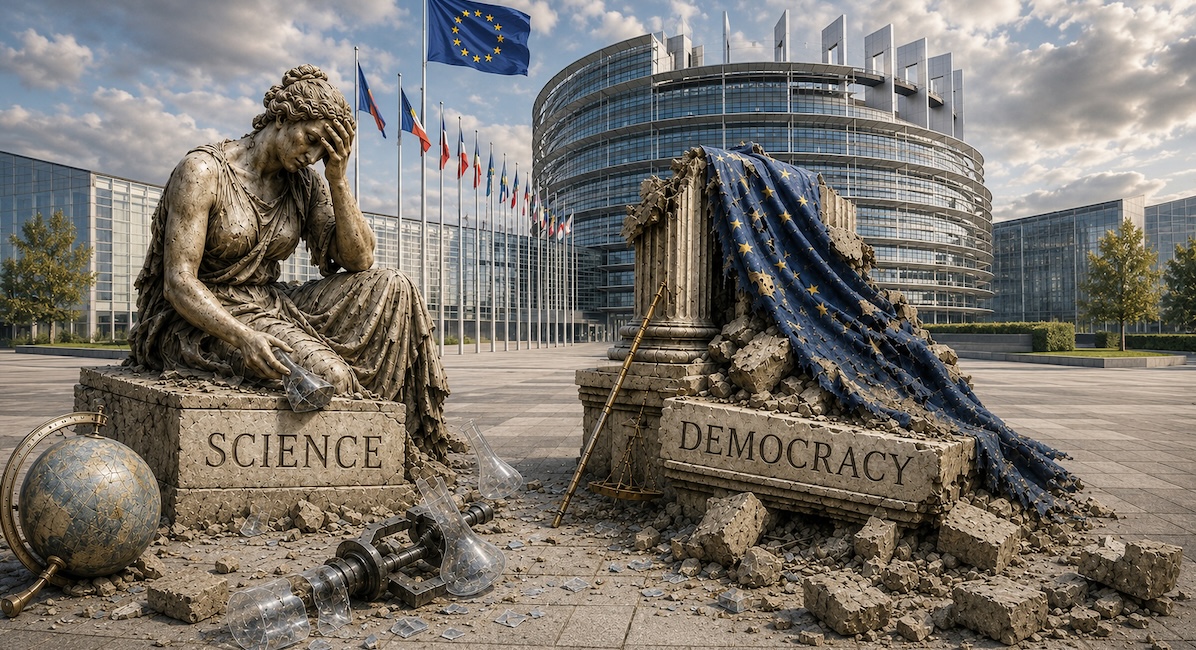
Nevertheless, the deregulation process adopted today marks the failure of an enlightened, democratic debate on technology in Europe. It calls into question both the integrity of leading scientific institutions – which have championed the cause with preposterous arguments – and the ethics of politicians from almost all political groups in the European Parliament. Instead of honestly communicating the state of their knowledge and lack thereof, as well as their doubts, they have chosen to issue blank cheques for potential future innovations using semantically carefully crafted narratives. Using tricks that cannot be scientifically justified, a distinction has been forced through between supposedly ‘natural’ and less natural genetically modified products, a distinction that makes no reliable statement whatsoever about their respective risks.
The telling silence regarding the real intention of the international genetic engineering corporations – to bring future plant breeding under the patent control of their legal departments – looks just as bad on publicly funded science, which of course also benefits from this, as on politicians who, in the name of supposed competitiveness and innovation, are privatising intellectual property rights over seeds, curtailing citizens’ freedom of choice and jeopardising the protection of health and the environment.
Alternative truths from science?
This failure of democratic discourse on technology undermines the credibility of organised science and the already limited trust in the integrity of politics. Incidentally, the majority that voted in favour of this today in the European Parliament would not have been possible without the support of the far right.
However, at a time when it faces its greatest threat, this decision also constitutes an attack on a socially binding concept of truth: when semantic contortions such as ‘new genomic techniques’ – rather than genetic engineering – become the basis for addressing the risks involved and citizens’ right to self-determination, and when fear-free scientific discussion is no longer possible, Europe’s democracy has lost an important foundation for future decisions.
Commission goes viral: GM-microorganisms
Unfortunately, such decisions are likely to be on the agenda before the end of this year on a much more radical proposal for dismantling of the Genetic Engineering Act – one that poses a far greater threat to freedom of choice, the environment and public health. The EU Commission has moved ahead, and the Council and Parliament are currently negotiating its proposal to massively relax the rules on the release of genetically modified microorganisms (ranging from bacteria to fungi and viruses) into the environment!
Photo ©Annemarie Volling (AbL) — Save Our Seeds Team, Franziska Achterberg and Alina Banse in front of the European Parliament
Further information
Inf’OGM: La déréglementation des OGM/NTG adoptée à Strasbourg
Friends of the Earth Europe: EU lawmakers scrap basic rights for consumers, breeder, food sector
Arche Noah: NGT Vote: European Parliament opens the floodgates to a wave of patents
Testbiotech: NGT plants: the EU fails to take the right decisions
---
2. IFOAM Organics Europe re-affirms commitment to produce without NGTs and warns of threats on European seed sovereignty
IFOAM, 17 June 2026
After today’s adoption by the European Parliament of the legislation on plants obtained by New Genomic Techniques (NGTs), the organic movement reaffirms its commitment to produce food without NGTs and warns that additional measures will be needed to protect European seed sovereignty.
The new rules exempt so-called NGTs from key requirements that apply to other genetically modified organisms (GMOs), including risk assessment procedures, traceability and consumer labelling. While this represents a step backwards for biosafety, transparency and freedom of choice, the mobilisation of the organic movement has secured important safeguards: NGTs will remain prohibited in organic production, and seed lots containing NGTs will have to be labelled, providing farmers with the minimum information necessary to avoid planting NGT crops.
The most worrying concern left unresolved by today's vote is the issue of patents on traits and genetic sequences, which risk limiting access to genetic resources, reducing innovation, increasing dependencies, and will lead to increasing market concentration within the food system.
According to Jan Plagge, IFOAM Organics Europe president: “The organic movement remains committed to producing food without GMOs and without NGTs, and will continue to engage in systemic and open-source agroecological innovation to make whole farming systems more sustainable. The alleged benefits of NGTs are based on pure speculation, and we urge policy-makers to pay more attention to who controls the technologies they choose to deregulate, and to the impact of technologies like NGTs on European food sovereignty.”
Like many scientists, civil society organisations, farmers, processors and retailers, the organic movement remains convinced that systemic approaches to farming, innovation, breeding, and pest and disease management offer a more effective path towards long-term sustainability and resilience.
Despite repeated warnings from farmers, breeders and civil society organisations, a majority of MEPs chose not to strengthen safeguards against harmful effects of too broad and strong intellectual property rights like patents. In the run-up to the vote, amendments were tabled to strengthen safeguards against the harmful effects of patents on seeds and genetic resources. These measures to limit the scope of patents aimed to preserve fair competition, support Europe's diverse breeding sector and protect breeders and farmers' freedom to operate. IFOAM Organics Europe will continue advocating for limits to the scope of patents to ensure that the hundreds of small and medium-sized breeding companies that form the backbone of Europe's seed sector can continue their work. Safeguarding biodiversity and breeding diversity remains essential for European sovereignty and long-term food security.
---
3. NGT plants: The EU fails to take the right decisions
Testbiotech, 17 June 2026
* Final approval for the deregulation of plants obtained from new genetic engineering
The European Parliament has given final approval to the proposed deregulation of plants obtained from new genetic engineering (or new genomic techniques, NGT). Amendments to the regulation failed to gain a majority. As a result, the highly controversial legislation has been passed. The new regulation is based on scientifically unsubstantiated thresholds, and exempts approximately 90 percent of NGT plants from crucial provisions in current legislation.
NGT plants can now be brought to market without undergoing environmental risk assessment. Health risks will only be assessed in specific cases. In addition, there are no requirements for food product labelling or methods of detecting the NGT plants.
Testbiotech believes that civil society now needs to face the serious challenges that this new legislation will bring and push back with countermeasures. Testbiotech plans to play a role in this respect: data on releases and approvals will be systematically collected and evaluated. Thereby, Testbiotech will endeavour to provide greater transparency and push for higher standards in the approval process. For this purpose, a publicly accessible database will be established. Furthermore, Testbiotech also believes that there would be good chances of winning a court case against the new legislation, if started.
Testbiotech is also warning that the EU may go further and lower standards for the release of genetically engineered microorganisms and animals. Instead of simply following unsustainable promises made by the biotech industry, the EU should now prioritize the protection of health and the environment. Unless appropriate measures are implemented, ecosystems could quickly reach the limits of their functionality. Fast-track releases of genetically engineered organisms will also endanger agriculture and food production.
---
4. AbL: An irresponsible decision
AbL, 17 June 2026
* Legal and political resistance and self-help are now called for
Today, the European Parliament approved a draft law on NGT crops by a majority vote. Not a single one of the more than 40 amendments was adopted. According to the Working Group for Peasant Agriculture (AbL) e.V., the draft legislation is unacceptable in many respects; for this reason, AbL e.V. had previously called on the Parliament to clearly reject the draft legislation.
Claudia Gerster, a farmer in Saxony-Anhalt and Federal Chair of the Working Group for Peasant Agriculture (AbL) e.V., comments:
“From the AbL’s perspective, today’s decision by MEPs is irresponsible. Farmers have been highlighting the serious consequences of this unacceptable draft legislation over recent months. Their right and ability to continue producing GMO-free food in the future would be under massive threat, and with it their economic livelihoods and competitive advantages. There has also been strong criticism from the scientific community and legal experts, who have called for the precautionary principle and European fundamental rights to be safeguarded. National governments and the European Parliament had ample time to address the well-founded substantive criticism of the draft legislation. They have chosen to support a handful of GM companies and their untenable promises. It is foreseeable that NGT techniques will not produce any drought-tolerant or flood-resistant NGT crops. Companies can secure their profits – entirely without labelling or freedom of choice, and without legally binding bans on patents. We, as farmers, and society as a whole will have to bear the costs of foreseeable risks and damage. In our view, this is irresponsible.”
Gerster continued:
“The AbL will not accept this outcome. We call for a democratic debate on the future of our livelihoods and our food production. We will therefore exhaust all political and legal possibilities to ensure that the rights of farmers, breeders, processors and consumers are restored. The AbL is currently considering legal action against the deregulation on NGT crops. We will support farmers and all other partners in the value chain who wish to continue farming without GM crops, and organise self-help measures.”