







Deregulation proposal favours political and economic objectives at the expense of the precautionary principle and the public interest, say agriculture experts
The Panhellenic Federation of Agronomists’ Associations (abbreviated in Greek as POSG), the primary professional and scientific organisation representing agronomists (agricultural scientists) across Greece, has strongly criticised the EU’s deregulation plans for genetically modified plants and products derived from new genomic techniques (NGTs). In a press release, POSG writes[1]:
It is our assessment that the implementation of the proposed regulation will lead to:
- A serious lack of information regarding the food that citizens choose. The absence of clear and mandatory information deprives consumers of their fundamental right to free and informed choice, as they do not know exactly what they are consuming.
- Reinforcing a system of dependence for producers, with serious consequences for the functioning of agricultural production and the preservation of their autonomy, particularly with regard to seeds and plant propagating material. This dependence may have significant legal and economic implications due to the patenting of genetic material.
- The increased risk of widespread contamination of conventional and organic crops by plants derived from new genomic techniques, a fact that threatens the security of production systems and the sustainability of distinct production chains.
- Unforeseeable impacts on biodiversity – which is one of the country’s competitive advantages – while simultaneously undermining the identity, reputation, and added value of Greek agricultural products.
Overall, these developments raise serious questions regarding the protection of public health, as well as the safeguarding of fundamental democratic rights, such as the right to information, transparency, and freedom of choice.
It should be noted that many of the above conclusions are also reflected in the relevant opinion of the European Economic and Social Committee to the European Commission (NAT/908 – “Plants produced using new genomic techniques – NGT”).
Here are some of the main points of contention regarding the proposed regulation:
1. Classification of NGT1 and NGT2 [these are GMOs that are claimed to be ‘conventional-like’ and so it is proposed that they can evade regulation and labelling if categorised as NGT1, and that they are subjected to a weakened risk assessment if categorised as NGT2]. The proposed distinction between NGT1 and NGT2 introduces a differentiated regulatory framework, which provides for simplified procedures for the NGT1 category. We express our concern as to whether this categorisation adequately reflects the scientific complexity of the techniques used and their potential impacts. In other words, there is a risk that the primary criterion for the dissemination of these specific techniques will not be a scientifically substantiated risk assessment, but will instead be based more on political and economic objectives linked to the promotion of “innovation” and competitiveness, at the expense of the precautionary principle and the protection of the public interest.
2. Equivalence criteria and risk assessment. According to the proposal, certain NGT1 interventions are treated with a regulatory approach similar to that applied to conventional products. This concept of “equivalence” between a conventional plant and one that has undergone up to 20 genetic modifications [the criterion for the GMO plant being categorised as NGT1], as introduced by the proposed regulation, is not based on specific scientific data but constitutes an arbitrary legal/political construct; for this reason, it is contested by many European scientific bodies (such as, for example, ENSSER – European Network of Scientists for Social and Environmental Responsibility).
3. Labelling and consumer information. The proposed framework provides for variations in labelling requirements for NGT 1 products [essentially that consumer labelling is not required, unlike with other genetically modified products – see point 4 below for more on this]. POSG considers that the adequacy and transparency of information provided to consumers are critical matters of public interest and must be ensured in a clear and uniform manner.
4. Traceability and controls. The proposed declaration and verification procedure for NGT1 products may limit the ability to ensure full traceability at all stages of the production and distribution chain. Furthermore, there are concerns regarding the handling of confidential information and the degree of transparency of the data that will be available to competent authorities and the public.
The requirement, in effect until now, to label products as containing NGT1 is being abolished, constituting a flagrant violation of democratic and human rights regarding access to information, particularly regarding food. Labelling is required only for NGT1 propagation material. It allows for the free movement of NGT1 plants and products within the production company by means of a simple “NGT1 status declaration”, which the competent authority is only required to verify.
The requirement for this verification process does not apply to the offspring of these plants.
During the verification process, the production company intervenes by designating which details it considers confidential; consequently, these details will not be made public.
It abolishes the procedure for authorising entry into the country. It removes the right of Member States to refuse the importation and movement within their territory of NGT1 plants and products. This right is reserved solely for NGT2.
5. Crop coexistence and the risk of contamination. There are concerns regarding the adequacy of the proposed mechanisms for preventing contamination between different types of crops (conventional, organic, and NGT). The need for a clear definition of liability and compensation mechanisms in the event of adverse effects is emphasised.
6. Intellectual property rights and access to seeds. The strengthening of intellectual property rights over plant genetic resources raises questions about its long-term impacts on:
- producers’ access to propagating material,
- the self-sufficiency of farms, and
- the preservation of traditional practices involving self-produced seeds.
7. Impact assessment. It should be noted that the provision for a subsequent assessment of the regulation’s impacts (several years after its implementation) raises questions regarding the precautionary principle, particularly in areas related to the environment and public health.
In light of the above, the POSG Board of Directors:
A. Calls on the Greek government and Greek Members of the European Parliament:
- To advocate, within the European Union, for the retention of mandatory risk assessment, labelling, and traceability for all categories of organisms derived from GMOs, regardless of the degree of genetic modification. This intervention ensures a high level of protection and aligns with the principle of transparency in the food chain.
- To ensure the right of Member States to impose restrictions or bans on the cultivation of GMOs, in accordance with the principles of subsidiarity and the protection of the public interest.
- To establish a clear, practical, and scientifically sound regulatory framework to prevent and manage cross-contamination between crops, which should include: monitoring and detection mechanisms, as well as liability and compensation provisions; in this context, the application of the “polluter pays” principle should be tailored to take into account the specific characteristics of NGTs, particularly with regard to the ability to detect and document a causal link.
- To protect organic farming, traditional varieties, and PDO [Protected Designation of Origin] products, which are key pillars of Greece’s agricultural identity.
- To ensure that citizens are adequately informed and that transparency is maintained throughout the food supply chain, an essential element for social acceptance and trust.
Greece possesses a unique plant heritage characterised by exceptional biodiversity, high quality, and international recognition. We consider it our duty to defend public health, the environment, agricultural production, and consumers, ensuring that any technological advances are implemented under scientifically sound and socially responsible conditions.
B. Given the critical nature of these developments and the urgency of the decisions:
- We call for a vote against the proposed regulation;
- We expect the Government and the country’s representatives from all political parties to take a corresponding stance in the upcoming EU vote.
C. Call to organisations. POSG calls upon:
- POSG member associations, GEOTEE, PEGDY, POGEDY, and all relevant scientific and professional organisations to contribute to the public dialogue and support this campaign.
- Agricultural sector organisations to inform their members and actively participate in this joint effort.
Notes
1. Text in square brackets is clarification by GMWatch.
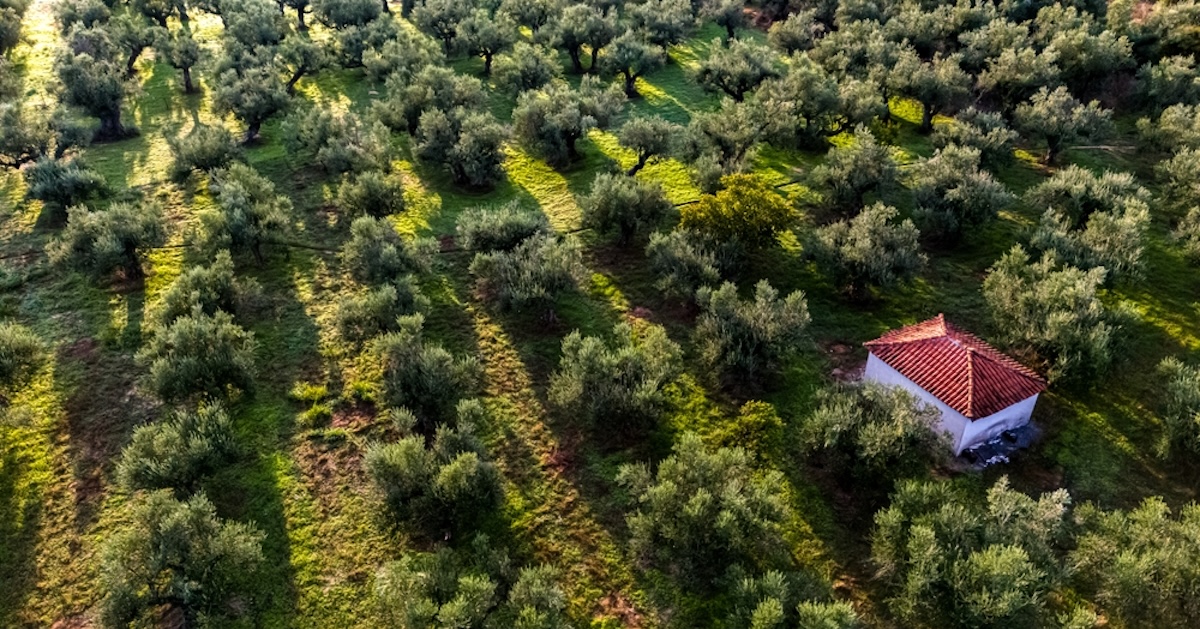
Image: Shutterstock (licensed purchase)