



Deregulation of new GM crops will increase seed market concentration, undermine resilience of the food system. By Corporate Europe Observatory and GMWatch
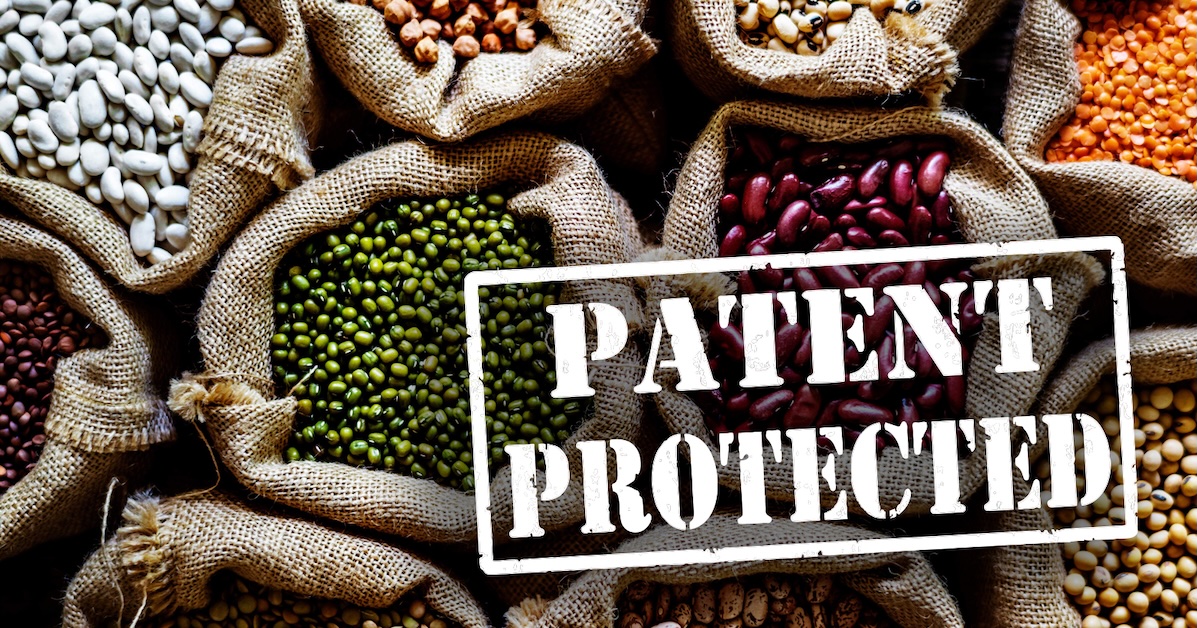
Industry lobby documents reveal a fierce ongoing battle on patented seeds and agricultural crops. A new EU law that would scrap any safety or labelling rules for a class of new GM crops produced with new genomic techniques (NGTs) is in its final stages. As all GM crops are covered by patents, this will negatively impact the way our food is produced – meaning more market power in the hands of just a handful of corporations, less choice in seeds for farmers and more risk of being sued, and restricted access to plant genetic material for smaller plant breeders. This raises strong concerns, as our food security depends on the availability of diverse and locally adapted seeds.
Members of the European Parliament in 2024 supported measures to curb patents for NGT seeds and crops, but this crucial demand was lost in the negotiations between the EU institutions. In May the Parliament will have a final opportunity to reinstate this demand.
For over a decade, the biotech industry has been waging a lobby battle with the aim to dismantle the EU GMO safety and transparency rules. While the European Commission is currently busy rolling back health, environmental and social standards through numerous Omnibus proposals, this deregulation proposal (COM/2023/411) of the EU GMO law has been in preparation for several years. The Commission’s proposal would mean that new genetically modified NGT crops would enter the market without any safety checks, consumer labelling, monitoring or liability rules. It would also mean that independent seed breeders and farmers would be left in the dark about patents, have less choice of seeds and crops, and face higher costs.[1]
In March 2025, under the Polish Presidency, EU countries agreed to a position implying a far-reaching deregulation. Up until that point, Poland had vehemently opposed patented crops in Europe’s fields. But the proposal it put forward was void of any meaningful action regarding patents – only mentioning a voluntary disclosure of patent information on a GM crop, unverified by any authority. An investigation published in EUobserver exposed the pressure that had been put on Poland.[2] Big biotech multinationals tried to convince Polish seed companies to join their patent platform.
Now, in the final phase of decision making, with a plenary vote foreseen for 18 May, MEPs will have to make up their mind: stand up for a ban on patented plants and foods and for consumer choice – or abandon the rights of farmers, breeders, and consumers.
The European Commission has released a cache of lobbying documents on the NGT deregulation proposal in response to an access to information request from Corporate Europe Observatory (CEO).
The documents show in particular
- How farm lobby Copa-Cogeca in a 2025 letter to the EU institutions clearly spelled out the disadvantages of patented food crops for farmers. However, later in the year, the group called for the new deregulation law to pass and stayed silent on the unresolved patent issue, leaving plant breeders and farmers at the mercy of patent infringement allegations by patent owning companies.
- How the pesticide and biotech industry lobby group CropLife Europe actively tried to allay widespread concerns about the increase in patented crops in the marketplace that would be triggered by the proposed deregulation of GM NGT plants.
Patents a sticking point
The patents issue has proven a sticking point for the European Parliament,[3] EU Member States, farmers,[4] and plant breeders.[5] Farmers worry that they will be sued for patent infringement if their crops are alleged to contain patented GM NGT genetic material, whether resulting from contamination by untraceable patented GMO NGT plants or from native genes or genetic material derived from traditional, non-patentable breeding. Plant breeders are concerned that GM NGT deregulation will usher in a wave of patented GM NGT plants that will severely restrict access to valuable non-GMO plant genetic material to use in their breeding programmes.
Many organisations defending food safety, the environment, farmers’ rights, and science (including farmers organisation Via Campesina, IFOAM Organics Europe, the European non-GM food sector organisation ENGA, foodwatch, Friends of the Earth Europe, and scientist organisation ENSSER) have repeatedly spoken out against the NGT deregulation and oppose the increasing trend of patents on GM NGT plants extending to plants produced from conventional breeding.[6]
This is a growing problem. Patents affecting over 1000 conventionally bred plant varieties have been granted by the European Patent Office (EPO), contradicting its own rules.[7] Patents are granted that claim traits obtained by genetic engineering techniques like gene editing, but also include the same traits obtained by conventional breeding. By law, patents should only cover genetic engineering and not conventional breeding. Indeed, EU law bans patents on conventional breeding, but as reported by the coalition No Patents on Seeds!, the EPO continues to ignore this provision.[8]
Recently a patent was granted on tomatoes resistant to a plant virus, a trait found in wild tomatoes from Peru, to the Dutch seed company Rijk Zwaan. This patent appears to be unlawful, as natural genes cannot be considered inventions. These and other patent applications hinder breeding programmes, such as that of the Dutch organic seed company De Bolster, which is also working to develop tomatoes resistant to this virus.[9]
Other examples of recently granted patents, the scope of which can extend to naturally occuring genes, include maize, spinach, tomatoes and lettuce.[10] This trend would escalate with any deregulation of NGTs, because like all GM technologies and products, NGTs and the products made from them are patented.
Phillip Howard, food system expert at Michigan University, explained in the Dutch magazine De Groene that the seed and pesticide corporations like Bayer have adopted a cartel-like strategy by building several patented traits into seeds, which leads to “a reduced number of available varieties for farmers, pushes them to buy more expensive ones, and where possible link[ing] those seeds to their own pesticide products.”[11]The result is a dangerous dependence on just a few companies by farmers, which poses a significant risk to the food system as a whole.
Eight farmers’ associations, the plant breeders association, rural organisations and the organic sector in Germany said in a joint statement that unrestricted access to biological material for plant breeding is essential to “guarantee the range of varieties in a large number of crops for sustainable agriculture that takes account of ecological and economic challenges” and that this can only be achieved “if the plant variety protection system is not undermined by the patent system”.[12]
The Secretary-General of the German Farmers’ Association DBV, Stefanie Sabet, warned in response to the negotiation outcome in December 2025 that the potential introduction of patents crosses a clear red line for the organisation. “Patents must not be allowed to block progress in plant breeding progress. If key plant characteristics are monopolised by individual companies, our farmers and small and medium-sized breeders will lose access to important genetic material,” she said.[13]
For these reasons, in the trilogue discussions on the NGT deregulation proposal, the European Parliament voted for measures to curb patents on (deregulated) NGT plants and to restrict their scope.[14] However, by the final negotiation outcome from December 2025, the Parliament’s demands had been overruled and ignored.[15] Therefore the patent issue is still causing concern for numerous actors who want to ensure that the plant breeding and agricultural sectors are protected from the chilling effect of lawsuits brought over the use of patented genetic material.
Their objections are intensified by the consolidation of NGT patent ownership in the hands of a few powerful players with deep pockets. The patent landscape for “new GMOs” made with gene editing tools such as CRISPR/Cas is dominated by the big seed firms, notably Corteva and Bayer, and some academic institutions.[16] Other big European patent holders include the multinational companies KWS Saat and Limagrain/Vilmorin.[17] These corporations want to have it both ways: on one hand they claim that these new GM crops are “equivalent” to conventionally bred crops, so there is no need for risk assessment; but at the same time they base their patent applications on claims that they are very different and a genetic engineering “invention”.
Copa-Cogeca understands the patent threat – but goes silent on the issue
In a letter of May 2025, Copa-Cogeca strongly opposed patents on GM NGT crops. Uncompromising in its warning, Copa-Cogeca stated: “It is essential that the European Parliament, the Council, and the European Commission agree without delay on effective legal reforms that clearly limit the scope of patent protection in plant breeding. Only through such targeted legislative action can we preserve fair competition, foster agricultural innovation, and secure the future of sustainable food production in the EU.”
Copa-Cogeca said it supported the Community Plant Variety Right (CPVR) system, which protects breeders’ intellectual property rights to plant varieties they develop while providing a breeders’ exemption, which allows protected varieties to be used freely in further breeding, on condition, however, that they remove the patented genes. CPVR also provides an exemption for farmers, who may use their own farm-saved seed on condition that they pay licence fees to the breeders.[18]
In a meeting in July 2025, Copa-Cogeca reiterated its concerns “about the potential impact of the patenting of NGT plants on the future diversity and affordability of seeds for farmers”, while agreeing with the scrapping of biosafety rules for these crops.[19] However, in September 2025, without any meaningful solution to the patent issue being written into the deregulation proposal, Copa-Cogeca wrote again to the Commission, reiterating that the “legislation on NGTs must be adopted without delay”. The letter did not mention patents at all.[20] Copa-Cogeca called again for “swift conclusions on the negotiations” in a meetingon 3 November with DG SANTE.[21]
Copa Cogeca’s ambiguous position was also evidenced in an earlier message to politicians claiming the issue of patents is separate from the issue of NGT deregulation.[22] It thus appears that Copa-Cogeca’s lobbying abandons farmers and breeders to an increasingly concentrated seed market and a legal minefield of patent infringement claims.
CropLife Europe and Euroseeds want to tie farmers and breeders to patents and and replace public law with private licensing platforms
The pesticide and biotech industry lobby group CropLife Europe wrote to the Commission in October 2025, seeking to allay fears over the impact of patents on farmers and breeders.[23] However, CropLife’s arguments are largely irrelevant to the real concerns being raised.
With its letter, Croplife Europe sent the Commission a report it commissioned that assesses the current intellectual property landscape in the EU and its implications for various stakeholders.[24] In its report, CropLife seeks both to calm fears over the impact of patents on farmers and breeders and to defend the patent model. It also attached a letter signed by 32 companies, including Bayer, BASF, Corteva, Syngenta and Limagrain, “underscoring the importance of robust IP [intellectual property] protection in fostering agricultural innovation”.[25]
Here are the key arguments from the biotech industry and why they are flawed:
- Voluntary licensing platforms: Large seed companies and lobby groups Euroseeds and Croplife Europe held various meetings with the Commission throughout 2025 advocating for licensing platforms that would ensure “plant patents on fair, reasonable and non-discriminatory terms in order to facilitate breeders’ access to patented plant material.”[26] In October 2025 Euroseeds and its members Bayer, Limagrain, Corteva, Syngenta, and KWS Saat had a meeting with Irene Sánchez, head of unit at DG SANTE, in which they claimed their industry had a “commitment to addressing the smaller breeders’ and farmers’ concerns regarding patents via the established patent licensing platforms”.[27] Croplife in the same month wrote to the Commission regarding these “existing initiatives to enhance the transparency and access to patented plant-related inventions, such as the PINTO database, the ILP Vegetables and the Agricultural Crop Licensing Platform (ACLP)”.[28]
However, as confirmed by a report by the consultancy Technopolis for the European Commission, voluntary platforms and transparency are not enough to palliate the detrimental effects of patents on plant innovation in general. Voluntary initiatives such as ALCP are especially flagged as being potentially deterrent for innovation as they are voluntary and incomplete, and cannot substitute for clear legal certainty and limitations on patents that impact plant breeding and agricultural production.[29] Under the ACLP (founded by Corteva, Bayer, BASF, Syngenta and Limagrain), for instance, the extent of access to patent-protected traits is defined by themselves under private law.[30] CropLife’s claim that licence rates will be “fair” does not provide any guarantees that that will be the case. - Farmers’ seed saving rights: CropLife claims that farmers’ seed saving rights are maintained. It states: “In the EU, farmers growing fodder plants, oilseeds, cereals or potatoes retain the right to save and reuse seeds, even when those varieties contain patented traits. However, this right, established in Regulation No 2100/94 on Community plant variety rights,[31] applies only to these crops, not all food crops. Also, the right requires payment to the intellectual property holder, albeit with exceptions for very small farmers (such as an arable farmer producing cereals on no more than 15 hectares); and the seeds must be produced on the farmer’s own holding and used on that same holding – selling or exchanging saved seeds is prohibited.
- Industry suing farmers: CropLife claims that its members won’t sue farmers for inadvertent patent infringement: “We wish to reiterate our members’ commitment not to enforce their patents against farmers for unintentional minor presence of a patented trait in their field.” However, unless and until it is formally incorporated into European or national law, this declaration has no legal force, including for CropLife members; it cannot be extended to non-members or regarded as valid indefinitely. There are numerous documented cases of biotech companies suing farmers for alleged patent infringement when the companies’ patented genes have turned up in the farmers’ fields.[32] In addition, the terms “unintentional” and “minor”, when applied to the presence of patented genes in a farmer’s crop, are open to interpretation by biotech companies and their lawyers. To protect farmers and breeders from false allegations of patent infringement, detection methods for all GM NGT plants, which developers will certainly have in-house or they would not be able to protect their patents, must be made publicly available. Applicants must also be required to supply NGT plant reference material to GMO control labs to enable detection.
- Numbers of patents: CropLife claims that patentability criteria are applied strictly by the European Patent Office (EPO), with only about 30% of patent applications for GM NGT-related inventions granted. However, a search on CRISPR + plants in the European jurisdiction alone turned up 3,327 records.[33] Even if “only” 30% of those are granted, that’s more than enough to tie up breeders and farmers in patent wars. In addition, there is the dangerous trend whereby the EPO is granting patents that cover conventionally bred traits as well as GM NGT-developed traits (see “Patents a sticking point”, above).
- Patent ownership: CropLife claims that patent ownership is “broad and diverse”, with 28% of NGT-related applications coming from academic and research institutions, “showing a competitive and diverse innovation landscape”. But while academic and research institutions often develop NGT “inventions” and patent them, on their own they often cannot afford to commercialise NGT organisms. The institutions will then typically license the product or technology to a company, or sell it outright to them. Even if they retain the patent rights, the farmer or breeder who wants to use the patented traits still has to pay licensing fees and/or royalties to the patent owner. So CropLife’s statement is irrelevant to the threat posed by patents to farmers and breeders.
- Patents and innovation: CropLife says that the Plant Variety Protection (PVP) system protects entire plant varieties, but patents protect individual traits. CropLife argues that both systems, working together, are necessary for “innovation”. However, patents on traits cover all plants that incorporate them. This is shown time and again in the patent claims of the industry, which begin with the term, “A plant comprising...” Therefore, these patents could cover hundreds of plant varieties, not just one, which would lead to a much broader negative impact of monopolisation. This will stifle innovation by independent breeders. Therefore, strong protections must be established for farmers’ and breeders’ access to plant genetic material.
What about the promise of sustainability?
Industry has always claimed that genome editing would contribute to sustainability aims and used that as a reason for the deregulation of new GMOs.[34] But the biotech seeds lobby actually opposed mandatory sustainability criteria for the deregulated NGT status. In an October 2025 meeting with the Commission, the seeds lobby group Euroseeds and member companies Limagrain, Bayer, Corteva, KWS and Syngenta expressed “concerns that making sustainability a condition for category 1 NGT status would impose a heavy regulatory burden on NGT plants, and raised questions about how sustainability could be assessed at that stage”.[35]
Indeed, in the final text there are no mandatory sustainability criteria for the deregulated group of NGT products (category 1). Regarding sustainability, the only exceptions for deregulation are those products that are tolerant to herbicides or have known insecticidal effects. Otherwise, only a monitoring of sustainability impacts of NGTs is included in the text.
New law brings less safety, more patent control – what will Parliament do?
In December 2025, despite all opposition, a final compromise was reached between the EU Member States and the European Parliament’s rapporteur, with the latter giving up on the Parliament’s key demands for labelling and a ban on patents. Instead, weak proposals were adopted, such as a public database for patent information for NGT1 products (those assumed to be equivalent to conventional plants), the Commission setting up an expert group, and introducing a voluntary ‘code of conduct’ for patent holders to give licences.[36]
These weak provisions do not offer any meaningful protection for farmers and breeders against allegations of unlicensed use of patented genetic material in conventional and organic crops, foods, and food products at any point in the supply chain. Breeding programmes risk being abandoned due to the increased monopolisation of plant genetic material by patent owners and the consequent threat of patent infringement claims.[37]
The deregulation of NGTs is set to lead to further monopolisation in the food chain by large agribusiness companies, through the patenting of food crops. The European Parliament should vote to uphold its demands for mandatory labelling from seeds to consumer products, as well as for measures ensuring small- and medium-sized seed companies and farmers and the wider food system are not adversely impacted by patented crops.
References
[1] Clergeau C, Petersen K (2025). Who really benefits from new genomic techniques? Farmers and consumers at risk. Euractiv, 10 Mar. https://www.euractiv.com/opinion/who-really-benefits-from-new-genomic-techniques-farmers-and-consumers-at-risk/
[2] Prtorić J, Galindo G (2025). Unpacking EU’s food fight over new gene-edited supercrops. EUobserver, 13 Mar. https://euobserver.com/46146/unpacking-eus-food-fight-over-new-gene-edited-supercrops/
[3] Osborne Clarke (2025). European Council adopts negotiating mandate on patents for gene-edited plants. 16 Apr. https://www.osborneclarke.com/insights/european-council-adopts-negotiating-mandate-patents-gene-edited-plants#:~:text=EU%20moves%20closer%20to%20regulatory,Gene%20editing
[4] ECVC (2024). Patents on new genomic techniques: Briefing note. June. https://www.eurovia.org/wp-content/uploads/2024/09/2024-06-Patents-on-NGTS-ECVC-Briefing-note-EN.pdf
[5] Council of the EU (2025). New genomic techniques: Council and Parliament strike deal to boost the competitiveness and sustainability of our food systems. 4 Dec. https://www.consilium.europa.eu/en/press/press-releases/2025/12/04/new-genomic-techniques-council-and-parliament-strike-deal-to-boost-the-competitiveness-and-sustainability-of-our-food-systems/
[6] Greenpeace et al (2025). Joint statement on the deregulation of new GMOs. 11 Feb. https://corporateeurope.org/sites/default/files/2025-02/FINAL%20-%20Joint%20statement%20-%20New%20GMOs%20-%2010.02.pdf
[7] No Patents on Seeds! (2025). Just 7 patents affect 145 conventionally bred plant varieties. 10 Dec. https://www.no-patents-on-seeds.org/en/7-Patents
[8] GMWatch (2026). European Patent Office turns its back on EU decisions. 14 Jan. https://www.gmwatch.org/en/106-news/latest-news/20628 ; GMWatch (2024). 20 new European patents on conventionally bred seeds. 15 Oct. https://www.gmwatch.org/en/106-news/latest-news/20469
[9] Biojournaal (2025). Verzet tegen patent op klassieke veredeling laait weer op door ToBRFV. 13 Jun. https://www.biojournaal.nl/article/9737213/verzet-tegen-patent-op-klassieke-veredeling-laait-weer-op-door-tobrfv/
[10] No Patents on Seeds (2026). European Patent Office tries to knock out European patent law. 19 Feb. https://www.no-patents-on-seeds.org/en/patent-law
[11] Galindo G, Prtorić J (2025). Verstrikt in het patentenweb. De Groene Amsterdammer, 9 Sept. https://www.groene.nl/artikel/verstrikt-in-het-patentenweb
[12] Bundesverband Deutscher Milchviehhalter e.V. et al (2025). Urgent restriction of bio-patents for breeding and agriculture. 13 June. https://www.organicseurope.bio/content/uploads/2025/06/IFOAMEU_policy_Positionspapier_Biopatente_DE_EN-translation_20250617.pdf?dd The original statement in German is here: https://www.ekd.de/ekd_de/ds_doc/2025-06-12_Positionspapaier_Biopatente_final_komplett.pdf
[13] DBV (2025). Trilog zu Neuen Züchtungsmethoden: DBV warnt vor Patentrisiken. Sabet: Keine Kompromisse zu Lasten der Landwirtschaft. 1 Dec. https://www.bauernverband.de/fileadmin/user_upload/dbv/pressemitteilungen/2025/KW_49/2025_-_PM_116_Trilog_zu_Neuen_Zuechtungsmethoden.pdf
[14] Marks & Clark (2024). EU NGT proposal approval. 14 Feb. https://www.marks-clerk.com/insights/latest-insights/102jvrc-eu-ngt-proposal-approval/
[15] Shah P (2025). EU agrees on NGT plant regulation: what it means for patents and licensing. Dec. https://www.hgf.com/knowledge-hub/blog-posts/eu-agrees-on-ngt-plant-regulation-what-it-means-for-patents-and-licensing/
[16] Testbiotech (2021). New GE and food plants: The disruptive impact of patents on breeders, food production and society. June. https://www.testbiotech.org/wp-content/uploads/2021/06/Patents_on-new-GE.pdf ; Onorati A (2026). NGT patents, seed market and investments. ECVC, 9 Mar. https://www.gmwatch.org/images/reports/NGT_Patents_Seed_Market_EU_Regulation-_EN_automatic_translation.pdf
[17] Onorati A (2026). NGT patents, seed market and investments. ECVC, 9 Mar. https://www.gmwatch.org/images/reports/NGT_Patents_Seed_Market_EU_Regulation-_EN_automatic_translation.pdf
[18] Copa-Cogeca (2025). Letter to Commission. 21 May. Subject: new genomic techniques (NGTs) and patent protection. Ref.LETTER (25)01454. https://www.gmwatch.org/images/CEO_documents/14_Letter_from_Copa-Cogeca_on_new_genomic_techniques_NGTs_and_patent__protection.pdf
[19] Minutes of meeting between European Commission and Copa-Cogeca, 3 Jul 2025. https://www.gmwatch.org/images/CEO_documents/MeetingMinutes-5.pdf
[20] Copa-Cogeca (2025). Subject: Urgent need to continue trilogues on new genomic techniques (NGTs). 19 Sept. https://www.gmwatch.org/images/CEO_documents/24_LETTER2502378-Vrhelyi_-_Attachment_to_doc_23.pdf
[21] Minutes of meeting between European Commission and Copa-Cogeca, 3 Nov 2025. https://www.gmwatch.org/images/CEO_documents/MeetingMinutes-2.pdf
[22] Meunier E (2025). Copa-Cogeca’s ambiguities on the issue of plant patents. Inf’OGM, 29 Jan. https://infogm.org/en/copa-cogecas-ambiguities-on-the-issue-of-plant-patents/
[23] CropLife Europe (2025). Intellectual property protection in the context of the legislative proposal for a regulation for plants obtained by certain New Genomic Techniques. LET/25/LL/39140. 24 Oct. https://www.gmwatch.org/images/CEO_documents/17_39140_Intellectual_property_protection_in_the_context_of_the_legislative__proposal_for_a_regulation_for_plants_obtained_by_certain_New_Genomic__Techniques_-_Attachment_to_doc_16.pdf
[24] CropLife Europe (2025). Report on the Intellectual Property framework of plant related inventions obtained by NGTs. https://croplifeeurope.eu/resources/report-on-the-intellectual-property-framework-of-plant-related-inventions-obtained-by-ngts/
[25] CropLife Europe (2025). An open letter to representatives of the European Parliament, the Council of the European Union, and the European Commission on why Intellectual Property is a catalyst for bringing in agricultural innovation in the EU. 6 Oct. https://www.bayer.com/sites/default/files/open-letter-on-why-ip-is-a-catalyst-for-bringing-in-agricultural-innovation-in-the-eu-october.pdf ; CropLife Europe (2025). Email: CLE letter on IP protection in the context of the legislative proposal for a regulation for plants obtained by certain New Genomic Techniques. 29 Oct. https://www.gmwatch.org/images/CEO_documents/16_CLE_letter_on_IP_protection_in_the_context_of_the_legislative_proposal_for_a__regulation_for_plants_obtained_by_certain_New_Genomic_Techniques.pdf
[26] Minutes of meeting between European Commission and Euroseeds, 7 Jul 2025. https://www.gmwatch.org/images/CEO_documents/MeetingMinutes-6.pdf
[27] Minutes of meeting between European Commission and Limagrain et al, 9 Oct 2025
https://www.gmwatch.org/images/CEO_documents/MeetingMinutes-3.pdf
[28] CropLife Europe (2025). Intellectual property protection in the context of the legislative proposal for a regulation for plants obtained by certain New Genomic Techniques. LET/25/LL/39140. 24 Oct. https://www.gmwatch.org/images/CEO_documents/17_39140_Intellectual_property_protection_in_the_context_of_the_legislative__proposal_for_a_regulation_for_plants_obtained_by_certain_New_Genomic__Techniques_-_Attachment_to_doc_16.pdf
[29] Technopolis (2025). Supporting innovation in the EU bioeconomy through intellectual property protection: Challenges and opportunities for agricultural biotechnology. Final Report. European Commission, Nov. https://technopolis-group.com/wp-content/uploads/2025/12/supporting-innovation-in-the-eu-bioeconomy-through-ET0125191ENN.pdf
[30] Robinson C (2023). Plant breeders’ associations and seed companies claim to oppose patents on new GMOs – but there’s a catch. GMWatch, 5 Mar. https://www.gmwatch.org/en/106-news/latest-news/20188
[31] Council Regulation (EC) No 2100/94 of 27 July 1994 on Community plant variety rights. https://eur-lex.europa.eu/legal-content/EN/TXT/HTML/?uri=CELEX:31994R2100
[32] Harris P (2013). Monsanto sued small farmers to protect seed patents – report. The Guardian, 12 Feb. https://www.theguardian.com/environment/2013/feb/12/monsanto-sues-farmers-seed-patents ; Center for Food Safety (2013). Seed giants vs US farmers. https://www.centerforfoodsafety.org/files/seed-giants_final_04424.pdf
[33] Lens.org (2026). Search on CRISPR + plants, in European jurisdiction. 10 Mar. https://www.lens.org/lens/search/patent/list?q=(CRISPR%20plants)&p=0&n=10&s=_score&d=%2B&f=false&e=false&l=en&authorField=author&dateFilterField=publishedDate&orderBy=%2B_score&presentation=false&preview=true&stemmed=true&useAuthorId=false&j.must=EP
[34] For example: Minutes of meeting between European Commission and Limagrain et al, 9 Oct 2025. https://www.gmwatch.org/images/CEO_documents/MeetingMinutes-3.pdf
[35] Minutes of meeting between European Commission and Limagrain et al, 9 Oct 2025. https://www.gmwatch.org/images/CEO_documents/MeetingMinutes-3.pdf
[36] Council of the EU (2025). New genomic techniques: Council and Parliament strike deal to boost the competitiveness and sustainability of our food systems. 4 Dec. https://www.consilium.europa.eu/en/press/press-releases/2025/12/04/new-genomic-techniques-council-and-parliament-strike-deal-to-boost-the-competitiveness-and-sustainability-of-our-food-systems/
[37] No Patents on Seeds (2026). European Patent Office tries to knock out European patent law. 19 Feb. https://www.no-patents-on-seeds.org/en/patent-law ; Scotten M (2024). ‘Laying claim to nature’s work’: plant patents sow fear among small growers. The Guardian, 25 Jan. https://www.theguardian.com/environment/2024/jan/25/plant-patents-large-companies-intellectual-property-small-breeders ; No Patents on Seeds (2025). Patent on maize with native traits upheld. 6 Nov. https://www.no-patents-on-seeds.org/en/outcome
Image designed by Freepik