



Dr Daniele Mandrioli was fired in a unilateral decision by the Institute’s leadership after the study he led showed glyphosate is carcinogenic
Important note from GMWatch’s editors (14 March 2026):
Since our publication of this article, we have been in contact with trusted independent sources whose accounts of Dr Mandrioli’s departure entirely contradict the ‘corporate pressure’ narrative. We are assured that not only did corporate pressure play no role in his departure, but that the Ramazzini Institute’s structure is such that it would be impossible for such pressure to influence it (including the management): it has 40,000 members and it is not possible to influence them all. The Institute’s Board of Administrators is made up of the presidents of the Institute’s 26 member sections, spread across Italy. Therefore, our sources say, there is no authoritarian management or leadership; it is democratic, shared, and impenetrable by corporate influence.
However, due to a legally binding non-disclosure agreement being reached between Dr Mandrioli and the Institute, the Institute has been unable to give its own account of the reasons for his departure beyond stating that it was due to a “reorganisation”. We hope that in due course, the public will be informed of the full picture of these events. Meanwhile we caution readers that the ‘corporate pressure’ narrative in the particular case of Dr Mandrioli’s departure is, in our view, unreliable and inaccurate; and we reiterate our long-standing confidence in the scientific integrity of the Institute, which has conducted research that has led to the banning or restriction of many carcinogenic chemicals.
---
Dr Daniele Mandrioli, the former director of the Ramazzini Institute’s cancer research centre, was ousted from his position after he led the Global Glyphosate Study that found glyphosate and its formulations are carcinogenic. The Institute’s President Loretta Masotti told the press that Mandrioli's departure was “by mutual agreement”.
But this was false, according to Dr Mandrioli’s statement in an interview with his local newspaper, Corriere di Bologna.
In the article, by Marco Madonia, Dr Mandrioli reveals that he was summarily fired by the Institute management in an entirely unilateral decision. And the strong implication is that pesticide industry pressure was behind it.
Madonia’s article is titled “Ramazzini Institute: Daniele Mandrioli dismissed after discoveries on glyphosate and cancer: ‘Too much pressure from producers and lobbyists’”. It quotes Mandrioli as saying, “We needed maximum protection. In 15 years of research, we had never suffered such violent attacks.”
But clearly, the article says, that protection didn’t happen – least of all from his employer. Dr Mandrioli told the newspaper: “The termination of my employment was decided by the Institute. After that, with the help of my lawyers, Bruno Laudi and Giulio Cristofori, we were only able to work out the details of the process. Faced with a decision already taken by the Institute’s top management, I had no choice but to take note of it and cooperate to ensure an orderly transition of scientific activities, respecting the extraordinary professionalism of the researchers with whom I have shared 15 years of independent research and who have given their all for the good of public health.”
Dr Mandrioli said he has been supported by employees, trade unions and even the institute’s International Scientific Committee, with a strongly worded letter signed by Professor Philip Landrigan (Boston College) in which he openly states that the dismissal was due to pressure from the chemical industry. The Ramazzini Institute defended itself by referring to a simple reorganisation, stating: “The cooperative's managerial autonomy is guaranteed and has always been respected.”
Asked what he is doing now, Dr Mandrioli said, “As secretary general of the Collegium Ramazzini, together with 180 experts from around the world, we are continuing Professor Maltoni’s [founder of the Ramazzini Institute and the associated Collegium Ramazzini] legacy. I will continue to do independent scientific research and look for other positions, since I didn't have a plan B.”
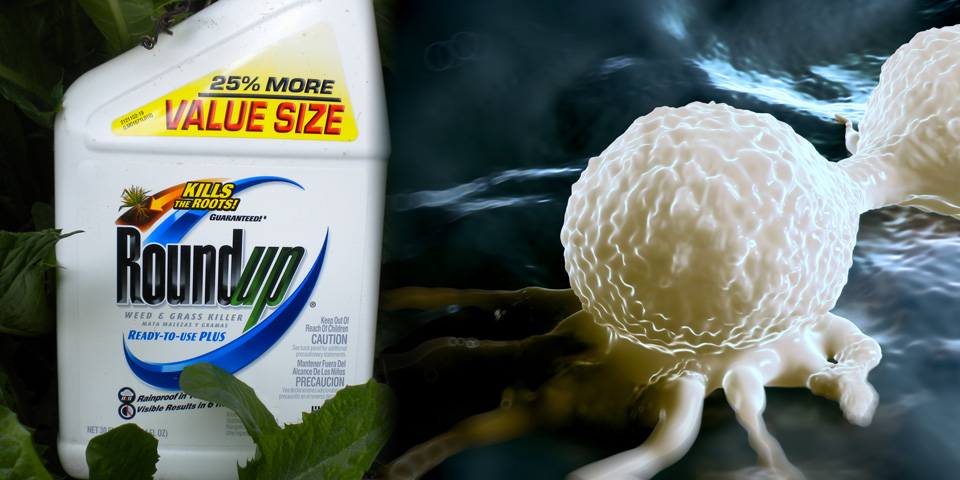
He explained why the Global Glyphosate Study is so important: “Until now, glyphosate has been considered safe. We have shown that both glyphosate and glyphosate-based herbicides have carcinogenic effects, even at doses currently considered ‘safe’. This study starts from prenatal life and shows that when exposure begins early, the effects are even stronger.”
After its publication, the study received “a great deal of attention,” according to Dr Mandrioli. “In June, the European Commission mandated EFSA, the European Food Safety Authority, and ECHA, the European Chemicals Agency, to reassess the carcinogenicity of glyphosate in light of the data in our study.”
The kickback from industry and its allies was violent: “Every time we publish a study on adverse effects, manufacturers or lobbyists react. The attacks are all the more abrupt the greater the interests at stake. I’ve been doing this job for 15 years, and I’ve never seen anything like it. It’s the best-selling pesticide in the world... We addressed the substance on a scientific level, but many are influenced by sales. The scientific approach should be immune to this, but it is not always so.”
Asked how the meeting with ECHA and EFSA went, Dr Mandrioli said: “After delivering the raw data from the study as requested, we had a technical meeting in December that was considered very fruitful by ECHA and EFSA. Immediately afterwards, I left.”
Madonia asked him: “Were you pressured?”
Dr Mandrioli replied: “In recent years, I have been profiled, defamed and attacked at every possible level. The pressure has been enormous. The situation required maximum protection for myself and the research group precisely because there had been warning signs. There was a perception of growing pressure, and the climate was much less tolerant of our independent research, as was also noted by researchers and trade unions.”
He added that he received “a lot” of solidarity and support from colleagues: “At a time when attacks on independent scientists are on the rise, I am fortunate because I have many colleagues who respect me and make me feel less alone.”
Regarding plans for the future, Dr Mandrioli said, “I will continue to conduct independent research and defend Professor Maltoni’s scientific legacy with the Collegium [Ramazzini].”
There’s more to come from the Global Glyphosate Study. Following the publication of the carcinogenicity results, Dr Mandrioli and his team and collaborators expect to publish further findings on the neurotoxicity of glyphosate and the genotoxic effects of exposure to multiple pesticides. He said: “It will then be up to the Institute to decide what will happen in the future.”
Does he expect the substances to be banned? “The experience with asbestos teaches us that it can take 30 years. The important thing is that bans, restrictions or confirmation of current limits are decisions based on the best evidence produced by scientists. We have done our part.”
Image: Depositphotos.com (licensed purchase)