









 Some scientists who argue for deregulation deny outdoor gene editing is possible. But patents and the scientific literature tell a very different story. Report: Claire Robinson
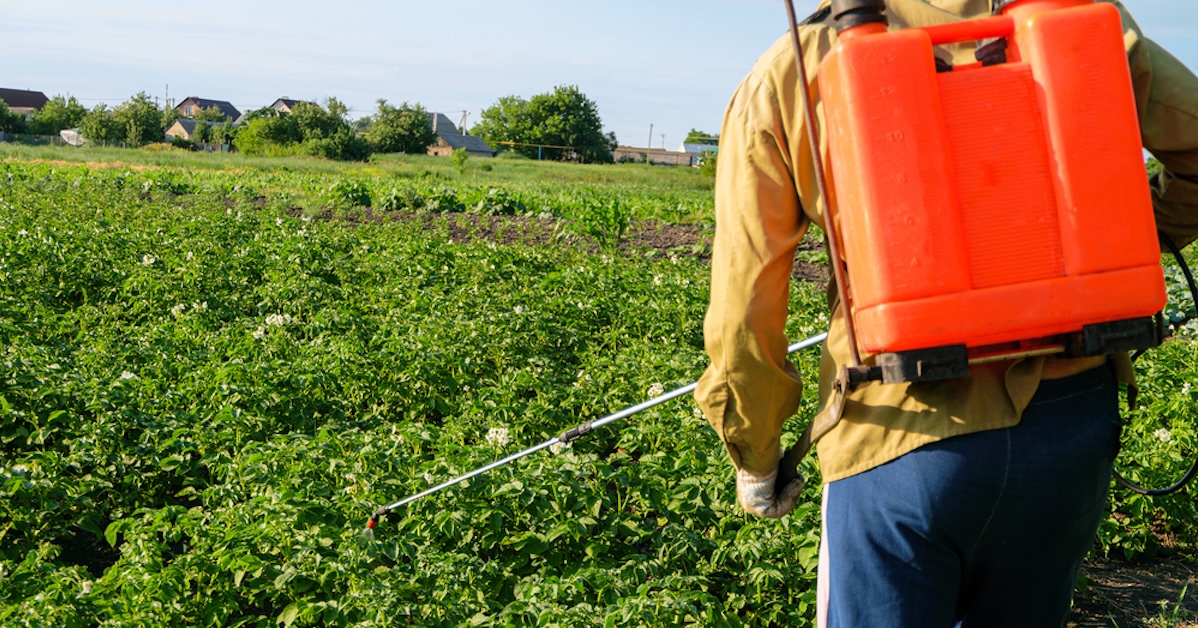
We’re used to gene editing being something that happens in contained and controlled lab facilities, with the intention of releasing only the final edited crop or other organism into farmers’ fields or greenhouses. But for years, the GMO industry has been working toward the capability to genetically engineer living organisms at environmental scales in real time – meaning “outdoor” applications of gene editing. Such gene editing tools would be released on a scale that was previously impossible, in uncontrolled environments and by untrained users. For example, in agriculture they could be used as pesticides or to control the ripening and dryness of grain.
GM gene-edited plants that are developed and tested in labs and greenhouses before being grown in fields carry risks of their own – as numerous papers in the scientific literature attest. Yet outdoor gene editing applications pose even more serious, and different, risks – including that active gene editing tools will end up altering the genomes of humans and other living organisms in the environment.
Yet outdoor gene editing seemingly isn’t mentioned or considered by the lobbyists and politicians who are backing the deregulation of gene editing technologies worldwide on the claimed grounds that they only do what nature or conventional breeding can do. Indeed, some prominent scientists are denying that outdoor gene editing is even possible. However, a newly published paper shows that many “outdoor” gene editing products have already been developed and that they are close to being deployed in the wider environment.
Early warning
An early attempt to bring the topic of outdoor gene editing to people’s awareness was made in 2019 by Prof Jack Heinemann,of the University of Canterbury, New Zealand, and Dr Sophie Walker of New Zealand’s Defence Technology Agency. They assembled a substantial collection of scientific papers and patents that described the ambitions, tools, and testing of outdoor applications of gene editing. Already at that time, efforts were underway to develop agents that could be used to make modified microbes, plants, and animals in the outdoors or biocides intended to kill pests or pathogens.
A second paper, by a team led by Profs Sarah Agapito-Tenfen and Heinemann, followed in 2024. The researchers titled their paper “Predicted multispecies unintended effects from outdoor genome editing”. They used the same standard computer-based methods that are commonly used to predict the specificity of various “precision” techniques, known as gene editing or RNA interference, to assess the potential unintended effects and adverse outcomes of exposing non-target organisms to these tools. Use outdoors would necessarily mean that non-target organisms, from bacteria to people, would be exposed.
Hoepers et al. (2024) investigated three scenarios, based on real CRISPR/Cas gene editing applications in research and development stages. The applications were designed for pest and disease control. Targets were the western corn rootworm and red flour beetle pests and white mould infection, which affects beans and cotton. The delivery methods for the gene editing applications could be through irrigation, fumigation, or fertilisers.
The researchers found that off-target effects were predicted in multiple species commonly found in the agroecosystem, including humans. Many of the tested non-target species were found to have high potential to be unintentionally gene-edited, regardless of how “specific” the gene editing was to the target species. Among the risks identified were effects on central nervous system development in honeybees and on several pathways related to cancer and hormone metabolism in humans. In total, 155 biological pathways were altered for the three gRNA scenarios in the 12 species and the majority of hits were found in the human genome.
The researchers’ investigations confirmed that during outdoor use, “Exposure to CRISPR/Cas pesticide could unintentionally alter the genomes of an assortment of non-target organisms.” Moreover, they found that genome databases are too small and concentrated on too few species to ensure that computer-aided hazard prediction will work to reduce or eliminate risk.
The authors also mention a surprising finding of their analysis: neither the relatedness of the target organism to the non-target organism, nor even the biological kingdom of the non-target organism, was able to predict the likelihood of unintended effects: “Therefore, a thorough risk assessment may require specific examination of all species of concern.”
The authors concluded: “Our findings emphasise the importance of exercising caution when considering the use of this genome editing in uncontrolled environments. Unintended genomic alterations may occur in unintended organisms, underscoring the significance of understanding potential hazards and implementing safety measures to protect human health and the environment.”
Pushback and denial
Hoepers et al. (2024) attracted strong pushback from a group of scientists, led by Andrew C. Allan of the University of Auckland, New Zealand, who is genetically engineering apple trees to have red flesh. (Spoiler: I have a non-GM apple tree in my garden, called Tickled Pink, that produces delicious red-fleshed fruit. There are others, including Redlove, Kissabel, Hidden Rose, and Lucy. I wonder if Allan pirated genes from these varieties to make his GMO version?).
Allan and co-authors published a paper titled conveniently (so that even those deemed incapable of reading the abstract will get the message) “Human-mediated outdoor genome editing is not possible so therefore poses no risk to the environment”. The introduction makes clear that the authors are primarily concerned with blowing away any concerns on the part of policymakers and regulators that might get in the way of the “world-wide re-examination of the regulations that surround genetic technologies, including gene edited organisms” – in other words, the deregulation of gene editing – and their commercial objectives. Indeed, their paper has all the appearance of a thinly disguised and politically motivated letter to the editor. By their own admission, they were troubled by the reference to Hoepers et al.’s 2024 paper in submissions to the Parliamentary Select Committee considering New Zealand’s planned deregulation of GM technologies.
Allan et al. claimed that “gene editing cannot be used as an ‘outdoor’ application in a manner similar to synthetic chemical pesticides or fungicides”. They wrote: “Getting the CRISPR-Cas machinery into plant or animal cells requires highly sterile tissue culture and sophisticated delivery tools. Therefore, gene editing, in the open environment by ‘field spraying’, is not currently possible… Suggestions that gene editing using CRISPR-Cas can occur through spraying directly on to plants in the outside environment is fanciful, incorrect and misleading.”
And that, according to these authors, is the end of the controversy. The implication is that policymakers should get on with arranging the type of deregulation that will allow gene editors to release whatever GMOs they want without having to subject them to tedious regulatory approval processes.
180 degree inversion of reality
We at GMWatch are used to hearing “experts” make categorical statements on GM that are incorrect or misleading. Allan et al.’s statements fall squarely into this category of extreme assuredness combined with a 180 degree inversion of reality.
In response to Allan et al.’s false claims, Prof Heinemann and an international team of co-authors have published a new paper (Heinemann et al. 2026: “Genome editing outside of controlled facilities: A review of plausible futures and risks”), in which they discuss the history of research and development projects on outdoor use of gene editing techniques and review additional new ones. Each of their examples is taken from the primary peer-reviewed literature or credible secondary sources, such as patents and science publications.
For example, they highlight a 2019 New Scientist headline, “Spray-on CRISPR. Genetically modifying plants could soon be almost as easy as squirting them with water”. The article features research describing a method for genetically modifying plants using carbon-based nanoparticles bound to the CRISPR-Cas9 enzyme applied via a sprayer onto leaves. “It was so straightforward,” said researcher Heather Whitney of the University of Bristol in the UK. “It was really surprising how easy it was.”
In other examples, an expired Monsanto patent describes methods of introducing nucleic acids (molecules that store and express genetic information, such as DNA and RNA) into plants at scale, including when growing in the field.
Another patented process describes the use of bioactive nucleic acids or proteins for agriculture and aquaculture delivered by both foliar sprays and uptake by roots. Applications may target plants, insects, invertebrates, fungi, and viruses.
Importantly, the new paper includes developments in medicine with potential cross-over use in agriculture. For example, the development of gene editing pharmaceuticals also enables use on companion animals and livestock. These new products could have impacts that would never be realised without proper pre-release risk assessment. A precedent (not involving GM) is antibiotics, which were initially developed to control infections in people but were then sold as prophylactics in animal feed and to spray on field-grown plants at environmental scales. We are now paying the price of having used antibiotics in agriculture in the form of the unintended rise in resistance to them.
Denial of reality
As Heinemann and co-authors state, “Some scientists deny developments for gene editing in uncontrolled environments, leading to scientifically unjustified dismissals of risk.”
Contrary to the current trend for deregulating gene editing, Heinemann and co-authors are asking for “a new framework for risk assessment” of outdoor gene editing. They conclude: “The use of genome editing outside of controlled facilities is imagined worldwide and expressed in peer-reviewed literature, patents, and respected science adjacent publications. Scalable lab-free genome editing is already firmly in the technological trajectory of molecular biology and agricultural practice. It is time to turn the discussion from denial to guidance for safe and responsible use.”
This is the conversation that the pro-deregulation lobby don’t want us to have. And that’s why it needs to take place now, before the deregulatory bills pass into law.
The new paper: Heinemann JA et al (2026). Genome editing outside of controlled facilities: A review of plausible futures and risks. Ecotoxicology and Environmental Safety 309, 119565. https://www.sciencedirect.com/science/article/pii/S0147651325019104?via%3Dihub
Image: Shutterstock (licensed purchase)