GMWatch
  • Home
    • Newsletter subscription
    • News Reviews
    • News Languages
      • Notícias em Português
      • Nieuws in het Nederlands
      • Nachrichten in Deutsch
    • Archive
  • Resources
    • Non-GM Successes
    • GM Myth Makers
    • Gene Editing
    • GM Quotes
    • GM Myths
    • GM Firms
      • Monsanto: a history
      • Monsanto: resources
      • Bayer: a history
      • Bayer: resources
    • GM Booklet
    • GM Book
      • Recordings of scientist Arpad Pusztai interviewed by journalist Andy Rowell
  • Donations
  • Contact
  • About
  • Search
  • Test

News

 Here is the latest news on GM issues. We try to update it daily.

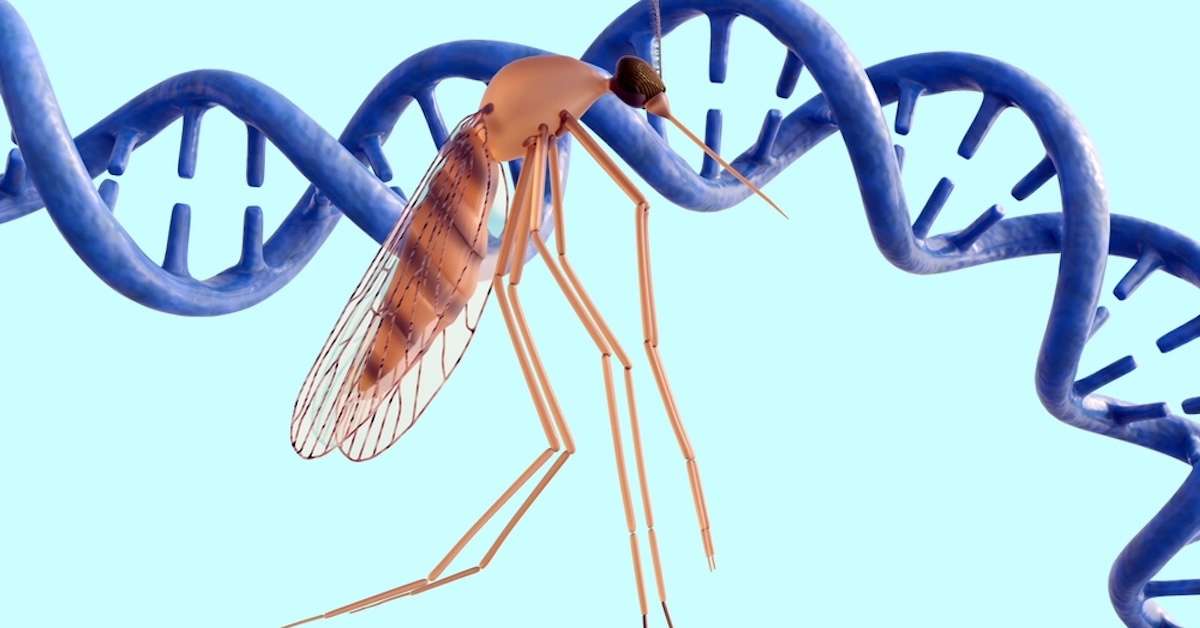
Oxitec withdraws application to release its GM mosquitoes in Australia

Details
Published: 10 November 2025

GM mozzies plan had attracted strong opposition from the public and scientists

Read more …

Review 592: Resistance to GMOs

Details
Published: 08 November 2025


While some of the world’s governments rush lemming-like towards the cliff of GMO deregulation, the process is going in the opposite direction in that home of GMOs, the US, driven not by the government but by court cases brought by civil society groups – see our lead story below. 

Elsewhere, resistance to GMOs remains strong. Burkina Faso has banned Gates-backed GM mosquito experiments. And in South Africa, an important court victory maintains the ban on cultivation of a GM maize pending the country’s GMO regulator starting to do its job in line with the requirements of the law.

As well as reporting on the inspiring pushback from other African countries and pan-African organisations, we also cover resistance to GMOs in the Philippines, Venezuela, Ireland, Russia, Canada and Hawaii. For all these stories and more, see RESISTANCE WORLDWIDE.

Some of the most sustained opposition to GMOs is seen in India, to the extent that in this Review we’ve given that country its own section (RESISTANCE IN INDIA). Here, a landmark court order targeting GMO imports requires the Indian government and the Food Safety and Standards Authority of India (FSSAI) not to permit the sale, manufacture, distribution or import of GM foods and products until the government establishes proper regulations governing their handling.

RESISTANCE WORLDWIDE

Victory in the US! Win for the public’s right to know in GMO labelling lawsuit

A federal court of appeals decision handed down on 31 October overturned a US Department of Agriculture (USDA) rule on the disclosure of genetically engineered foods, the Center for Food Safety reports, which took a leading role in bringing the case. The case challenged the USDA rulemaking which applied the 2016 federal law mandating GMO labelling for foods that are now called “Bioengineered” in the US. USDA had exempted “highly refined” or ultra-processed GMO foods – the category into which the majority of foods with GMO ingredients fall – from disclosure, a massive loophole that the court held unlawful. The court of appeals also held that the lower court abused its discretion regarding USDA’s use of “QR code” or smartphone labelling in the rule: the district court had previously held that USDA’s reliance on “QR code” labelling alone on packages without other forms of disclosure was unlawful, but had nonetheless left such products on market shelves. The court of appeals determined that remedy was an error and instead held that the QR code section should be vacated, or made null and void, so food companies cannot any longer label GMO foods solely with a QR code.
US court ruling on GMO food labelling puts pressure on Canada
As reported above, a US court has strengthened the US labelling law to include processed food ingredients. This should impact the entire North American market, particularly for corn and soy. The Canadian Biotechnology Action Network (CBAN) says the ruling is likely to bring more pressure to bear on Canadian regulators as they consider similar labelling in Canada. A public opinion survey result shows 83% of Canadians want mandatory labelling – this finding has remained consistent for over 20 years. Another recent poll finds that Canadians understand gene editing to be genetic engineering, and they want gene-edited foods similarly labelled. Amazingly, there is no mandatory labelling of any genetically modified foods in Canada. There is a Canadian voluntary standard for labelling that is currently under review but no companies have voluntarily labelled GMOs for Canadian consumers.
Burkina Faso bans Gates-backed GM mosquito experiments, samples to be destroyed nationwide
Burkina Faso has announced a nationwide end to the activities of Target Malaria, the research consortium funded by the Gates Foundation and Open Philanthropy. The decision effectively halts all experimentation with GM mosquitoes in the country. In a statement, the Minister of Higher Education, Research and Innovation revealed that the enclosures containing GM mosquitoes were sealed in August. The statement added that “all samples will be destroyed according to an indicated protocol”. The announcement follows Target Malaria’s second experimental release of 75,000 GM mosquitoes in the country. Target Malaria had planned to follow up their GM mosquito releases with gene drive mosquito releases – gene drive is a genetic modification forced to spread through an entire population to reduce its numbers. With the government’s decision, Burkina Faso has become the first country to formally shut down Target Malaria’s activities nationwide, reflecting growing scepticism over the safety, ethics, and necessity of gene-drive mosquito experiments.
African faith leaders demand reparations from Gates Foundation over industrial farming harm
More than 600 faith leaders across Africa have signed a renewed open letter to the Gates Foundation, demanding reparations for the ecological and social harm caused by industrial agriculture and calling for a just transition towards agroecology. The campaign is led by the Southern African Faith Communities’ Environment Institute, supported by networks such as the Alliance for Food Sovereignty in Africa. According to the groups, their updated letter reflects a growing consensus among faith, traditional and community leaders that Africa’s food future must be locally rooted, ecologically sound and socially just. “The letter continues and strengthens the first direct appeal to the Gates Foundation in 2020, to end funding for the failing Green Revolution model in Africa, which seeks to change African seed laws and industrialise farming production,” the groups said.
Battle for African Agriculture podcast
The Alliance for Food Sovereignty in Africa (AFSA) has launched an excellent podcast series, “The Battle for African Agriculture” hosted by AFSA general coordinator, Dr Million Belay. It pulls back the curtain on the enduring legacies of colonialism in Africa’s food systems, challenges corporate-driven narratives, and amplifies agroecological solutions rooted in justice, biodiversity, and food sovereignty. The dozen or so guests so far include the academic, activist and author Raj Patel, the environmental justice advocate, architect, writer and poet Nnimmo Bassey, and the globally respected authority on genetic engineering and food safety Michael Hansen, senior scientist at Consumer Reports. All episodes are here.
Benin: March against GMOs, for agroecology (video)
In Benin in West Africa, during the runup to an agroecology seed fair showcasing local crops that are in danger of disappearing, local officials and rural communities held a march against GMOs and the International Union for the Protection of New Varieties of Plants (UPOV). If Benin joined UPOV, this would restrict farmers’ saving and exchanging seeds. The protesters were also marching in support of agroecology.
Experts, activists urge ban on GMOs in Nigeria
In Nigeria, some scientists, experts, and activists have called for a ban on GMOs, describing them as a threat to the country’s political, economic, and food sovereignty. The stakeholders made the call at a national symposium. They argued that with the right support, smallholder farmers could feed Africa and even export surplus produce to other regions. They warned that the growing adoption of GMO products in Nigeria risked creating a new form of colonialism with serious health and environmental consequences. They urged the government to declare an immediate moratorium on GMO approvals and imports, stressing that GMOs are difficult to withdraw once released into the environment. Molecular biologist Dr Ifeanyi Casmir of Alex Ekwueme University described GMOs as “a cocktail of promises and pain”. He said he had studied over 204 publications across 179 scientific journals, with overwhelming evidence that most GMO promises were either contradicted or disproved. More on this topic here and here.
Nigeria: Catholic bishops demand ban on GM foods
The Catholic Bishops Conference of Nigeria has called on the federal and state governments to enact legislation prohibiting the production of GMOs in the country, citing the need to safeguard life and health.
Senegal: African consumer organisation calls on MPs to reinstate law banning GMOs
The executive director of the Pan-African Institute for Citizenship, Consumers and Development (CICODEV Africa), Amadou Kanouté, called on Senegalese MPs to reinstate the biosafety law, which prohibited the import, storage, use and marketing of GMOs in Senegal. This law was repealed during previous legislative sessions, according to CICODEV Africa. “Just before leaving office, the country's former leaders repealed the biosafety law, which prohibited the import, storage and use of GMOs in this country,” Kanouté said. He added that they did this without debate or consensus. 
South Africa: Court victory keeps ban on GM maize and sets critical legal precedent
In South Africa, the government’s attempt to overturn a hard-won legal ban on the commercial release of Bayer's GM – so-called “drought-tolerant” – maize has been defeated in the highest court in the country. The application for the general release of GM maize MON87460 now has to be sent back to South Africa’s GMO regulator for proper reconsideration in line with the requirements of the law. The African Centre for Biodiversity (ACB), which pursued the case against the government and its GMO regulatory bodies in a decade-long litigation battle, believes that it “will put an end to the rubber-stamping of GMO approvals” in South Africa ahead of the release of GMOs into the environment. You can read their full statement here. 
South Africa: Objection to GM canola field trials
In August, the African Centre for Biodiversity (ACB) objected to a proposed field trial of GM canola, engineered to tolerate glyphosate-based herbicides. The trial was proposed by Corteva. In the objection, the ACB noted that South Africa had 154 wild relatives of canola that could cross-fertilise, risking widespread genetic contamination.
US: Growing opposition to GMO chestnut trees
More than 170,000 individuals and over 440 organisations worldwide have voiced strong opposition to the release of the GMO American chestnut tree, known as Darling 54 (D54), into wild forests. The USDA is currently considering a petition by SUNY-ESF to deregulate the tree. Anne Petermann of the Global Justice Ecology Project is interviewed by KPFA Radio about the growing opposition to these GM trees. She warns that they are genetically defective, unproven, and could pose serious ecological risks if released into the environment. Meanwhile, despite GMO promoters declaring the American chestnut tree doomed without genetic engineering, wild American chestnuts are thriving in many locations across Northeast forests against all the odds.
Hawaii: Court says state failed to require environmental review for GMO farm
The Hawaii State Supreme Court has ruled that the land department should have ordered a GMO seed company to do an environmental review before planting on state land. Environmentalists say the ruling could impact other businesses that use state facilities or property. Eight years ago, when Syngenta Seeds got a permit from the Department of Land and Natural Resources to do corn and pesticide research in Kekaha, Kauai, the state decided it didn’t require an environmental assessment. Now the Supreme Court says that was wrong, but it’s too late. Syngenta has left the property. 
Philippines: Negros Occidental groups rally vs GMO ordinance, threaten hunger strike
Protesters staged a rally on 9 September in front of the provincial capitol in Bacolod City to oppose a proposed ordinance that would allow GMOs and related facilities into Negros Occidental, warning they would launch a hunger strike if officials push ahead. Carrying placards that read “No to GMO”, more than 100 protesters staged a “silent protest” outside the capitol and demanded that the provincial board scrap the proposed “Negros Occidental GMO Regulatory Ordinance”, which has already passed first and second readings in August.
Venezuela: Seeds, GMOs and sovereignty
In an interview, Venezuelan biologist, ecologist and activist Esquisa Omaña takes stock of the country’s Seed Law and the struggle for food sovereignty. She says, “One of the law’s features, which sets it apart from any similar seed law around the world, is that it contemplates two main seed systems that stem from two different knowledge structures. The 2015 Seed Law acknowledges what we could call a more formal system, with the certified seed. It also recognises the system of local, traditional and ancestral knowledge, with the campesino, Indigenous and Afro-descendant seeds... This is key for us, because instead of denying a knowledge system, it acknowledges these two different ones. At the time, some critics claimed the law was against progress, but it promotes progress. It proposes participatory research processes and the improvement of local seeds and the generation of local varieties, which is something that campesinos have done for centuries.” She adds, “The other fundamental aspect is, of course, the anti-GMO character of the law. It forbids the use, multiplication, and sowing of genetically modified organisms. Importing is not forbidden, for example, GMO corn for consumption, but it can’t be sown.”
Irish grain growers want action on imports of GM maize products
The Irish Grain Growers’ Group is calling for an immediate examination of what it has described as the “now excessive use” of GM maize and soy entering the Irish food chain from third countries. 
Russia’s non-GMO soybeans exports to China safe despite US-China trade deal
Russia’s non-GM soybean exports to China are safe, a Russian government source said, despite a deal between China and the US concluded by President Trump and Chinese President Xi Jinping. Russia ranked fifth among the largest soybean exporters to China in 2024, but its shipments consist exclusively of non-GM soybeans, used in the production of foods such as tofu, soy milk, and soy sauce. The US primarily supplies GM soybeans to China, which are used for animal feed. The IKAR consultancy estimates Russia’s exports to China at up to 0.8 million tons of non-GMO soybeans this season. Russia banned GMO farming in 2016 in a bid to capture a share of the growing global non-GMO food market, which Fortune Business Insights projects will reach $2 trillion by 2032, up from $895 billion in 2025.
RESISTANCE IN INDIA
India-US trade talks may face hurdles following Rajasthan High Court order on GM food imports 
In a ruling targeting GMO imports, the Rajasthan High Court has ordered the Indian government and the Food Safety and Standards Authority of India (FSSAI) not to permit the sale, manufacture, distribution or import of GM foods and products until the government establishes proper regulations governing their handling. The ruling could throw a spanner into India-US trade talks, with Washington seeking Indian market access for its GM corn and soybeans. Kavitha Kuruganti of the Coalition for a GM-Free India emphasised that the court order serves as a reminder for regulatory bodies such as the Genetic Engineering Appraisal Committee (GEAC) and the FSSAI to fulfil their statutory responsibilities. “GEAC and FSSAI have consistently failed to perform their statutory duty to ensure biosafety and food safety, thereby protecting the Indian public,” said Kuruganti. “The High Court’s order ensures that ordinary Indians are not made scapegoats due to American pressure on the Indian government.”
The soy mirage: When “strategic alliances” pose a threat to Indian farmers
The India-US trade talks are being promoted with the narrative that India and the United States can strike a soybean deal that could benefit both nations – America finding markets for its surplus soybeans, and India reducing its edible-oil deficit. But such a deal risks trapping India in GM seed dependence and crushing its farmers – a win-win only for Trump, US soy farmers and corporations, writes Sridhar Radhakrishnan, a member of the Steering Committee of the Alliance for Sustainable and Holistic Agriculture (ASHA-Kisan Swaraj).
Is India going to be the dumpyard for the US’s GM soybean?
In a retaliatory move against US-imposed tariffs on Chinese goods, China has decided to stop buying soybean from the US. So, what happens with the US soybean surpluses? With China out of the picture, in order to appease its soybean farmers, the Trump administration can pressure India to buy GMO soybean and soybean oil cakes from the US. Both these steps could lead to disastrous implications for cattle and human health, writes agri-policy analyst Indra Shekhar Singh. He adds that India could lose its non-GM or GM free tag in agriculture, which would further diminish its agrarian exports and be bad for biodiversity.
India: Farmers’ body calls for cancellation of permission to test GM maize at Punjab Agricultural University
Farmers’ group Bharatiya Kisan Sangh (BKS) has demanded the cancellation of the permission granted to test GM herbicide-tolerant and insecticidal maize in Punjab Agricultural University’s fields, terming it “cancer-causing farming”. “We want organic, not GM,” the BKS delegation said. The delegation added, “Bt cotton, a genetically modified pest resistant plant cotton, was brought to India and insects started eating it soon after its introduction. Later, more toxic Bt-2 was introduced which witnessed the same fate as whiteflies and sucking insects started destroying the cotton crop. It is clear from this that the use of pest-resistant GM cotton turned out to be uncertain, unsafe and full of adverse effects. Hence, the way of giving permission to test GM corn is also an attempt to bring the failed experiment back on the farmers.” 
India should learn from Bt cotton fiasco
After the GM Bt cotton fiasco, pushing GM maize with glyphosate tolerance is repeating a dangerous mistake, writes policy analyst Devinder Sharma.
India: Herbicide tolerant cotton not a panacea, only ecological disaster
In India, the reason for the decline in the area of cotton cultivation is primarily the failure of Bt cotton against pink bollworms and other insects, writes Dr Virender Singh Lather, former principal scientist at ICAR-Indian Agricultural Research Institute (IARI). Bt cotton is now also affected by a new pest, tobacco streak virus (TSV), which is causing yield losses. This crisis of cotton production has given multinational seed companies an opportunity to pressure Indian policymakers to seek legalisation of HT cotton (herbicide tolerant) hybrids with false promises to double cotton production. But frequent use of the controversial herbicide glyphosate can have adverse ecological effects. Dr Lather calls for a ban on all GM crops. 
India should shift to organic cotton to circumvent US sanctions, says farmers’ leader 
Over the last month, India reduced its cotton import duty from 11% to zero under US pressure. The move effectively allowed foreign US grown cotton to reach India with a cheap price, severely harming the domestic market. As a result, many farmers’ organisations launched protests. However, Mohini Mishra of the Indian farmers' union Bhartiya Kisan Sangh said, “There is nothing to worry about [in] the USA tariff. This is a trade attack. We are a world in ourselves and if we develop organic cotton we don’t have to come under USA pressure and buy the genetically modified cotton from the USA. If we strengthen our organic production we can sell our organic cotton to the USA, and circumvent the sanctions.”
After India cracks down on pesticide makers, experts question nod for herbicides and herbicide-tolerant seed varieties 
After India's Agriculture Minister ordered the suspension of licence of a pesticides manufacturer, experts are questioning the necessity of indiscriminate approval of herbicide-tolerant varieties. These varieties increase the use of herbicides which ultimately result in polluting the soil, the experts point out. “There are several herbicides approved for agriculture use whereas there are limited herbicide-tolerant varieties of different crops available in the market. This has created a research push to develop herbicide-tolerant (HT) varieties as well as push sales of those chemicals by companies,” said a senior agriculture scientist. There has been a push to approve a herbicide-tolerant variety of ‘Swarna sub 1’ rice variety, which is known to be flood tolerant, sources said. “As the ‘Swarna sub 1’ paddy [rice] is grown where water is abundantly available and there is no weed threat due to water-logged field, there is no need for any HT variety,” said the agriculture scientist.
“Act of war” on Indian agriculture: Aruna Rodrigues slams GM crop expansion and regulatory apathy
Aruna Rodrigues – lead petitioner in the Supreme Court case launched in 2005 that seeks a moratorium on GM crops – told India’s Agriculture Minister in a letter that conflicts of interest have infiltrated India’s regulatory system like a cancer: “The result is that the agenda of the biotech industry, Bayer-Monsanto/Syngenta, is being executed in Indian agriculture to fully prepare it for GM crops”, including gene-edited and mutagenesis-bred herbicide-tolerant (HT) rice varieties. India is the origin of over 80,000 rice varieties and the regulators’ targeting of rice is “an open act of war on Indian agriculture and our farming community”, she wrote.

Patent on maize with native traits upheld

Details
Published: 07 November 2025

Precedent case shows new rule does not solve problems

Read more …

Poll: 82% of Danes oppose GMO deregulation, at odds with government position

Details
Published: 05 November 2025

Poll comes as EU institutions are in the final negotiation rounds to determine if new GMO products will be exempt from labelling and traceability requirements

Read more …

Victory! Center for Food Safety secures win for the public’s right to know in GMO labelling lawsuit

Details
Published: 01 November 2025

Court says USDA's labelling exemption for “highly refined” or ultra-processed GMO foods — such as corn and soy oils — is unlawful

Read more …

Review 591: GMOs in General

Details
Published: 30 October 2025

Welcome to our latest Review, which covers illusory GMO PROMISES and also explains how a much-hyped GMO “solution” to the bee crisis might only serve to prop up a failed agricultural system (GMOs AS CRUTCH FOR FAILED AG MODEL). There’s some bad news on the issue of GENETICALLY ENGINEERING NATURE, as well as our TRIBUTE to the late Dame Jane Goodall, yet more GMO RISKS AND HARMS, and developments on PATENTS, REGULATORY CAPTURE, and GMO RELEASES AND APPROVALS. The issue of GMO CONTAMINATION is ongoing, as are the perennial topics of CORPORATE CONTROL and CORPORATE MYTHS. We also have some updates on FAKE MEAT and the latest NON-GMO SOLUTIONS.

In our next Review, which will follow soon after this one, we’ll summarise the continuing widespread resistance to GMOs around the world. And for recent news specific to new GMOs and the battles around the world over deregulation, see our last Review, archived here.

GMO PROMISES

The GMO illusion: Three decades of hype, harm, and false hope
We were asked to picture a world where there is plenty of food, no hunger, fields grow without chemical pesticides, children are saved from malnutrition, and people live healthily. Three decades later, the promises of GMOs lie across the fields like superweeds - costly, useless, and crowding out real alternatives. In 1995, with the approval of Bt maize and glyphosate-tolerant soy in the US, GMOs were touted as the silver bullet: eliminating hunger, reducing pesticides, boosting yields, and fortifying nutrition. But the dream, peddled by biotech giants and promoted by complicit research institutions, has proven illusory. A comprehensive exposé, GMO Promises, by Save Our Seeds, GMWatch, and Beyond GM, offers a reality check. Through ten meticulously documented case studies, the website lays bare a pattern of ecological harm, regulatory evasion, scientific failure, and corporate overreach.
GMOs AS CRUTCH FOR FAILED AG MODEL
GM food supplement for bees supports failed agricultural model
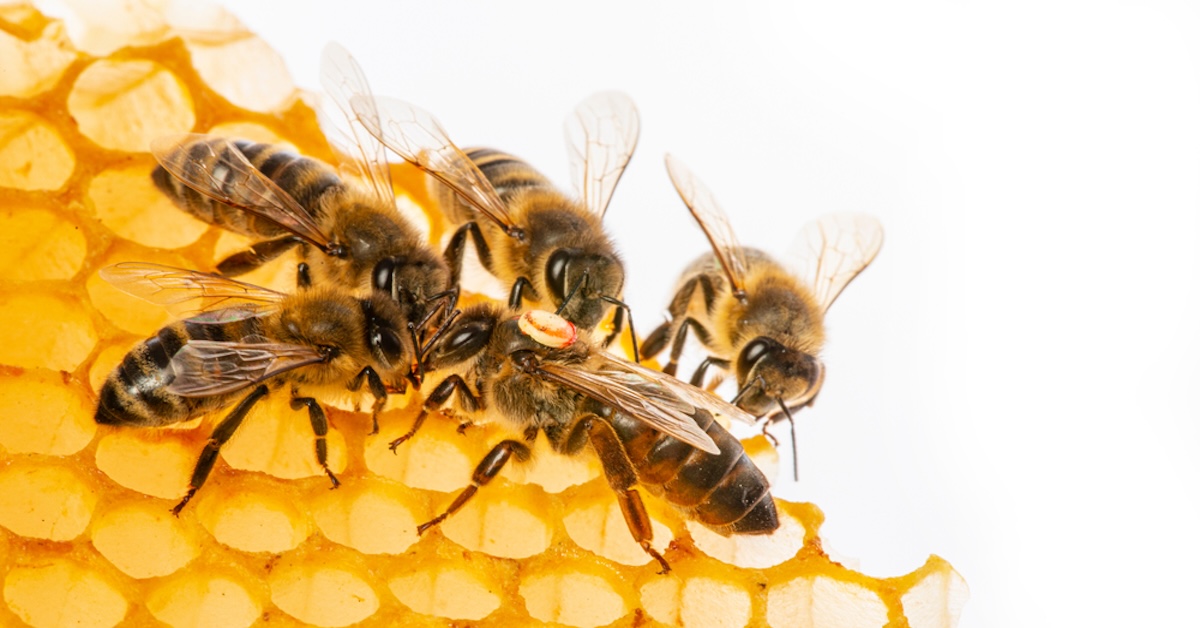
Scientists have developed a food supplement that “could help save honeybees from devastating declines”, according to a press release from the University of Oxford, where the lead researcher is based. The scientists used transgenesis (foreign gene insertion) augmented with gene editing to produce a strain of yeast that could be used as a food supplement for bees. The food supplement contains six essential sterols – types of fat – that are found in pollen, the usual main food source for bees. The resulting bee food supplement is being promoted as “a nutritionally complete diet” that “boosted reproduction up to 15-fold”. However, it carries its own risks. These include perpetuating an unsustainable agricultural model, as well as potentially creating additional problems of its own due to the inherent dangers stemming from the large-scale biochemical changes arising from the GM process.
GENETICALLY ENGINEERING NATURE

IUCN backs risky genetic engineering in nature, rejects call for precaution
Image

In a widely anticipated but deeply concerning decision, members of the International Union for Conservation of Nature (IUCN) have implicitly endorsed the use of genetic engineering in nature conservation — despite insufficient scientific evidence and the absence of effective regulations to manage its risks. By rejecting a proposed moratorium on high-risk applications such as gene drives, IUCN has decided to ignore the need for adequate safeguards against irreversible harm to nature. These technologies could permanently alter or eradicate species, triggering cascading effects across entire ecosystems. To pass, the motion needed more than 50% support in both categories — governments and non-governmental organisations — and it came down to a close call. Among governments, the result was 87 in favour and 88 against. Among non-governmental organisations, the result was 407 in favour and 323 against. See also Beyond GM's article on the IUCN's move.

Chimera: The genetic modification of nature
In September, GeneWatch UK published a report, “Chimera: The Genetic Modification of Nature – A briefing”, for the IUCN Congress at which the vote was taken on the proposed moratorium on genetic engineering of nature (see above). The briefing summarises concerns about the use of genetic engineering (including gene editing) to create GMOs for release into the wild. It was written to draw the attention of members of the IUCN to serious problems associated with plans to develop the use of synthetic biology in nature conservation. The report concludes that all claimed benefits of genetically modifying nature have major potential downsides. GMWatch wholeheartedly recommends this report, which is clear, accessible, and uncompromising.
A TRIBUTE

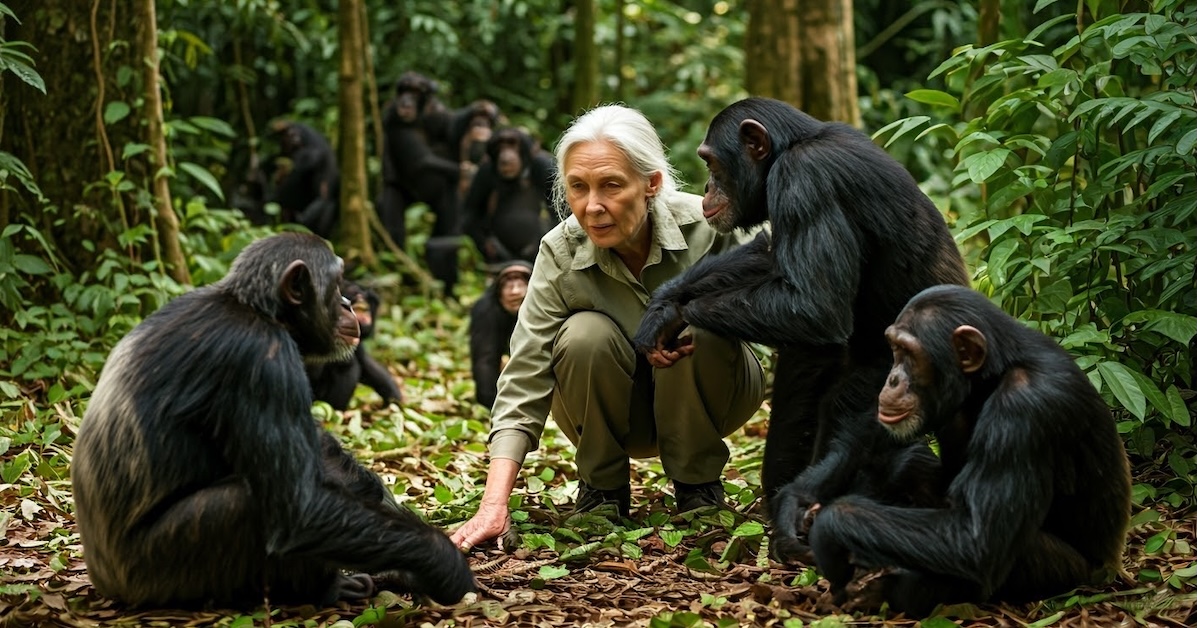
RIP Dame Jane Goodall
Image

We at GMWatch were sad to hear of the death, at the age of 91, of the primatologist Dame Jane Goodall. She was a pioneer researcher into animal sentience, especially as it related to her beloved chimpanzees, which she observed in their natural habitat. She outraged the scientific and academic community by giving the chimps names and commenting on their personalities. In 1960 she was the first to document their use of tools – at the time, a skill that was frequently claimed to be unique to humans. Jane was also concerned about the effects of GM foods and pesticides on health and the environment. Only a few days before her death she was in Mexico, where she praised the country’s brilliant resistance to Bayer-Monsanto and the planting of GM corn. On pesticides, she said, “Someday we shall look back on this dark era of agriculture and shake our heads. How could we have ever believed that it was a good idea to grow our food with poisons?”

GMO RISKS AND HARMS
Are GMOs safe? A molecular geneticist speaks out
Are genetically engineered foods safe? In an interview with Stacy Malkan of US Right to Know, the leading molecular genetics expert Prof Michael Antoniou discusses the scientific evidence behind health concerns tied to GM corn and pesticides, how GMOs are changing in ways that increase health risks, and how regulatory systems have failed to keep pace with modern genetics. Prof Antoniou has studied for more than 35 years how genes function and how they are disrupted. His decades of rigorous independent research into the risks of GM foods and glyphosate-based herbicides have raised serious concerns about the safety of these technologies. In a report he prepared for the Mexican government, as the country attempted to restrict GMO corn imports for health reasons, Prof Antoniou cited “a large body of evidence from well-controlled laboratory animal toxicity studies that show evidence of harm to multiple physiological systems” from toxic agents found in GM corn. The transcript of part 1 of the interview is here; part 2 is here – see also below.
Not substantially equivalent: New scientific methods challenge claims that GMOs are safe
In part 2 of an interview with US Right to Know's Stacy Malkan, Prof Michael Antoniou explains the findings of his team’s extensive research on glyphosate and glyphosate-based herbicide formulations, which he said shows that regulators are “clearly wrong” in claiming that current exposure levels are safe for our health. Prof Antoniou also explains how his research challenges the claim that GMOs are “substantially equivalent” to non-GMOs — the foundation of US regulations for GMOs — and how regulators are ignoring modern scientific tests and methods that can help us better understand the risks to our health from GMOs and pesticides.

Another long-term feeding study raises questions about the safety of GM maize
Image

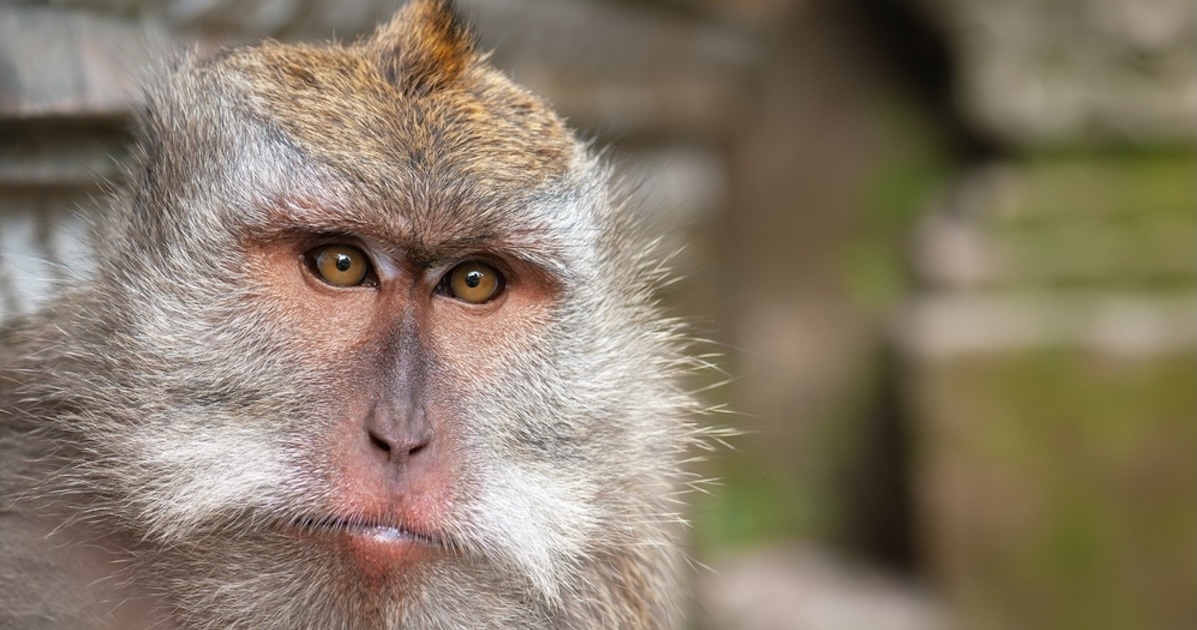
A long-term 7-year feeding study testing the effects of GM maize consumption across two generations of cynomolgus macaques – a type of monkey – was recently published in the journal Food and Chemical Toxicology. The GM maize tested contains two Bt insecticidal toxins and a gene conferring tolerance to glyphosate herbicide. The authors concluded that there are no adverse effects on the test animals or their offspring – even though some of their findings raise serious safety questions. The GM maize diet caused some adverse and potentially adverse changes in the macaques’ health that need further investigation. These include indications of anaemia, kidney and thyroid disorders, and an altered gut microbiome.

GM gene-edited tomatoes to be fed to humans (but no, it's not a food safety study)
The Quadram Institute in Norwich is recruiting 76 people with low vitamin D to take part in the ViTaL-D Study, where some participants will eat soup containing tomatoes that have been genetically engineered via gene editing to contain a vitamin D precursor. When the fruit is placed under ultraviolet light, vitamin D forms. While the BBC headlines its article on the GM vitamin D tomato study “Trial uses tomatoes to test impact of gene-edited food on humans” and touts it as probably “the first human trial in the UK”, this 21-day study is not a food safety study and it won’t “test the impact of a gene-edited food on humans”, in the sense of monitoring the health of GM tomato-consuming people over the medium or longer term. Instead, it will be an efficacy study, where the scientists will measure the levels of vitamin D in the blood after consuming meals containing the GM tomatoes. In other words, it’s a study designed with marketing in mind, not precaution about human health.

GMWatch publishes historic recordings of scientist Arpad Pusztai
Image

GMWatch has published a series of recorded interviews with the late scientist Dr Arpad Pusztai, conducted in 2002 by the journalist Andy Rowell as part of his research for his book, Don’t Worry, It’s Safe to Eat. Dr Pusztai carried out the first safety research on a GM food plant. Andy kindly gifted this interview archive of recordings to GMWatch and wishes them to be made public. In these interviews Dr Pusztai describes the results of his landmark 1999 study that found that GM insecticidal potatoes had toxic effects on rats. He also details the political fallout from his public announcement of these findings in a brief 150-second appearance on British TV, in which he said he would not eat these potatoes and that it was unfair to use our fellow citizens as guinea pigs by putting GM foods into the food supply. For his pains, Dr Pusztai was summarily fired and barred from access to his lab. His research team was disbanded and a gagging order was imposed on him.

Ladybird populations affected by Bt maize pollen
A study has shown that pollen from GM maize MON810 can have negative effects on ladybird populations. Currently, MON810 is the only GM plant approved for cultivation in the EU. The study investigates long-term effects of Bt pollen on beneficial insects not naturally expected to be adversely affected by the toxin. The experiment showed that the lifespan of the offspring of female ladybirds that had consumed Bt pollen was reduced by 17–30 percent. 
In Symbiosis film will show in Leeds on 1 and 3 November
The film In Symbiosis, which analyses what’s wrong with the food system (including GMOs and pesticides) and how it might be put right, has been selected for Leeds international film festival and will be showing on 1st and 3rd November. The film features interviews with GMWatch editor Claire Robinson, as well as molecular geneticist Prof Michael Antoniou and other experts. GMWatch readers have asked us when the film might be available on general release. The answer is: eventually, but initial release is taking place via film festivals. It seems that the festivals won’t consider showing a film that has already been publicly released.
PATENTS
Entangled in the patent web
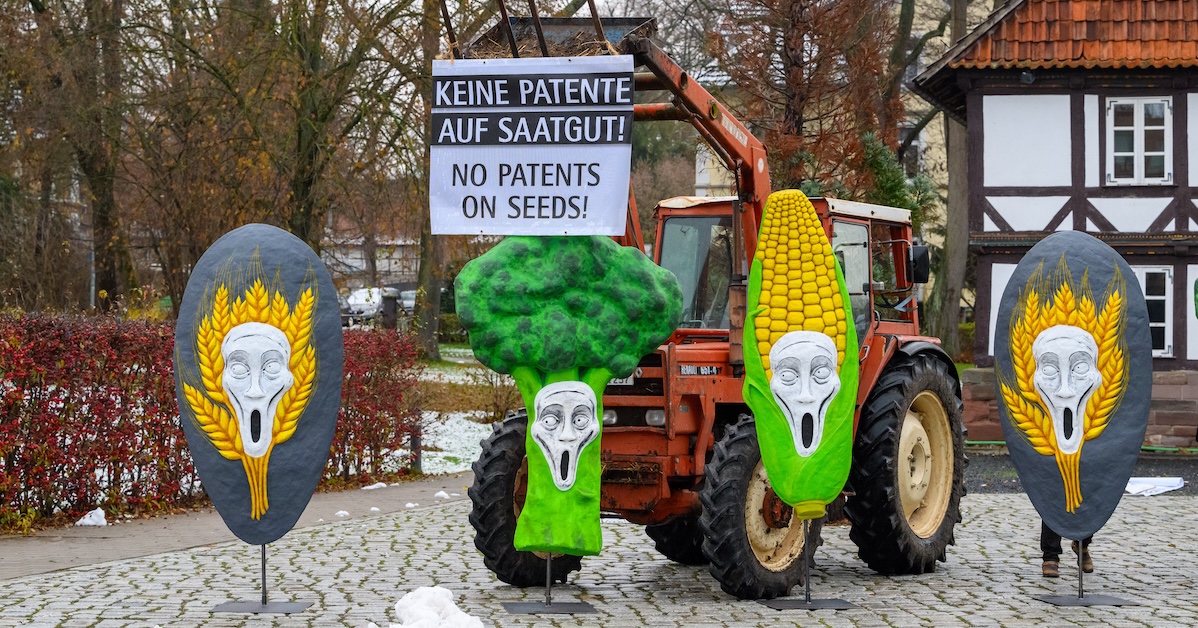
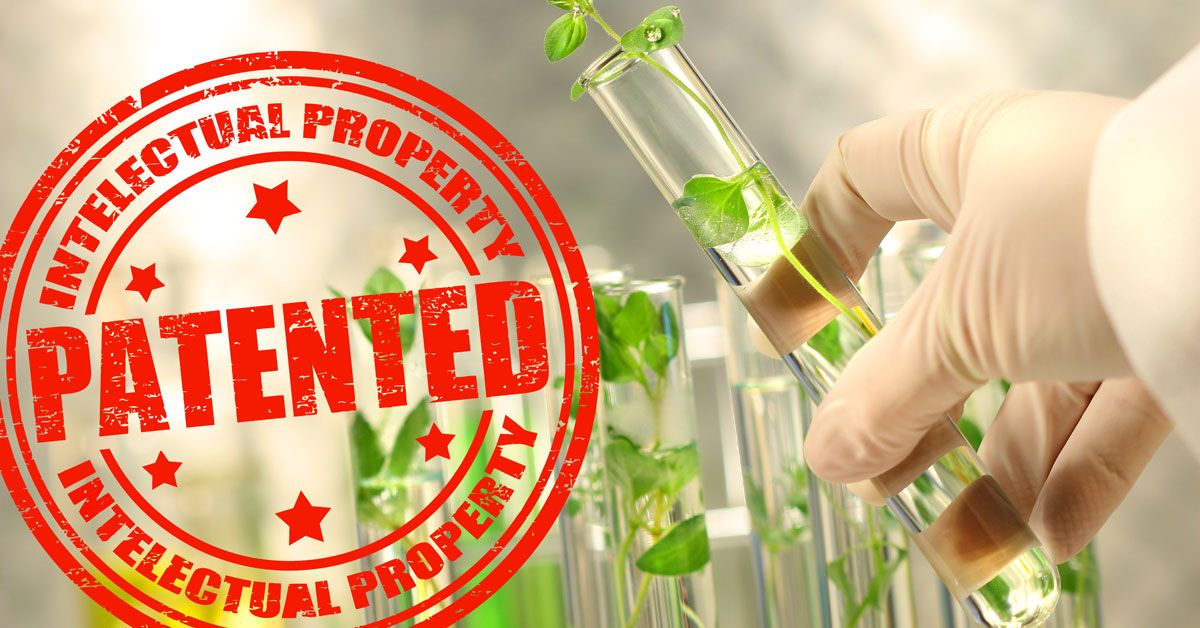
As co-owner of a family seed breeding business, Grietje Raaphorst usually spends her days tending to the corn plants that fill her fields. She carefully crosses them or harvests seeds from the cobs that she and her husband have spent decades adapting to thrive in the Dutch climate. Yet for the past three years, she has spent more time dealing with large seed companies and their patent lawyers than with corn kernels and pollen. The Raaphorsts’ goal was to develop cold-resistant crops that could be harvested earlier in the year, so that the soil would be spared the damage caused by heavy machinery during a wet autumn harvest. But since the German seed company KWS patented a method for growing cold-resistant maize in 2022, Raaphorst’s company, Nordic Maize, has been at risk of being taken to court for infringing this patent. A patent blocks use and commercialisation, unless an expensive licence is paid. “For traditional breeders such as Nordic Maize, this is a matter of life and death,” says Christoph Then of No Patents on Seeds. New GMO techniques, such as CRISPR-Cas, would make it even easier for large agricultural corporations to satisfy their hunger for new patents. (Link is to Dutch language article)
REGULATORY CAPTURE
GMOs and glyphosate: Regulators use double standards when evaluating scientific evidence indicating harm
UK, US and European regulatory institutions have for many years been repeatedly subjecting evidence of possible harm from constituents of our food supply to severe critical scrutiny, while accepting seemingly reassuring studies and data uncritically, a new peer-reviewed article shows. Drawing on the details of regulatory debates over four key issues, including the sole GM maize variety that’s approved to grow in the EU (MON810) and glyphosate, the authors document regulators’ consistently asymmetric treatment of evidence (more commonly known as “double standards”), which has served to benefit commercial interests to the detriment of consumer protection.
GMO RELEASES (PLANNED AND ACTUAL) AND APPROVALS
GM wheat gets closer to reality in US
On September 23, Bioceres, the Argentine company that owns the technology, signed a deal with the Colorado Wheat Research Foundation (CWRF) to commercialise its GM wheat HB4 in the US. Argentina, Brazil and Paraguay have approved the cultivation of HB4 wheat. Other countries, including Australia and New Zealand, have authorised its use in food and feed products. In August 2024, the US Dept of Agriculture approved the cultivation of HB4 wheat. However, American farmers won’t be planting GM wheat for a while, probably not until 2029, 2030 or later. HB4 wheat is marketed as drought-resistant and as tolerant to the herbicide glufosinate ammonium, which is banned in the EU due to concerns about its toxicity. But according to official data, HB4 wheat yields much less than conventional (non-GMO) wheats, even in drought years.
Three genetically engineered fruits and vegetables sold in Canada
The Canadian Biotechnology Action Network (CBAN) reports that there are now just three genetically engineered (genetically modified or GM) fruits and vegetables sold in Canadian grocery stores: sweetcorn, GM papaya, and a GM pink-fleshed pineapple, but these products are not widely available. However, produce sections could quickly be confronted with more GMOs now that the federal government is exempting many new gene-edited foods from regulation. Genetic engineering in Canadian diets is still dominated by processed food ingredients – from GM corn, GM canola, GM soy and GM sugar beet. 
Chile approves first gene-edited wheat in the Americas
Chilean startup Neocrop Technologies has developed a gene-edited wheat variety with five to ten times higher dietary fibre content than conventional flour wheat, “while maintaining the taste, texture, and quality of white flour”. Chile’s Agricultural and Livestock Service (SAG) has stated that these new wheat lines are not classified as GMOs (even though technically and scientifically, they are). This decision paves the way for field cultivation without regulatory oversight, making Chile the first country in the Americas to approve gene-edited wheat. (No explanation is given in this article as to why people who want high fibre wheat can’t eat wholewheat products, which are naturally high in fibre, rather than GMO white flour.)
Norfolk Healthy Produce selling GM Purple Tomato seedlings in the US
Norfolk Healthy Produce has been selling its GM Purple Tomato seedlings during the 2025 season at garden centres in the US.
Regulators assessing bid to grow and sell GM Purple Tomato in Australia
The GM Purple Tomato could be sold in Australian supermarkets next year if regulators approve a bid to grow it in Australia. Read GeneEthics’ objection here.
India: Plans afoot to legalise herbicide-tolerant GM Bt cotton 
India’s government is planning to legalise the controversial herbicide-tolerant (HT) Bt cotton (HT Bt cotton). The expert committee on HT Bt cotton seeds has given a positive recommendation for its commercial cultivation to the top biosafety regulatory body, the Genetic Engineering Appraisal Committee (GEAC). Environmentalists are concerned that the approval may lead to farmers indiscriminately spraying glyphosate herbicide. This practice raises concerns about potential negative impacts on the environment and other crops grown in nearby fields. HT Bt cotton cultivation has been occurring illegally in Gujarat, Maharashtra, Andhra Pradesh, and Telangana for years. Some comments are here.
GMO CONTAMINATION
Mustard industry on edge over canola hybrid
Leaders in Canada’s mustard industry are worried that a new GM canola hybrid, not yet on the market, could harm mustard exports to Europe and other parts of the globe. Mustard importers in countries such as France have almost zero tolerance for GMOs in shipments of mustard seed. This new canola hybrid will increase the risk of GMO contamination, said Rick Mitzel, executive director of Sask Mustard. “There is a miniscule tolerance (for GMOs). It’s very, very tiny, as close to zero as you can get,” he said. “Any field of condiment mustard (seed) that’s anywhere close to a field of this InVigor Gold is definitely going to get (GMO) contamination.” The canola is tolerant to Liberty Link (glufosinate) herbicide.
2024, another year contaminated by illegal GMOs
In 2024, the EU once again recorded alerts about GMO contamination. Of the 24 alerts, the vast majority concerned unauthorised GM rice, but also papaya, soy, flax and maize. Two cases of contamination by genetically modified microorganisms were also reported, one of which even forced the Belgian authorities to issue a public statement recalling a product. In three cases, the nature of the illegal GMO was not specified. One GM maize, one flax, two papayas and one soybean were also found in 2024, either on European territory or at its border. 
Illegal cultivation of GMO soybeans in Tunisia revealed by DNA tests
Presented as a response to the feed crisis, a new crop is quietly taking root in Tunisian fields. Behind the soybeans are GM seeds, introduced without supervision and amid total institutional silence. Laboratory analyses carried out in Tunisia and then in France on three samples of soybean seeds distributed to Tunisian farmers show them to be GMO. The soybean samples are tolerant to several herbicides: glyphosate, glufosinate-ammonium, 2,4-D and dicamba, and produce several insecticides against lepidoptera (butterflies). These transgenes belong to Monsanto (Bayer), BASF, and Dow AgroSciences.
CORPORATE CONTROL
Corporate concentration in food and farming in 2025
A report examines the state of corporate concentration in six sectors critical to agriculture: commercial seeds, pesticides, synthetic fertilisers, farm machinery, animal pharmaceuticals and livestock genetics. Corporate consolidation has increased in recent years in most of these sectors and four of them - seeds, pesticides, agricultural machinery and animal pharmaceuticals - meet the definition of an oligopoly, in that just four companies (Bayer, Corteva, Syngenta and BASF) control more than 40% of the market.
CORPORATE MYTHS
The enduring fantasy of “feeding the world”
In an important essay, the food scholars Adam Calo, Maywa Montenegro, Ben Iuliano and Alastair Iles debunk the feed-the-world myth of industrial agriculture. In its latest repackaging, this myth with its fixation on boosting yield is being promoted not just as the remedy for global hunger through greater output, but as using less land – due to its efficiency in commodity production, and hence the way to leave more land available for nature. But the authors show that industrial agriculture has not only proven bad at feeding people, failing to budge food insecurity, but it doesn’t lead to “land sparing” either.
Commentary on the “feeding the world” fantasy
The anthropologist Dr Andrew Flachs, who researches food and agriculture systems, has done a Bluesky thread commenting on Adam Calo et al’s essay (see item above). In this thread, Flachs highlights “a depth of research on this issue, which is just so much more than yields vs hunger”.
Is famous proof of the triumph of science the most deceptive graph ever made?
Nobody is better at debunking the myths of industrial agriculture than Glenn Davis Stone. It was Stone who famously pointed out that new research suggested the claim of a “billion lives saved” by the Green Revolution, which is so often used as a framing for GM crops, was not just badly wrong but that the number of lives actually saved appeared to be zero. In a piece on another key component of industrial agriculture mythology, Stone looks at “the most reproduced chart in anything ever written on agriculture”, which shows the meteoric rise in US corn yields following the adoption of hybrid corn. This also gets used, as Stone notes, to validate GM crop technologies. But in reality, as he explains, the yield rises were due to other factors than hybrids – and “If the input-intensive, over-producing corn hybrids were a disaster in the 20th century, they are likely to be even worse in the 21st”. Stone concludes, "At the end of the day, we have not only spent a taxpayer fortune subsidising farmers to use toxic chemicals to grow vast quantities of uneconomic and unneeded corn, but to do so with hybrids that are highly unstable in weather extremes.”
FAKE MEAT
Consumers are losing interest in fake meat, says article
The plant-based "fake meat" alternatives market is declining as consumers have begun to shift back towards real meat and dairy, according to an article in Food Navigator. The article explains that that the main reason is health: consumers increasingly associate plant-based options with ultra-processed foods, which many distrust. Conversely, meat and dairy have been consumed for thousands of years and are associated with naturalness. The article claims another driver for the shift is that consumers are increasingly placing less importance on sustainability. But in reality, the sustainability rating of all ultra-processed foods, and especially “bioreactor” fake meat and dairy, is rock bottom. Some fake meat is made from GM bacteria or yeast.
GMWatch correction on soy leghemoglobin and news update
In August GMWatch published a correction to one point from our extensive comments to the European Food Safety Authority about the Authority's favourable opinions on the GM food supplement soy leghemoglobin, which “fake meat” burger company Impossible Foods has submitted for EU approval. We also submitted this correction directly to EFSA. Interestingly, our correction raises further questions about EFSA’s opinions, which we have put to them. In response to this communication, we received a reply from EFSA saying that they will issue revised opinions and re-open the comments period. They didn't specify a date. The planned revision appears to be partly aimed at addressing complaints about the numerous redactions in the original EFSA opinions, which hid crucial details about the complex series of genetic modifications made to the GM yeast that produces the soy leghemoglobin. The redactions were made in the name of commercial confidentiality. However, transparency about the modifications is important because they could affect food safety. GMWatch will submit updated comments on the revised opinions when they appear. (Link is to GMWatch correspondence to EFSA)
NON-GMO SOLUTIONS
Sixteen year field trial shows organic corn outcompetes chemical-intensive fields in Kenya
In a sixteen-year field trial based in Kenya, researchers have found higher crop yield stability in low-input organic systems with previously degraded soil than in high-input organic and nonorganic agricultural systems. One of the agrichemical industry-fed arguments against organic production is the false belief that, if all agricultural production went organic, then it would lead to a crisis of food security. Proponents of transitioning to organic continually push back, given the steady flow of evidence, backed by decades-long field trials, that organic can compete with — and even outcompete — conventional systems after a transitional period. “Based on the findings of our study, organic farming systems have the potential to achieve yields that match or exceed those of conventional farming systems, particularly in the long term when given adequate time for soil adaptation and improvement in soil fertility,” the authors write.
Organic systems more sustainable and profitable, 40-year study finds
There is increasing evidence that organically managed crop production systems are more sustainable than chemical-intensive fields, or those that operate under the model of pesticide reduction, in terms of biodiversity, public health, and climate mitigation. The Rodale Institute, Ohio State University, and Tennessee State University determined in a study based on field trials that organic grain cropping systems contain higher concentrations of total nitrogen and soil organic carbon, exceeding those found in conventional, chemical-intensive systems. This study is an extension of the Rodale Institute’s Farming System Trial (FST), a 40-year-long field study published in 2020 with the goal of addressing "the barriers to the adoption of organic farming”. The FST finds:
* Organic systems achieve 3–6 times the profit of conventional production;
* Yields for the organic approach are competitive with those of conventional systems (after a five-year transition period);
* Organic yields during stressful drought periods are 40% higher than conventional yields;
* Organic systems leach no toxic compounds into nearby waterways (unlike pesticide-intensive conventional farming;
* Organic systems use 45% less energy than conventional; and
* Organic systems emit 40% less carbon into the atmosphere. 
Brazil beats hunger. GM wasn’t part of the solution
Brazil is officially removed from the UN Hunger Map – after lifting over 40 million people out of food insecurity in just two years, the UN confirms. This historic achievement was driven not by techno-fixes or increased yields, but by political choices that put family farmers and food access first.
New non-GM drought-tolerant durum wheat variety proves its worth in Morocco
Released in 2023, Jawahir, “an improved durum wheat variety, serves as a resilient solution to the challenges of climate change in dry areas by offering disease and pest resistance, drought tolerance, higher grain and straw yields, as well as cost savings, thereby enhancing farmers’ income and sustainability”. The new drought-tolerant durum wheat variety yields significantly higher than other varieties under dry conditions and is being rapidly scaled up to provide food security for farmers in Morocco, particularly in the face of climate change. 

Dark PR attacks on critics of 10-billion-dollar biotech Goliath

Details
Published: 29 October 2025

Debunkers of de-extinction disinformation hit by vicious campaign of intimidation. Report: Jonathan Matthews

Read more …

Long-read whole genome sequencing the only way to confirm absence of foreign DNA in gene-edited products

Details
Published: 29 October 2025

New scientific article warns of loss of consumer trust unless proper analysis is done. Report: Claire Robinson

Read more …

Review 590: New GMOs

Details
Published: 11 October 2025


Welcome to our latest Review, which focuses on new GMOs, mostly developed using gene editing. Our main focus is on the battles over the deregulation of new GMOs that are rumbling on in the EU and New Zealand (DEREGULATION BATTLES). We also have updates on the mess created by the UK DEREGULATION.

In the EU, talks between the European Parliament, Council and Commission on the Commission’s new GMO deregulation proposal collapsed in June. The Parliament wants a ban on patents on plants derived via new GMO techniques (new genomic techniques, NGTs) and this proved one of the key sticking points in the discussions. In addition, there were disagreements about if or how new GM plants would be labelled, and questions about how many genetic changes should be allowed before a plant would be subject to the more robust GMO regulations. Disagreeing sides are set to return to negotiations in mid-October, with meetings being arranged in the background to try to force an agreement.

In addition, we have important updates on the DETECTION of new GMOs, the PATENTS that threaten farmers and breeders, NEW GMO DEVELOPMENTS, and (inevitable, but maybe sooner than even we expected) a major NEW GMO FAILURE. There’s also a development on the NEW GMO GRAVY TRAIN (read and weep, British taxpayers) and the latest expert commentary on the risks posed by GMO MICROORGANISMS.
DETECTION
DARWIN project policy brief highlights feasibility and importance of detecting new GMOs in food and feed

The first policy briefing from DARWIN, the EU-funded project for detecting gene-edited organisms (NGTs), focuses on the analytical detection of products derived from new GM techniques (new genomic techniques, NGTs). Gene-editing technologies such as TALENs and CRISPR/Cas present regulatory challenges regarding EU standards for transparency, traceability and labelling. The policy brief reaffirms that PCR-based methods remain highly effective for detecting GMOs and can be adapted to detect NGTs when prior knowledge of the modification exists. The document also presents findings from a recent study by DARWIN researchers that has demonstrated the effectiveness of combining whole genome sequencing, public genome databases, and machine learning to identify a minimal set of unique genetic markers or “genetic fingerprint”. This fingerprint enables the unambiguous identification of an NGT line. The key to the success of the approach is that the researchers targeted several key genetic elements that constitute the unique genetic fingerprint of the gene-edited line – not just a single genetic change, which might have occurred naturally by chance. Lobbyists promoting the deregulation of new GMOs have repeatedly claimed that detection won’t work because the changes in new GMOs are indistinguishable from those occurring in non-genetically engineered organisms – something that this EU-funded project gives the lie to.
PATENTS
New GMOs exacerbate patent thicket for farmers and breeders
A complex mix of patents and new genetic engineering threatens our agriculture, according to a new legal analysis by ARCHE NOAH. Different patent rules at different political levels create major legal loopholes. While plants resulting from classical breeding – crossing or selection – are excluded from patentability in Europe, the processes and products of old and new genetic engineering are patentable. “Large corporations combine different methods and claims in their applications in order to obtain patents with the widest possible scope. Abolishing risk assessment for new genetic engineering could further exacerbate this problem,” says Katherine Dolan, seed policy expert at ARCHE NOAH. The organisation has repeatedly pointed out to various political actors that corporations and their patent lawyers have created an impenetrable thicket of patent rules and claims. Now is the time to act.
Farmers’ seeds in danger worldwide!
To mark the harvest festival in Germany (5 October), an alliance of church-based development organisations and farmers’ interest groups presented a harvest crown to Bärbel Kofler, Parliamentary State Secretary at the Federal Ministry for Economic Cooperation and Development, with a request to campaign for the protection of seed diversity. The alliance is also calling for no patents on seeds to be authorised. The harvest crown symbolises gratitude towards nature, appreciation of farmers’ work and a good harvest. This is becoming increasingly difficult to achieve for farms in Germany and around the world. Climate change is causing extreme weather conditions, and large agricultural companies are gaining more control over the seed market through patents. Diverse, locally adapted seeds are becoming less available and access is increasingly restricted. In addition, the EU Commission is planning to weaken EU genetic engineering legislation so that GMO-free seed and food production will no longer be possible. “If new genetic engineering is hardly tested and labelled in the EU, if plants can be patented and a few corporations control the seeds, farmers in Europe and around the world will lose control over what they grow,” says Kathrin Schroeder of Misereor, the German Catholic Bishops’ Organisation for Development Cooperation. “They are then no longer free to decide whether a variety suits the soil or climate. Less choice in the field means less safety on the plate: if everyone grows the same thing, one disease can destroy entire harvests – and that ultimately affects us all.”
DEREGULATION BATTLES
Action Alert: EU leaders – protect GMO labelling!
Keep our foods safe and our choices ours! Let’s show EU decision-makers we won’t allow corporate giants to push unlabelled genetically modified foods. Tell EU leaders: Protect GMO labelling! You can sign whichever country you are in, including outside the EU.
Who doesn’t want new GMOs to be traceable and labelled? 
Certain big food producers and their interest groups, gathered under the umbrella lobby group FoodDrinkEurope, are adamant there should not be any “additional requirements”, such as traceability and labelling requirements, for new GMOs that are claimed to be “conventional-like”, in the food chain. The same goes for big agrichemical companies, gathered under the lobby group CropLife, which have expressed “strong concerns... about the possible introduction of unjustified, mandatory labelling requirements for conventional-like NGT plants and products”. FoodDrinkEurope members include Cargill, Coca-Cola, Mars, and Kraft-Heinz. Signatories to CropLife’s demand for no traceability and labelling include farming lobby group Copa-Cogeca, biotech industry lobby group EuropaBio, and FEFAC (European Feed Manufacturers' Federation). 
Scientific publication on AI-designed “new GMO” maize

The blueprint for an insecticidal GM corn has been published in the journal Frontiers in Plant Science. It was designed using artificial intelligence (AI) for the application of new genetic engineering (NGT). A legislative proposal by the EU Commission for the future regulation of NGT plants was used as a guideline. As a result, NGT plants could be placed on the market without mandatory environmental risk assessment. Insecticidal plants can be toxic not only to herbivorous insects, but also pose significant risks to non-target organisms, food webs, ecosystem function, and biodiversity. Under the current EU legislative proposal, NGT plants with up to 20 genetic modifications could be released into the environment and marketed without environmental or health risk assessment. Food produced from these plants would not be subject to labelling requirements. However, there is no reliable scientific evidence that NGT plants that remain below this “magic threshold” of 20 genetic modifications are safer than other plants. The AI specifically designed the insecticidal corn to meet the EU Commission's requirements. The criteria proposed by the Commission were used as a kind of instruction manual to circumvent a mandatory risk assessment.
TV show exposes role of Dutch government lobbying on new GMOs
Five Dutch ministries, led by the Ministry of Agriculture, are playing a key role in lobbying in Brussels for a relaxation of the safety and transparency regulations surrounding GM crops, a Dutch TV programme revealed. This is despite several motions calling on the ministry to advocate for robust frameworks. The analysis of more than a thousand pages of internal documents shows that the ministries are primarily concerned about the competitive position of the Dutch seed industry. Concerns from citizens, members of the House of Representatives, and smaller breeders are being ignored. Under the EU Commission's proposal, any NGT (new GM, “new genomic techniques”) plant with fewer than twenty DNA modifications would be exempt from a comprehensive risk assessment and mandatory labelling. Internal emails between officials in 2023 and 2024 reveal that the Netherlands actively tried to persuade other member states to vote in favour of the proposal. Lists were kept of critical countries that still needed to be convinced. The Ministry of Agriculture, Fisheries, Food Security and Nature (LVVN) also organised a meeting with like-minded member states to discuss their strategy prior to a key vote. The link above is to a Dutch language article; an article in English by Corporate Europe Observatory is here.
Canada Action Alert: Demand mandatory labelling of GMOs
If you are a citizen and/or a resident of Canada, you can sign the House of Commons petition for mandatory labelling of GMOs. Demand transparency and choice!
New Zealand: NZ First Party to block Gene Tech bill unless National Party makes changes 
The NZ First Party – part of the country’s ruling coalition – has said it will not allow the New Zealand government’s Gene Technology Bill, which would deregulate many GMOs, to pass in its current form. Associate Agriculture Minister Mark Patterson said the current bill wasn’t what his party had signed up for. The difference of positions over the bill reveals another potential fracture point for the three-party coalition. The coalition agreement between NZ First and the National Party included a commitment to “liberalise genetic engineering laws while ensuring strong protections for human health and the environment”. But the legislation National was now spearheading had gone too far, according to its coalition partner.
New Zealand: Are the Gene Technology Bill appointments just window dressing?
The NZ First Party has said that the Gene Technology Bill in its current form has gone far beyond the safety protections envisaged and they didn’t want it to destabilise the organic food and farming businesses and the wider agricultural sector. The Ministry of Business, Innovation and Employment (MBIE) has now introduced some immediate amendments to address public concerns. They have been tasked with setting up a new sector committee. Representatives from Organic Aotearoa New Zealand (OANZ) have been appointed. But Claire Bleakley, president of GE Free NZ, warned: “It is too late to involve affected parties by tinkering around the edges of the defective Gene Technology Bill... [The bill] has to be stopped.”
New Zealand’s Gene Technology Bill is dangerous – organic farmer
Jenny Lux is a certified organic grower and Chair of Soil and Health NZ. She also has a scientific background. In a short video, she calls out the Gene Technology Bill – which would remove whole classes of GMOs from regulatory oversight in New Zealand – for what it is: dangerous and irresponsible. She points out that as well as posing risks to living organisms, the Bill would make organic farmers prove their land is GM-free, but offers no protection if their crops get contaminated. 
New Zealand: GM not needed to reduce methane emissions from cows
Why risk contaminating New Zealand with GMOs when nature already has the answers? In a video clip, dairy farmer Paul Bosher explains why Crown Research Institute (publicly funded) scientists are pushing GMOs, even though there are other natural, proven ways to cut methane on farms. Feeding diverse multi-species plants and certain seaweeds are practicaland low-risk solutions that work. Instead, New Zealanders are being sold risky, untested GMO experiments that could harm the environment and export markets. Why? Because there’s no money to be made from natural solutions. 
Background to the GMOs/methane con
New Zealand has a lot of livestock, so there has been a big focus on reducing methane emissions, including funding for public (Crown) research, as part of the country’s mission to get to net zero by 2050. As an article on the issue says: “It’s the subject of a huge scientific inquiry in New Zealand”. And the research has included developing genetically engineered methane inhibitors and genetically engineered clover and rye grass cattle feed. So when the government announced last year that it was going to pursue GMO deregulation, it highlighted the supposed potential of genetic engineering to reduce methane emissions. However, this is a con (see above item on the natural, proven ways of cutting methane on farms that are already known about). (No link in header)
Who’s behind the push for gene editing in Africa?
Across Africa, powerful corporate, donor, and government interests are driving a rapid push to deregulate gene editing in agriculture. A new report from the African Centre for Biodiversity details current regulatory frameworks, country-by-country project updates, and the key funders and institutions backing genome editing on the African continent, including the Bill & Melinda Gates Foundation, Corteva Agriscience (the DowDuPont spin-off), the US Agency for International Development (as was), and the Donald Danforth Plant Science Center. It also sets out critical concerns: risks to seed sovereignty and biodiversity, corporate control through intellectual property, and the erosion of precautionary biosafety systems.
UK DEREGULATION
Game-changing gene-edited products coming soon to UK supermarkets due to Brexit? Er... maybe not
According to a GMO-boosterish article in the Telegraph, “Britain’s first genetically-edited (GE) foods will be on supermarket shelves in the new year as a result of Brexit freedoms. Crops which have been genetically edited to be tastier, longer-lasting and healthier will now be legally sold in England for the first time under the Genetic Technology (Precision Breeding) Act 2023.” The article says that among these products are “bread with less cancer-causing chemicals, longer-lasting strawberries and bananas, sweeter tasting lettuce and disease-resistant potatoes”. What it doesn’t say is that not only are hardly any of them ready for commercialisation, but none of them are necessary or even desirable. They certainly won’t provide any better solution to our food and farming problems than the non-GM solutions already available. Read on to find out why.
A disaster by design: The UK’s new rules for new GMOs
The UK government’s Genetic Technology (Precision Breeding) Act (GenTech Act) was passed in 2023. The GenTech Regulations for plants will come into force in November 2025. It is expected that the deregulation of new GMO animals will follow, though as of October 2025 the timeline for this is unclear. A new report from GM Freeze outlines multiple problems with the new system and why it creates health, environmental and socio-economic risks. The UK’s deregulatory regime also poses a threat internationally, as it’s an area in which regulatory alignment is being sought. This means that other countries are being pressured to accept, and potentially adopt the same, removal of safeguards.
Group that advises on new GMOs tied in multiple knots
The committee that advises the UK government on new GMOs met in July for the first time since the Genetic Technology (Precision Breeding) Regulations were signed into law. The UK is now poised to open up our environment, health and borders to a likely influx of newer forms of GMOs, but it was clear during the meeting that there are problems and disagreement at the committee with key decision-making powers. The Advisory Committee on Releases to the Environment (ACRE) has been tasked with deciding whether certain GMOs should be granted “precision bred organism” (PBO) status, which means they will be exempted from labelling, risk assessment and traceability requirements. But the Committee is divided on key issues, including the presence or otherwise of transgenes – in this context, genes introduced from another species.
NEW GMO FAILURE
No silver bullet – pest resistance threatens corn’s newest GMO defence, study warns
Corn rootworms – pests responsible for billions of dollars in yearly crop losses – are evolving resistance that weakens even the latest biotechnology controls, according to a new study. Drawing on decades of data across multiple states, entomologists found that field-evolved resistance to GM Bt insecticidal toxins is undermining the effectiveness of corn that targets rootworms with the combination of Bt and RNA interference, or RNAi, a new GMO gene-disruption control that turns the rootworms' own genetic instructions against them. The research team analysed field data collected over the past two decades in 12 previous studies, including millions of rootworms evaluated across the Corn Belt. “The results consistently show that in fields where resistance to Bt has evolved, the combination of Bt and RNA interference provides less protection from rootworm damage,” said Bruce Tabashnik, lead author on the study and head of the University of Arizona Department of Entomology. “This isn’t lab data,” he added. “This is real-world, on-the-ground field data gathered from university and industry research across multiple states.” The study is here. (Note: link in header may not work in your country)
NEW GMO DEVELOPMENTS
Mars teams up with gene editing company to develop GM cocoa
Chocolate company Mars has teamed up with the gene editing firm Pairwise, which is in a strategic allience with Bayer, with the stated aim to “futureproof cocoa crops using gene editing”, by making them more climate change-resilient and less prone to disease. In GMWatch’s view, it won't work, as focusing on single or a few genes is too reductionist. What’s needed is a systems approach. We’ve been told by a prominent person in the chocolate industry that the root cause of the current cocoa crop collapse is overuse of nitrogen fertilisers. This makes the cocoa trees grow fast and produce large numbers of beans – but it also causes weak growth that is low in the strengthening substance lignin, resulting in trees that are highly prone to fungal infection and pest attacks. In response, farmers spray fungicides frequently, which, however, destroys soil health and reduces the plants' production over the longer term. The industry insider’s solution? Stop using nitrogen fertiliser. Production will decrease for a while and prices will go up, but in time both will recover.
NEW GMO GRAVY TRAIN
British Sugar secures £660k of taxpayers’ money for gene editing research on sugar beet
British Sugar has secured over £660,000 in grant funding from the Government, which, in conjunction with its own funding, “will further its research into how gene editing can be used to benefit the British sugar beet crop”. The funding, from Innovate UK’s Farming Futures R&D Fund, which was awarded jointly to British Sugar, agricultural biotechnology company Tropic and the John Innes Centre, will pay for research on gene editing to try to develop Virus Yellows resistance in sugar beet. The British Beet Research Organisation – the UK’s beet sugar industry’s research centre – will also support the project. GMWatch notes that the gene editing technique used will be RNAi gene silencing. To learn about the risks, which include silencing the genes of non-target animals and consumers, see this paper. 
GM MICROORGANISMS
GM microorganisms pose huge challenges for risk assessment and governance
A review by researchers from Environment Agency-Austria, Austrian Academy of Sciences and the German Federal Agency for Nature Conservation identifies critical biosafety and wider governance risks of environmental applications of genetically modified microorganisms (GMMs), including those developed by genome editing. It focuses on two case studies of commercialised applications: 1) GM microalgae for biofuel production and 2) GM soil bacteria for increased nitrogen fixation. The review says GMMs are “fundamentally different to GM higher organisms”, raising specific challenges. Their microscopic size complicates detection of their environmental presence, hindering assessment and monitoring of their survival following intended or accidental release. Bacteria and microalgae also readily exchange DNA via horizontal gene transfer, raising the risk of spread of both intended and unintended engineered sequences and traits. Moreover, bacteria are capable of rapid genetic change, with the potential for evolutionary adaptation, providing “new opportunities to evolve, adapt, and spread”.

No “undo button” for nature: IUCN must say no to genetically engineered wild species

Details
Published: 10 October 2025

Over 90 NGOs urge moratorium on genetic engineering in the wild as World Conservation Congress meets in Abu Dhabi

Read more …

New GMOs exacerbate patent thicket for farmers and breeders

Details
Published: 07 October 2025

ARCHE NOAH briefing shows that EU institutions have the legal power to act

Read more …

Scientific publication on AI-designed "new GMO" maize

Details
Published: 05 October 2025

The EU Commission would allow the release of the plants without prior risk assessment

Read more …

Three genetically engineered fruits and vegetables sold in Canada

Details
Published: 05 October 2025

New report warns of coming unregulated, unlabelled gene-edited produce
Read more …

RIP Dame Jane Goodall

Details
Published: 02 October 2025

A tribute by Claire Robinson of GMWatch

Read more …

GM gene-edited tomatoes to be fed to humans (but no, it's not a food safety study)

Details
Published: 29 September 2025


Researchers are recruiting vitamin D-deficient subjects to trial the GM tomato. Report: Claire Robinson

Read more …

DARWIN project policy brief highlights feasibility and importance of detecting new GMOs in food and feed

Details
Published: 24 September 2025

Reliable detection of NGT products is possible and essential for transparency and consumer trust, say researchers

Read more …

Another long-term feeding study raises questions about the safety of GM maize

Details
Published: 20 September 2025

GM-fed monkeys showed indications of anaemia, kidney and thyroid disorders, and an altered gut microbiome. Report: Claire Robinson and Prof Michael Antoniou

Read more …

Not substantially equivalent: New scientific methods challenge claims that GMOs are safe

Details
Published: 16 September 2025

Part 2 of an interview with Prof Michael Antoniou by Stacy Malkan of US Right to Know

Read more …

Game-changing gene-edited products coming soon to UK supermarkets due to Brexit? Er... maybe not

Details
Published: 13 September 2025

Bananas that don’t go brown even when cut and stale are among promised GM products – but most aren’t ready. Report: Claire Robinson

Read more …

Are GMOs safe? A molecular geneticist speaks out

Details
Published: 11 September 2025

Interview with Prof Michael Antoniou by Stacy Malkan of US Right to Know

Read more …

GM food supplement for bees supports failed agricultural model

Details
Published: 29 August 2025

Product is intended to “enable honeybee colonies to produce brood in the absence of floral pollen”. Report: Claire Robinson and Prof Michael Antoniou

Read more …

Review 589: De-Extinction, Designer Babies, Gene Drives and More

Details
Published: 19 August 2025


Our latest Review provides updates on an array of biotech developments and accompanying mythologies: from gene drives to cloning, from transhumanism to CRISPR babies, from lab-grown sperm to de-extinction disinformation, from AI-assisted gene editing to immortality projects. What unites many of these is not just the massive gap between the myth making and the reality, but the immense financial and political leverage now propelling them forward. 

It turns out that it’s not just Bill Gates that people need to worry about when it comes to tech-fixated billionaires. Elon Musk has made it clear that immensely rich tech bro extremists can now be found right at the centre of power. And anyone celebrating Musk’s departure from Washington DC needs to remember that other ideologically aligned associates and protégés of the hugely influential tech titan Peter Thiel are said to be running half the Trump administration, where they are busy transforming it into their preferred operating system. 

Thiel, of course, is the dystopian ideologue who founded the spy tech firm Palantir, which is extending its reach ever further into government. He is also a keen supporter of transhumanism, i.e. re-engineering humans, and other extreme techno-futurist ideas that have become increasingly entrenched in Silicon Valley (see THE CRAZY WORLD OF THE TECHNO-FUTURISTS), where Thiel has wielded tremendous influence for the last two decades. 

These ideas have led Thiel to invest millions in biotech projects aimed at radical life extension, or what he calls “the immortality project”. Thiel is also helping fund embryo-screening start-ups that claim to enable would-be parents to engage in “genetic optimisation” of their offspring (see GENETIC TESTING/SUPER-BABIES). He has also backed the Harvard geneticist George Church’s research effort to “resurrect” extinct species (see DE-EXTINCTION DISINFORMATION). 

Some experts see such projects, including Church’s de-extinction work (see DE-EXTINCTION DISINFORMATION), as also aiming for the acceptance of heritable human gene modification, i.e. the editing of human embryos with technologies like CRISPR. In fact, despite the many well-founded concerns about the genetic modification of humans, there are tech billionaires and rogue scientists already making open moves to commercialise CRISPR babies while talking up a future “trillion-dollar” industry. For some of these techno-boosters, embryo editing, embryo screening, and even lab-made eggs and artificial wombs are all on the table in their quest for genetically superior children (see HUMAN GENETIC ENGINEERING for more on all of this). 

We also have updates on CLONING, BIOSAFETY, GM (AND NON-GM) INSECTS, and GMO BIOLOGICALS, but we start with a commentary on the hype around GENE DRIVES. 

GENE DRIVES

Gene drive: Communication, hype, and the public
An article in the Journal of Medical Entomology critically reflects on the hype surrounding gene drive technologies, a novel self-spreading form of genetic modification that is designed to engineer entire populations of wild species. The author, a specialist in vector-borne diseases at the University of Montpellier, France, concludes that current communication around gene drives “often borders on propaganda rather than fostering a balanced, 2-way dialogue”. The rhetoric surrounding gene drive technologies is also often couched in pessimistic language regarding “conventional” tools. But in fact, “several other strategies… are expected to deliver similar impacts but with higher success rates of development and shorter development times”. Hype and exaggerated claims for gene drives could lead to focusing research efforts on their development, biasing policy discussions and diverting “resources away from simpler, proven approaches”. 
HUMAN GENETIC ENGINEERING
The tech billionaires and rogue scientists moving to commercialise CRISPR babies
Image
Since the “CRISPR babies” scandal in 2018, no additional genetically modified babies are known to have been born. Now several techno-enthusiastic billionaires are setting up privately funded companies to genetically edit human embryos, with the explicit intention of creating genetically modified children. Heritable gene editing remains prohibited by policies in the overwhelming majority of countries that have any relevant policy, and by a binding European treaty. But advocates of such germline editing who command enormous financial resources are moving ahead with no regard for its safety, societal, or eugenic risks. These include Bootstrap Bio, whose founders have talked about “gene editing adults to make them smarter”. The company may be planning to launch human trials – that is, using altered embryos to initiate pregnancies – in 2026 or 2027, possibly at Próspera, the libertarian crypto-financed enclave in Honduras, backed by Peter Thiel and other tech investors, where controversial gene therapy trials have already taken place. A more recent investor in Próspera, the crypto billionaire Brian Armstrong, also says he is “ready to fund a US startup focused on gene-editing human embryos”. The Coinbase founder predicts the “IVF clinic of the future will combine a handful of technologies” – embryo editing, lab-made eggs, artificial wombs, and polygenic testing of thousands of IVF embryos, which he terms “the Gattaca stack”, referencing the sci-fi film about a dystopian future where genetically engineered people reign supreme over those conceived naturally. 
Opposing human genetic engineering
Professor Stuart Newman, the developmental and evolutionary biologist and co-author of Biotech Juggernaut (Routledge, 2019), has published a fascinating piece about his long history of opposition to human genetic engineering – not least because of the biological hazards involved – and the steps he and colleagues have taken to flag up their concerns. He writes, “As a biologist who has worked on the complexities of genotype-phenotype relationships, I am certain that human genetic modification will always remain in the realm of uncontrolled experimentation, with unpredictable outcomes”. For that reason, he continues to support an unequivocal ban on human embryo-stage genetic modification. 
Joint call for 10-year moratorium on heritable human gene editing
“Human heritable gene editing is clearly a terrible solution in search of a problem,” said Tim Hunt, chief executive officer at the Alliance for Regenerative Medicine, which, along with the International Society for Cell & Gene Therapy and the American Society of Gene & Cell Therapy, recently called for a 10-year global ban on heritable gene editing, citing safety concerns, lack of medical need. They said it risked a new form of “eugenics” that would have the effect of “potentially altering the course of evolution”. As Tim Hunt commented, “If you make a mistake, the mistake passes onto all future generations. So that’s a pretty big ethical roll of the dice.”
IVG: Lab-grown sperm and eggs just a few years away, scientists say
According to a pioneer in the field, Prof Katsuhiko Hayashi, scientists are only a few years from being able to transform adult human skin or blood cells into eggs and sperm, a feat known as in vitro gametogenesis (IVG). Hayashi’s lab previously created mice with two biological fathers. Other frontrunners include a California-based startup, Conception Biosciences, whose Silicon Valley backers include OpenAI co-founder Sam Altman, and whose CEO told the Guardian that growing eggs in the lab “might be the best tool we have to reverse population decline” and could pave the way for human gene editing. Stuart Newman and Tina Stevens have pointed out that molecular tests of cells artificially transformed in the lab “invariably show them to be not identical to their natural counterparts”. In other words, the products of IVG will only be egg-like or sperm-like. In their view, “Based on the state of the relevant science and the lack of any pressing health need we conclude that IVG for reproductive purposes should be strongly opposed”. You can read more about their concerns here.
UK researchers announce eight babies born through three-person IVF, but questions remain
Researchers at the UK’s Newcastle Fertility Centre have published the findings of their years-long experiment with “mitochondrial donation” (the transfer of healthy mitochondria from a donor egg), also known as three-person IVF. They reported on eight children born from the technique. The children born to mothers with mitochondrial DNA (mtDNA)-related disease are all reported to have been born healthy. But mitochondrial donation doesn’t guarantee a child will stay healthy. There have been reports of mitochondrial reversal, where traces of the mother’s faulty mtDNA increase over time, sometimes overtaking the healthy donor mtDNA. This could potentially lead to mtDNA-related disease, exactly what three-person IVF is purported to prevent. And that is not the only risk from a procedure that is currently illegal in the US, among other countries. “It’s dangerous,” says Professor Stuart Newman. “It’s biologically dangerous. And then it’s dangerous culturally because it’s the beginning of biological manipulation that won’t just end with preventing certain diseases, but will blossom into a full-fledged eugenics program where genes will be manipulated to make designer babies.” 
Meet Cathy Tie, bride of “China’s Frankenstein” – or is she?
Since the Chinese biophysicist He Jiankui was released from prison in 2022, he has sought to make a scientific comeback to repair his reputation after a three-year incarceration for illegally creating the world’s first “CRISPR babies”. At first he trod carefully, promising to only pursue his dream of genetically engineering more children “after society has accepted it”. But that changed after he hooked up with Cathy Tie, a Chinese-Canadian bio-entrepreneur and former Thiel Fellow. Tie, along with the biohacker Josie Zayner, has been part of the Los Angeles Project, which aims to make glow-in-the-dark rabbits, hypoallergenic cats and dogs, and possibly, one day, it claims, actual unicorns. Despite the fact that He Jiankui’s editing of human embryos is known to have gone badly awry, He – with Tie’s assistance – started tweeting defiant and sometimes bizarre claims about his “mission of editing human embryos”. He also says US investors are “providing several million dollars’ worth of funding” and that $GENE – a crypto meme coin created for him at Tie’s prompting – is worth another half million. He has even claimed, “My new lab in Austin, Texas will become the world center of gene editing”. For the moment, though, He’s passport is being held by the Chinese authorities and he can’t leave the country. And towards the end of July, Tie – He’s new wife – tweeted, “I have now relocated my base of operations to New York and, for a variety of both scientific and personal reasons, Jiankui and I will be pursuing separate paths.” 
Tie launches “Manhattan Project” as part of “future $Trillion” designer baby industry 
Moving rapidly on from her failed marriage, in early August Cathy Tie announced the launch of a new company, dubbed Manhattan Project, that says it plans to eliminate inherited disease by genetically modifying embryos to create gene-edited babies. Given the melodramatic company name and some of Tie’s past antics, it would be easy to dismiss this as just another attention-seeking provocation from someone who enjoys getting in the spotlight. But in this case, Tie seems to have drawn serious – if controversial – scientists to her cause. Her Manhattan Project co-founder is Eriona Hysolli, who until recently headed biological sciences at Colossal Biosciences (see DE-EXTINCTION DISINFORMATION), and previously worked in George Church’s Harvard genetics lab, which is known for “pushing CRISPR to the boundaries of areas including multiplexing [multiple gene editing] technology, de-extinction, xenotransplantation, and gene drives”. In her promotional video for the launch, Tie also mentions Shoukrat Mitalipov, who has been called “a push the envelope biologist known for his work on human cloning, mitochondrial replacement [three-person IVF], and gene editing in human embryos”. An article that Mitalipov co-authored reviewing the results of gene-editing in human embryos notes a raft of problems from gene editing, including large deletions, chromosome loss and off-target changes, yet was titled, “The case for germline gene correction…”. The Manhattan Project also claims to be backed by “visionary institutional investors”. Certainly, the money was right upfront in Tie’s tweet announcing the launch, which was headed, “Tackling the future $Trillion dollar germline gene correction industry”.
GENETIC TESTING/SUPER-BABIES
Inside the Silicon Valley push to breed super-babies
The Washington Post reports investors in embryo-screening startups as saying that the genetic prediction services for embryo selection, used by Elon Musk and others, are a trust fund for future children. Thiel FellowNoor Siddiqui, the founder of Orchid, for instance, offers custom-built algorithms and genome analysis that she claims will help eradicate illness and disease. Her vision, she says, is a world where “the vast majority of parents in the future are not going to want to roll the dice with their child’s health”, i.e. most babies will be born using Orchid-type screening and, by extension, IVF.  In addition to Peter Thiel, Orchid’s investors include the crypto billionaire Brian Armstrong, who recently said he was “ready to fund a US startup focused on gene-editing human embryos” (see HUMAN GENETIC ENGINEERING), George Church, the co-founder and lead geneticist of the de-extinction company Colossal Biosciences (see DE-EXTINCTION DISINFORMATION), and Anne Wojcicki, the co-founder and CEO of the recently bankrupted 23andMe (see items below).
IQ, “liberal eugenics”, and Nazi books and posters
A growing number of embryo-screening startups don’t stop at illness and disease but provide intelligence predictions, along with a wide range of other traits. One of these is Nucleus Genomics, which, like Orchid, is funded by Peter Thiel. Another embryo-screening start-up that claims to enable would-be parents to pick the embryo with the highest potential IQ using genetic data is Herasight, which is closely intertwined with another such company – Heliospect Genomics. Jonathan Anomaly, a bioethicist who advocates for “liberal eugenics”, is a senior executive of both firms. In 2024, the anti-fascist research group Hope not Hate, after conducting an in-depth investigation into Heliospect, accused Anomaly and several others associated with the firm of having links to scientific racism and far-right activists. One of Heliospect’s geneticists even got busted buying Nazi books and posters online and was eventually let go by the company. Commenting on the accusations, the statistical geneticist Sasha Gusev drily observed, “This is an interesting cast of characters to be involved in a product which, while clearly conceived and marketed around the idea of IQ prediction, has also elected to hide all the relevant validation until some date in the future.”
“Genetic optimisation” of embryos is Theranos-style hype
The American College of Medical Genetics and Genomics calls the benefits of the embryo screening for polygenic risks, as offered by firms like Nucleus Genomics, Herasight/Heliospect and Orchid, “unproven”. And it warns that such tests “should not be offered” by clinicians. Although the heritability of certain monogenic – single gene – conditions like cystic fibrosis, is comparatively easy to identify, polygenic traits that can be derived from thousands of genes, like height or the propensity for illnesses like diabetes, are not. No peer-reviewed research supports such testing. And an op-ed in Scientific American points out that “the predictive power of such polygenic risk scores remains so severely limited that you won’t find them part of standard clinical care anywhere in the world”. Yet Nucleus Genomics, for instance, offers prospective parents testing not just for intelligence, but for a host of other polygenic traits that include height, left-handedness, body-mass index, longevity, and even acne. The Thiel-backed firm terms such embryo screening “genetic optimisation”, which the SciAm authors suggest is reminiscent of the level of hype that the Silicon Valley startup Theranos went in for – not, they add, that they are accusing the company of the kind of dishonesty that saw that biotech company’s founder, Elizabeth Holmes, sentenced to eleven years in jail. 
DNA testing firm 23andMe fined £2.3 million by UK regulator for data hack
The California-based genetic testing company 23andMe has been fined more than £2.3m for failing to protect the personal information of more than 150,000 UK residents after a large-scale cyberattack in 2023. 
23andMe is out of bankruptcy. You should still delete your DNA
Nearly 2 million people protected their privacy by deleting their DNA from 23andMe after it declared bankruptcy in March, having never made a profit in the 18 years since it was founded. Now it’s back with the same person in charge – its cofounder Anne Wojcicki – and the concerns about privacy and consumers’ DNA have not gone away. The company could still sell people’s genetic information to the highest bidder in the future. And the attorneys general of California, North Carolina, Maryland and Connecticut all still recommend people delete their 23andMe accounts.
CLONING
Human cloning and the myth of “technological inevitability”
Back in the 1990s, leading scientists like Francis Crick and Richard Dawkins signed a declaration dismissing any obstruction to the “responsible development” of human cloning as “the Luddite option” that had “never proven realistic or productive”. Human cloning was inevitable, we were often told, and you cannot “stop science”. But political communication professor Dave Karpf points out: “The human cloning future proved to be neither inevitable [n]or immutable. The path of scientific progress veered in different directions. And, honestly… good! Does anyone regret that we haven’t empowered rich egomaniacs to create clones whose organs they can then harvest? When you tally up the state of the world today, with all its problems and opportunities, do you find yourself thinking ‘aw damn. It sure would help if we had clones’?... The broader lesson is that inevitability was never more than a framing device... Inevitability serves as a rhetorical dodge, an attempt to change the temporal register of the argument from ‘if’ to ‘when’.” Professor of Science and Technology Policy Andy Stirling has long pointed out that technologies are not hard-wired in nature; that tech directions are deliberate choices; and that to treat any particular tech development as unavoidable or self-evidently good is absurd. 
The troubling world of animal cloning: How to make cloning pay
While the quest for human cloning appears to have largely been abandoned, multiple attempts have been made to clone animals for profit, despite the substantial ethical and welfare concerns due to the severe health problems and suffering that can be involved. Pets, sheep, cattle, and now horses have all been cloned, but the ventures have largely proven unsuccessful in generating much revenue (though the firms mostly survive), or in creating the exact same animal. However, animal cloning has also played a role in so-called “de-extinction” – something Colossal Biosciences has made a $10 billion fortune out of (see DE-EXTINCTION DISINFORMATION below).
The dream of human cloning lingers on
Even though it took 276 unsuccessful attempts before Dolly the cloned sheep was produced in 2003, and many cloned animals that are carried to term die shortly after birth and suffer deformities, various people and groups have over the years claimed that they were going to clone a human being. Nothing ever seems to have come of it, though a sci-fi religious cult – the Raëlians – claim to have created as many as 13 human clones, while declining to provide any evidence to confirm their existence. Still the dream lingers on. In May of this year, the synthetic biology pioneer/entrepreneur Andrew Hessel, who, together with George Church, leads the artificial gene synthesis project Genome Project-write, published an article soliciting would-be cloners. Hessel said he’d “met someone who wants to be the first human cloned” and “I’m convinced he’d move forward if any clinic wanted to pursue this, and I’d be happy to broker the introduction and advise the project”. Presumably no clinic bit, because in a tweet on August 7, Hessel repeated his plea for “a clinic willing to do the embryo engineering” for someone “willing and financially able to be the first verified human clone”. According to Hessel, pioneering human cloning will open up a market worth “probably in the tens of billions of dollars”. Hessel has previously saidthat he himself would “like to be cloned after I die”, as this would bestow a kind of immortality. Hessel explained that his interest in cloning was “deep-rooted, sparked by reading Frank Herbert’s Dune when I was a kid”. Cloning humans is just one strand of the human future Hessel is keen to broker. Elsewhere, he remarks that synthetic humans are not far off: “Synthetic biology advances could see engineered humans being booted up in a few decades.”
THE CRAZY WORLD OF THE TECHNO-FUTURISTS
New book unmasks Silicon Valley’s crusade to control the fate of humanity 
A new book by Adam Becker, a science journalist with a PhD in astrophysics, has been called “a masterclass” in debunking the bad science and sinister ideas driving the “ideology of technological salvation” so rife in Silicon Valley. That ideology includes transhumanism and a cluster of other loosely connected techno-futurist credos. In More Everything, Forever, Becker very effectively shows that many of the most hyped claims of the techno-elite are pure sci-fi fantasy that appeal to tech-billionaires by making them feel as if they are key players in humanity’s future, helping justify their lust for wealth and power. The only serious reservation we’ve seen about Becker’s book comes from the writer on human genetic engineering Pete Shanks, who says that while Becker takes a wrecking ball to many of the techno-elite’s scientifically ridiculous claims, he fails to delve deeply enough into their dangerous techno-eugenics. That said, Shanks still considers the book “well written, well produced, and important” and as deserving a wide audience – something with which we completely agree. 
What the current Epstein brouhaha is missing
While speculation swirls around the exact nature of Donald Trump’s relationship with Jeffrey Epstein, many may have missed the recent New York Times revelation that the pedophile financier also had notable ties to Peter Thiel. Though Epstein met with many powerful people in finance and business during his career, he invested with very few. In Thiel’s case though, Epstein put some $40 million into funds Thiel co-founded. And investments weren’t all the two had in common. Like Thiel, Epstein was a strong supporter of transhumanism and much of his “philanthropy” was directed to its financing and promotion. A latter-day eugenicist who, Elon Musk-like, wanted to seed the human race with his own DNA, Epstein donated $120,000 in total to the Worldwide Transhumanist Association, now named Humanity Plus. He also bankrolled George Church to the tune of $686,000. Donors whom the sex trafficker introduced to Church also provided Church with another $2 million for his genetics research, some of which has also been supported by Thiel. Epstein also supported cryonics, which freezes bodies and body parts, particularly severed heads, in the hope that technological advances will eventually make it possible to resurrect the dead. Epstein apparently planned to have his own head and penis preserved in this fashion. Thiel also has a plan to be cryogenically frozen upon his death.
DE-EXTINCTION DISINFORMATION 
“World’s first de-extinction” or “a Colossal pile of bullshit”
The biotech firm Colossal Biosciences, which has George Church as its co-founder and chief geneticist, has recently generated a series of headline-grabbing claims concerning its mission to bring back extinct species. The latest iconic animal to be added to its revival wish list, joining the woolly mammoth, the dodo and the Tasmanian tiger, is a 12ft tall bird that went extinct in its New Zealand home 600 years ago – the giant moa. But Colossal’s biggest recent claim to fame is that it has achieved the world’s first successful de-extinction by resurrecting an animal that went extinct some 13,000 years ago and has been made famous by Game of Thrones – the dire wolf. Many experts, though, point out that Colossal’s three “dire wolf” pups that the company billed as “the first animals in history to be brought back from extinction” are actually cloned transgenic grey wolves with an unusual fur colour (white) that dire wolves almost certainly didn’t have, but which makes them look like the fictional “Ghost” from Game of Thrones.  The reality, the critics argue, is that Colossal’s gene-edited grey wolf pups’ genomes contain only 15 bits of dire wolf DNA, plus five other edits, whereas the two species differ by about 12 million DNA letters. The evolutionary geneticist Vincent Lynch points out that following Colossal’s argument that 20 mutations transmutes a grey wolf into a dire wolf, “every human that ever was or will be is a different species from each other” because “even parents and their children… differ from each other by on average about 150 mutations”. Lynch says the company’s de-extinction claims are so wildly misleading that they constitute a disinformation campaign – or “a Colossal pile of bullshit”. 
Reviving the woolly mammoth isn’t just unethical. It’s impossible
Image
“You will never ever see a living woolly mammoth,” geneticist Adam Rutherford writes. “While this is an obvious truth to most geneticists, zoologists and mammoth experts, the endless promises that you might get to meet an extant version of this very-much extinct elephantid apparently necessitate me typing it. The latest on the conveyor belt of mammoth resurrection stories came... in the form of a slightly hairy mouse. Colossal Biosciences, the US company behind the ‘woolly mouse’ and ensuing media frenzy, published a non-peer-reviewed paper in which it has genetically engineered a mouse to express a gene that relates to mammoth hair, resulting in a mouse with slightly longer hair than normal.” Rutherford adds, “This unusually hirsute mouse was not created for any... noble purpose but rather as a farcical little sideshow for the fantasy that one day Colossal will breed a living mammoth.” Rutherford also says the venture won’t work and recommends directing “scientific excitement and energies towards real problems, things on which millions of lives depend, rather than on this mammoth circus of macabre fantasy and moral bankruptcy”.
Is the de-extinction disinformation campaign really about designer babies?
Back in January of this year, after their latest funding round left Colossal Biosciences valued at $10.2 billion, TechCrunch asked Ben Lamm – the Colossal CEO who co-founded the company with George Church – why investors had poured “so much capital at an eye-popping valuation” into a company that had yet to generate any revenue. Lamm explained: “The investor base has been very impressed with the speed at which we’ve created new technologies.” Some of these technologies, which include artificial wombs, Lamm said, “are world-changing for human healthcare, for agtech, for all these different categories”.  TechCrunch also reported that “Colossal plans to spin off three businesses over the next two years, one of which will be for its artificial womb technology, which could have applications in fertility treatment”. Some scientific experts not only see this, rather than “de-extinction”, as the company’s real goal but as part of a disturbing trajectory. Dr Vincent Lynch, for instance, says, “It’s a remarkably tiny jump from ‘de-extinction’ technologies and deep fake species, to embryo selection, to eugenics”. And Stuart Newman suggested in a tweet that the fakery of “de-extinction” is a key strategic element in that trajectory: “@colossal’s business model is founded in bio-disinformation that extends well beyond the bogus ‘dire wolf.’ They are aiming for acceptance of human embryo gene modification, a project that will necessitate manipulating the perception of aberrant outcomes as desired improvements”. To which Lynch responded [his X account is suspended due to complaints he believes originated with Colossal], “It's not just @colossal, other biotech companies are developing commercialised human embryo gene editing; this has amazing and horrific possibilities. Eugenics among them”. Newman and Lynch, incidentally, expressed these concerns before Cathy Tie announced she was founding an embryo editing start-up with the former Head of Biological Sciences at Colossal, Eriona Hysolli. Hysolli is a protégé of Colossal’s co-founder George Church, whose lab pioneered editing in human cells (see HUMAN GENETIC ENGINEERING).
GM (AND NON-GM) INSECTS
GM mosquitoes company Oxitec launches non-GMO production facility
The British company Oxitec, which for years has been trying to market its GMO mosquitoes around the world in the name of reducing mosquito-borne diseases, is now producing Wolbachia-infected mosquitoes in Brazil. Wolbachia is a naturally occurring bacterium that biocontrol companies are using to reduce mosquitoes’ ability to transmit dengue and other diseases. It’s a non-GMO approach. Oxitec claims its Wolbachia infected mozzies are “capable of protecting up to 100 million people threatened by dengue”.  Oddly enough, Oxitec previously opposed Wolbachia use in California. And its current proposal to release its GM mosquitoes in Queensland could undermine the success of Wolbachia control there – see next item.  
Expert says releasing GM mosquitoes in Queensland is risky 
Oxitec, in commercial partnership with Australia’s public research body CSIRO as Oxitec Australia, is seeking a licence for the commercial release of GM mosquitoes in Queensland. The aim of the initiative is claimed to be to reduce transmission of the dengue virus by reducing the size of the mosquito population. But mosquito expert Dr Perran Stott-Ross of the University of Melbourne says the plan is risky and unwarranted for several reasons. The first is that dengue transmission in Queensland is all but eradicated, thanks to a successful Wolbachia control programme that has now been running for over a decade. Releasing GM mosquitoes will directly interfere with what is already an effective and ongoing solution to dengue in Queensland. Unlike Wolbachia, which has little impact on the size of the mosquito population, GM mosquitoes are intended to wipe them out. This increases the risk that mosquitoes without Wolbachia could establish themselves via accidental introductions (like stowaways) or mosquitoes derived from the GM strain. There’s also been no testing of any interactions between the genetic modification and Wolbachia. Dr Stuart-Ross details more reasons for serious concern here.
BIOSAFETY
The new “Spirit of Asilomar”: Move fast, don’t ask questions
In Review 582 we reported that fifty years after the 1975 Asilomar biosafety conference – a moment of self-reflection and self-regulation of molecular biologists – a group of historians and bioengineers organised a three-day conference in the same place to reflect and learn for the future. Naomi Kosmehl of Save Our Seeds has since reported on the Spirit of Asilomar: “The common theme throughout the event wasn’t concern over biosafety or ethics – it was a perceived lack of public trust in biotechnology. Some working group exchanges would suddenly turn into PR strategy discussions about how best to lobby ministers using biotech success stories... It felt rather surreal that no one... was asking the question why trust had been broken in the first place... I found myself in PR boot camps and casual conversations with scientists who said things like, ‘I don’t want to be governed, I want to move fast, I want to move as fast as possible.’” 

AI and genetic engineering: a biosafety issue – video available 
Image

We previously reported Testbiotech’s planned workshop exploring the risks arising from the convergence of Artificial Intelligence (AI) and genetic engineering, including biosafety issues that often get overlooked. The presentations and recording of July’s workshop are now available online. 

Trump executive order restricts gain-of-function research on pathogens
President Trump signed an executive order in May to further restrict experiments on pathogens that could make them more harmful. The debate over gain-of-function research sharpened during the pandemic. Trump and other elected officials have linked such research to the origin of Covid, stating that Chinese researchers produced the coronavirus in a lab in Wuhan. However, Trump’s crackdown turns out to be narrower than expected, writes Emily Kopp in the Daily Caller and on X. 
GM microorganisms pose huge challenges for risk assessment and governance
A review by researchers from Environment Agency-Austria, Austrian Academy of Sciences and the German Federal Agency for Nature Conservation identifies critical biosafety and wider governance risks of environmental applications of genetically modified microorganisms (GMMs), including those developed by genome editing. It focuses on two case studies of commercialised applications: 1) GM microalgae for biofuel production and 2) GM soil bacteria for increased nitrogen fixation. The researchers write that GMMs are “fundamentally different to GM higher organisms”, raising specific challenges. Their microscopic size complicates detection of their environmental presence, hindering assessment and monitoring of their survival following intended or accidental release. Bacteria and microalgae also readily exchange DNA via horizontal gene transfer, raising the risk of spread of both intended and unintended engineered sequences and traits. Moreover, bacteria are capable of rapid genetic change, with the potential for evolutionary adaptation, providing “new opportunities to evolve, adapt, and spread”.
GMO “BIOLOGICALS”
Big Agribiz co-opts organic principles to promote Big Ag’s “biologicals”
In a classic example of how shamelessly Big Agribiz pivots its marketing, the current US Secretary of Health and Human Services Robert F. Kennedy Jr, who was part of the legal team that scored the first major court victory against Bayer’s Roundup weedkiller, is being used as an unwitting front man for “biologicals”. These are substances derived from living organisms that agribusiness companies are increasingly promoting to farmers with claims of improving soil or crop health or controlling pests and diseases – all supposedly with the added benefit of reducing use of the chemical pesticides that still provide the largest chunk of the companies’ profits. “Biologicals” can be genuinely natural. For example, the biocontrols used in organic farming include ladybirds employed to combat aphids and nematodes used against slugs and snails. But they can also be GM microbes (see item above) – which can pose serious risks to human and animal health and the environment. 

US: MAHA Commission succumbs to pesticide industry pressure

Details
Published: 18 August 2025

Draft report walks back Administration’s promises of bold action on pesticides

Read more …

Regulators use double standards when evaluating scientific evidence indicating harm

Details
Published: 17 August 2025

Warning signs are dismissed for the flimsiest of reasons, a new peer-reviewed article shows. Report: Claire Robinson

Read more …

Silent spread: How weak regulation enables illegal GM cotton to proliferate locally in India

Details
Published: 13 August 2025


Unauthorised herbicide-tolerant cotton varieties circulate in Dhar district of Madhya Pradesh: Ambika Subash* reports

Read more …

  1. GMWatch publishes historic recordings of scientist Arpad Pusztai
  2. Group that advises on new GMOs tied in multiple knots
  3. GM microorganisms pose huge challenges for risk assessment and governance
  4. France's national medical association takes stand against pesticides amidst outcry over new law
  5. Bayer's glyphosate successor – icafolin – coming to the EU?

Subcategories

Archive Article Count:  17901

2025 Article Count:  112

2024 Article Count:  91

2023 Article Count:  135

2022 Article Count:  156

2021 Article Count:  283

2020 Article Count:  333

2019 Article Count:  540

2018 Article Count:  567

2017 Article Count:  590

2016 Article Count:  707

2015 Article Count:  706

2014 Article Count:  569

2013 Article Count:  655

2012 Article Count:  839

2011 Article Count:  690

2010 Article Count:  741

2009 Article Count:  896

2008 Article Count:  1031

2007 Article Count:  1142

2006 Article Count:  1278

2005 Article Count:  1256

2004 Article Count:  1132

2003 Article Count:  1038

2002 Article Count:  927

2001 Article Count:  1169

2000 Article Count:  294

Languages Article Count:  202

Artigos em Portugues Article Count:  18

Portug General Article Count:  18


Artikelen in het Nederlands Article Count:  28

Dutch General Article Count:  28


Artikel auf Deutsch Article Count:  155

German General Article Count:  155


News review Article Count:  632

Latest News Article Count:  49

Page 4 of 752

  • 1
  • 2
  • 3
  • 4
  • 5
  • 6
  • 7
  • 8
  • 9
  • 10

GENE EDITING MYTHS, RISKS, & RESOURCES

Gene Editing Myths and Reality

INTRODUCTION TO GM

GMO Myths and Facts front page.jpg