News
- Details

Dr Pusztai describes the results of – and the political fallout from – his landmark 1999 study that found GM insecticidal potatoes had toxic effects on rats
- Details
 GM Freeze’s Leonie Nimmo reports on a disturbing meeting
- Details
 Commentary by Third World Network
- Details
Physicians' association deplores "persistent gap between available scientific knowledge and regulatory decisions". Report: Jonathan Matthews and Claire Robinson
- Details

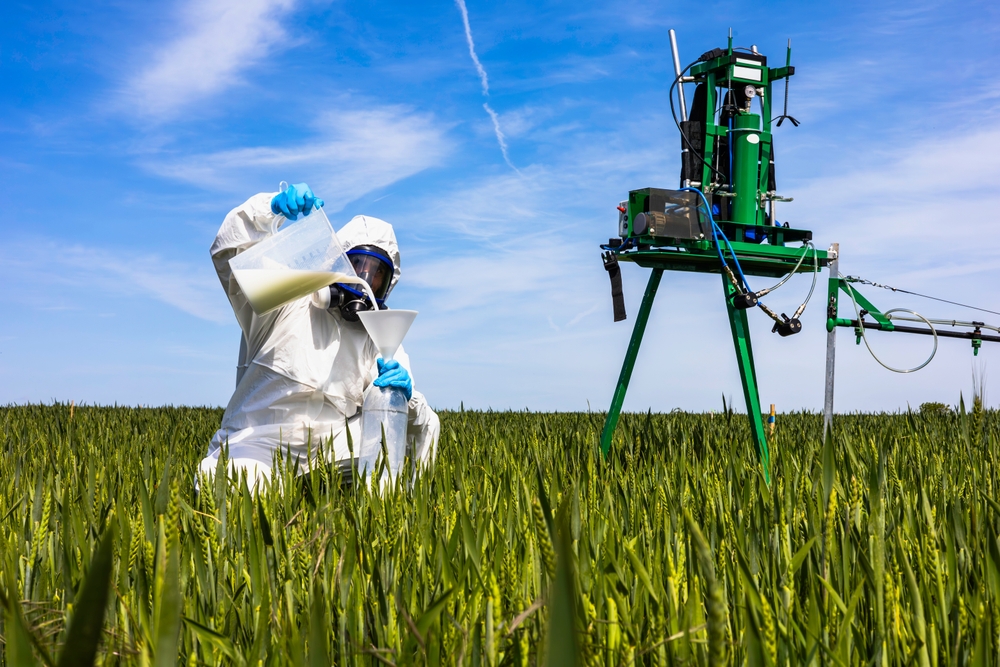
Glyphosate-resistant weeds are main driver for this development. Report: Claire Robinson
- Details
|
|
|

|
|
|
|
 Corporate ghost-writing is a form of scientific fraud, but a new paper, co-authored by the world-renowned historian of science Naomi Oreskes, shows how it can shape public health and safety. It analyses the impact of a ghostwritten paper crafted by Monsanto to support claims of glyphosate safety. Despite revelations of its ghostwritten nature, the paper has never been retracted, continues to be cited, and has exerted considerable influence, shaping public understanding, scientific discourse, and policy decisions. An analysis of policy and governance documents that cite it revealed that the vast majority referenced it uncritically. In academic literature, it is in the top 0.1 % by citation count among papers discussing glyphosate, indicating broad uptake, with minimal acknowledgment of conflict of interest. The ghostwritten paper has also been frequently cited in multiple articles on Wikipedia to support the safety of glyphosate or glyphosate-based herbicides; attempts to contextualise its ghostwritten origins have been repeatedly reversed or removed, illustrating how corporate-sponsored science infiltrates public knowledge platforms. Oreskes and her co-author say retraction and stronger oversight are vital, as these sources shape public perception and feed AI and Large Language Model (LLM) training data.
|
|

|
|

|
|
|

|

|
|
|
|
|
|

|
|
- Details
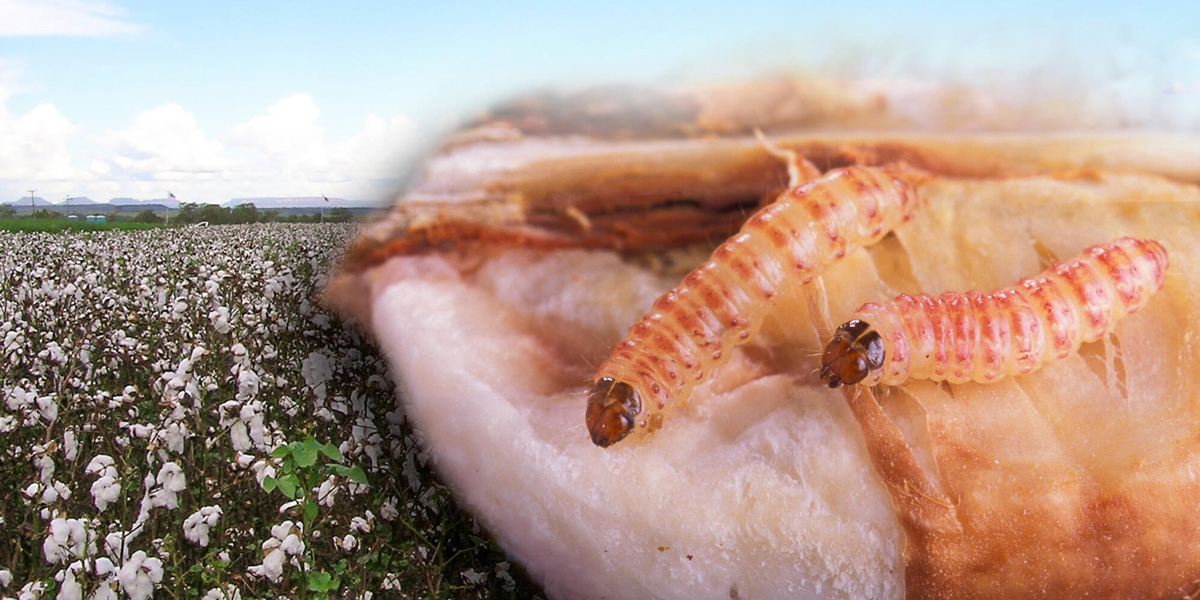
But cotton expert advises minister of good non-GMO solutions, reports Colin Todhunter
- Details
 Ag and food writer says GMO deregulation lobby live “in a fantasy land of precision, predictability and imagined safety”; points instead to agroecological controls. Report: Claire Robinson
- Details
 It’s time to step up the opposition to designer babies, says Marcy Darnovsky of the Center for Genetics and Society
- Details
In his book, The Mutant Project: Inside the Global Race to Genetically Modify Humans, the scholar Eben Kirksey explains how metaphors like gene editing, which suggest precision, in reality hide messy cellular dynamics. Kirksey says an armed drone attack gives a more accurate comparison. He writes:
“Gene ‘editing’ is not a particularly good metaphor for explaining the science of CRISPR. With the computer I can easily cut and paste text from one application to another, or make clean deletions – letter by letter, line by line. But CRISPR does not have these precise editorial functions. CRISPR is more like a tiny reaper drone that can produce targeted damage to DNA. Sometimes it makes a precision, missile strike, destroying the target. It can also produce serious collateral damage, like a drone attack that accidentally takes out a wedding party instead of the intended target. Scientists often accidentally blast away big chunks of DNA as they try to improve the code of life. CRISPR can also go astray when the pre-programmed coordinates are ambiguous, like a rogue drone that automatically strikes the friends, neighbours, and relatives of a suspected terrorist. CRISPR can persist in cells for weeks, bouncing around the chromosomes, producing damage to DNA over and over again, every time it finds a near match to the intended target.
“It is important to signal a sense of risk or need for caution in using CRISPR. Other metaphors – like genetic ‘surgery’ or DNA ‘hacking’ – have been proposed to replace the idea of ‘editing’. The idea of genetic surgery suggests that there can be a slip of the surgeon's knife, creating an unintended injury. Each of these images – the targeted missile, the surgeon's scalpel, the hacker’s code – offers a perspective on how CRISPR works, even while concealing messy cellular dynamics. In the absence of a perfect metaphor, ultimately, I think the technical language describes it best: CRISPR is an enzyme that produces targeted mutagenesis.
“In other words, CRISPR generates mutants.”
- Details
 USDA poised to approve release of GM American chestnut trees based on botched research
- Details
 GMO developers must supply detection methods, reference material and details of the genetic modification as part of authorisation procedure, say detection labs
- Details

by Sustainable Pulse. Source: Le Monde, by Stéphane Foucart (article translated from French to English by Sustainable Pulse)
- Details
|
|
|

|

|
|
|

|

|
|
|
|
|
|
|
|
|
|
|
|
|
|
|
|
|
|
|
|

|
|
|
|
|
|
|
|
|
- Details
 Please donate to the legal action "fighting fund"
- Details
Commission and Council won't compromise on key issues, including traceability and labelling
- Details
 By Non-GMO Project staff
- Details
|
|
|
|
|
|
|
|
|
|
|
|
|
|
|
|
|
|
|
|
|
|
|
|
|
|
|
|
|
|
|
|
|
|
|
|
|
|
|
|
|
|
|
|
|
|
|
|
|
|
|
|
|
|
|
|
|
|
|
- Details
 Wednesday 2 July | 15:00–17:00 CEST | Online workshop from Testbiotech
- Details
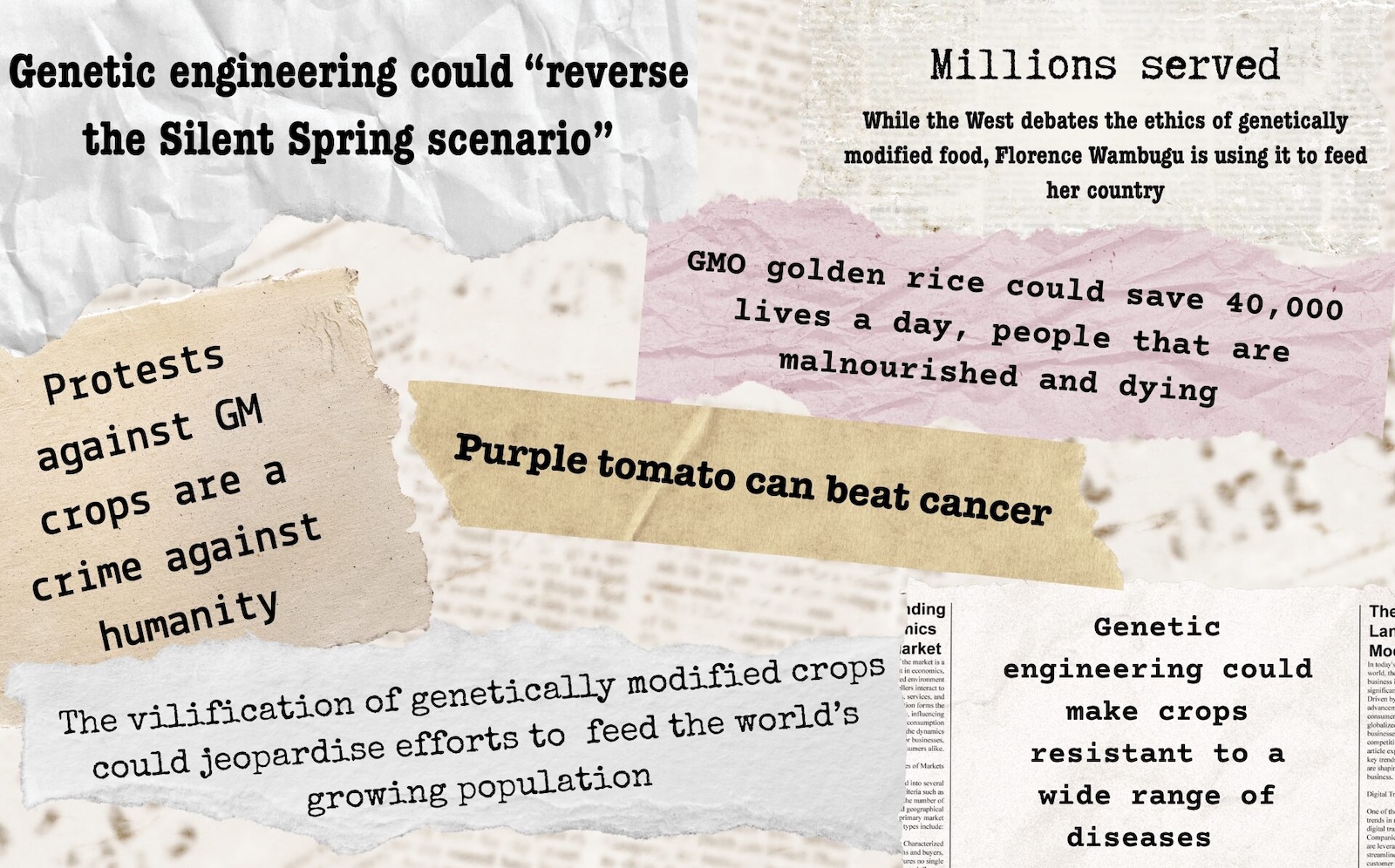 Save Our Seeds and GMWatch explore the fate of the bold claims made for agricultural GMOs
- Details
 “In Symbiosis” unveils the driving forces behind a broken food system and puts forward a path to building true resilience
- Details
|

|
|
|
|
|
|
|
|
|
|
|
|

|
|
|
|
- Details
|
|
|

|
|

|

|
|
|
|
|

|
|
|
|
|
|
|
|
|
|

|
|
|
|
|
|
|
|
|
|
|
|
|
|
|

|
|
|
|
|
|
|
|
- Details
 Leukemia findings are especially striking – potentially lending support to plaintiffs in court cases who allege that Roundup exposure caused their blood cancer
- Details
 Currently only three New GMOs are being cultivated and not a single crop has contributed to sustainability goals
- US farmers are planting too much GM Bt maize, leading to galloping pest resistance
- Norway's Parliament revises GMO law, retains precautionary stance
- GM crops fuel rise in pesticide use despite early promises, study shows
- EFSA is hiding data on genetically engineered burgers
- New GMOs: Freedom of choice only possible through mandatory labelling, warn 44 civil society organisations