



Framework “could have long-lasting effects on human health, the environment, and society”
In an op-ed for Le Monde, a group of over 60 scientists are calling on the European Commission to suspend the draft directive on the placing on the market of genetically modified microorganisms (GMMs).[1] They warn that relaxing the regulations could have serious consequences and urge a "more measured" reflection on these issues.
They note that the Commission has bundled the GMMs proposal with another proposal on something far less controversial. It is proposing a directive that seeks, on the one hand, to relax the regulatory framework for placing genetically modified microorganisms (GMMs) on the market and, on the other, updating the standards for processing human organs intended for transplantation – including the use of genetic modifications intended to improve their immunocompatibility.
The scientists criticise the Commission’s bundling of two different topics in one directive: “The text conflates two distinct subjects – GMMs and certain organ-treatment techniques – under a single agenda of regulatory acceleration. This grouping is problematic: it blends vastly different biological, ecological, medical, ethical, and social realities, obscures the democratic clarity of the debate, and hinders a focused examination of the specific issues surrounding genetically modified microorganisms.”
GMWatch comments that such ‘bundling’ may well be a way of defusing the opposition that a deregulation of GMMs might normally attract. After all, who is going to oppose a plan that could improve the chances of survivability for organ transplant patients?
Speed
The scientists comment on the speed with which the Commission is moving with its proposal: “The Commission itself acknowledges that the political urgency cited prevented the completion of an impact assessment within the required timeframe. Member states are therefore being asked to endorse a framework that could have long-lasting effects on human health, the environment, and society – all without a rigorous, critical assessment of the risks involved, which concern complex, historically evolved, non-linear, and deeply interconnected living systems.”
The scientists add that the use of AI in the context of GMMs is profoundly altering both the practices and the outcomes, in terms of both scale and nature: “Even as prominent business leaders and AI experts warn of the risks of malicious use of these technologies and call for stricter regulation, the European Commission is proposing – without any assessment of the situation – to loosen such regulations.”
Specific risks from GMMs
The scientists caution about specific risks from GMMs:
“Microorganisms are central to the balance of life. They play a role in biogeochemical cycles, soil fertility, the recycling of organic matter, the functioning of oceans, the maintenance of microbiotas, and the operation of immune systems. On a global scale, viruses destroy approximately one-third of all bacteria and archaea every day, contributing to the daily recycling of about 26 gigatons of carbon from microbial biomass – a figure that stands in stark contrast to the total human biomass, which amounts to roughly 0.06 gigatons of carbon. At the individual human level, about half of the cells in our bodies are microbial, and our physiology relies on constant interactions with these communities.
“Deliberately altering the genome of a microorganism is not the same as the occurrence of a spontaneous mutation. A natural mutation arises within a specific evolutionary context and remains subject to various selection filters; in contrast, an artificial modification can introduce entirely new combinations – driven by specific technical objectives – which may then be amplified, transmitted, and disseminated under conditions that have no natural equivalent.
“Furthermore, genetically modified microorganisms (GMMs) present specific risks stemming from their very short generation times, massive population sizes, vertical transmission, horizontal gene transfer, and a capacity for dispersal that is difficult to contain. These risks encompass public health, antibiotic resistance, food security, and ecological balance, as well as the potential for malicious use, the emergence of toxic, virulent, or persistent traits, and the development of dynamics that could prove irreversible.
“Since the rise of antibiotics, modern hygiene, and contemporary healthcare systems, our societies have at times harbored the illusion that infectious risks could be durably brought under control. Recent epidemics, however, have served as a reminder of how quickly a biological agent can cross borders, overwhelm healthcare systems, and disrupt the functioning of society. In such a context, weakening safeguards in the name of an unfounded sense of urgency – or reducing risk assessment to a simplistic, reductionist approach – betrays a fundamental misunderstanding of the nature of the living systems involved. What is required instead is a comprehensive, systemic, and ethical assessment, coupled with a commitment to minimal intervention for as long as these risks cannot be adequately anticipated and managed.”
Rapid deployment of GMMs is a problem, not a benefit
The scientists explain that “The primary justification for this directive – and for the sense of urgency surrounding it – rests on the assumption that acceleration is inherently positive and, in itself, sufficient to justify public policy decisions. Yet, we live within complex adaptive systems (such as ecosystems or societies) in which the rate of evolution is not merely a descriptive variable, but an intrinsic and fundamental characteristic upon which the trajectory of the system in question depends.
“In some cases, it is not merely the scale of a disruption that triggers a tipping point, but the speed at which it occurs and spreads. Social subsystems do not all accelerate at the same pace: the economy, science, law, politics, administration, technology, social norms, and public debate can fall out of sync, thereby weakening social cohesion. Consequently, the societal impact depends not only on the sectors directly involved, but also on how society absorbs a rapid transformation in its relationship with the living world.
“This text goes beyond a simple technical adjustment. It entails choices that could carry significant consequences. The goal, therefore, should not be to move faster – with less assessment – but rather to reflect more deliberately and broadly on the consequences of our actions.”
The scientists conclude by calling upon the European Commission “to suspend this draft directive in its current form and to recommit to a genuine democratic standard by initiating a discussion – accessible to all segments of society – before any political decision is made that would permanently alter our relationship with the living world”.
Notes
1. The Commission’s proposal is part of the broader European Biotech Act initiative and concerns Directives 2001/18/EC and 2010/53/EU.
Read the Le Monde article (in French) here (subscription only).
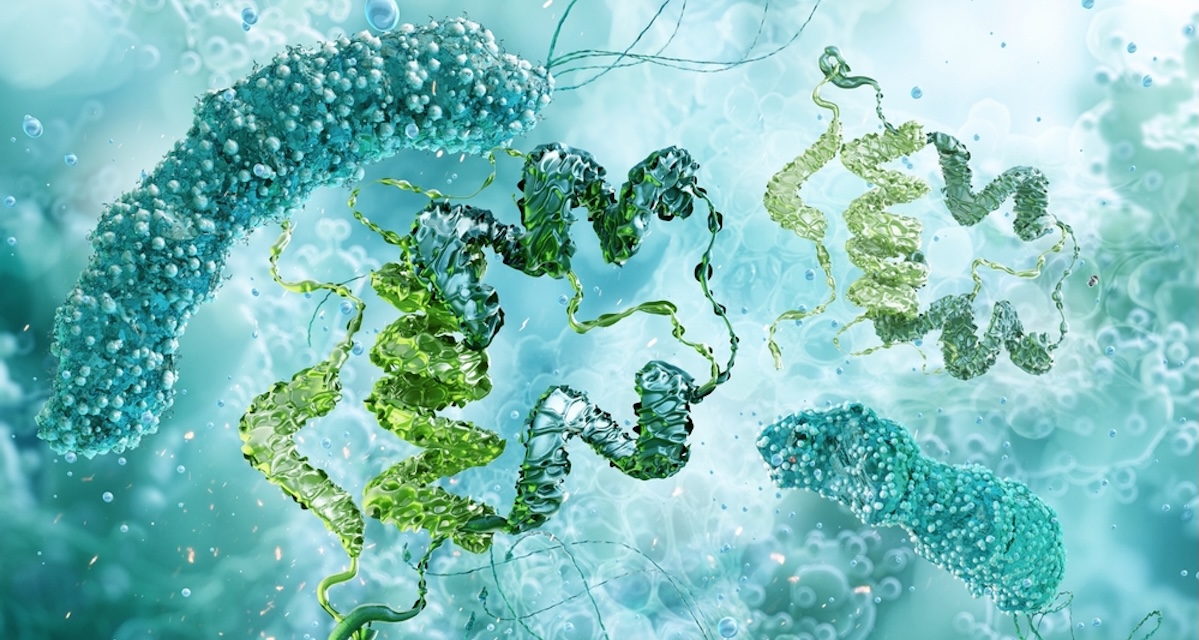
Image: Shutterstock (licensed purchase)