




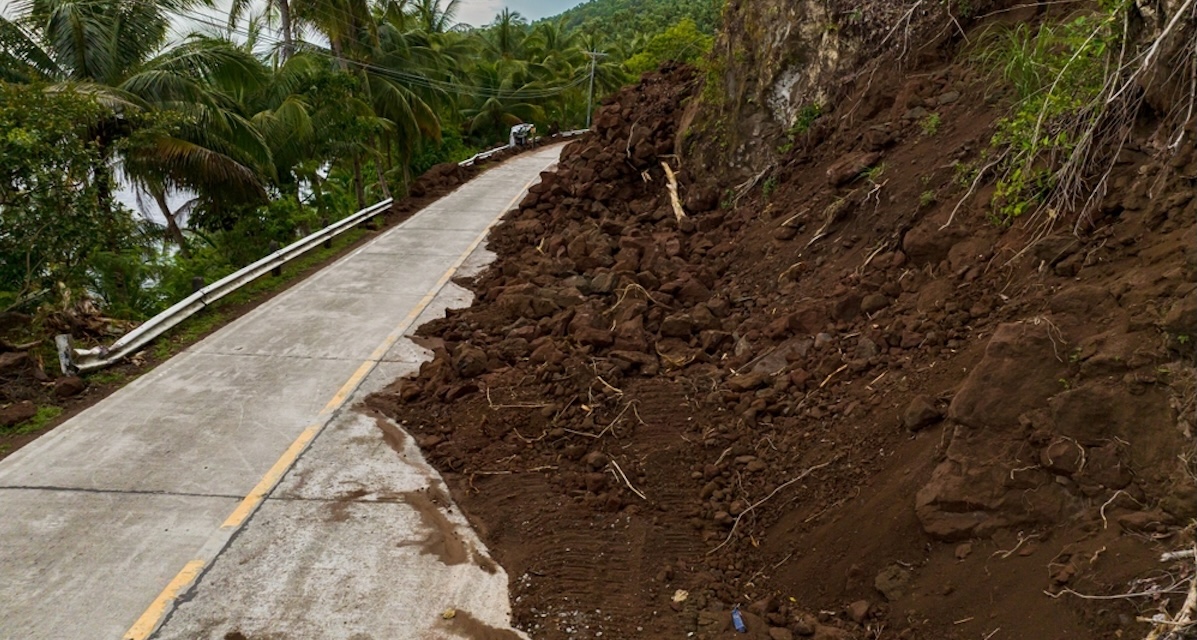
Herbicides used on GMO corn remove soil-stabilising plants and trigger soil erosion. Report: Claire Robinson
In the Philippine highlands, forests have been stripped away by intensive GMO corn farming and the accompanying heavy herbicide use, leaving downstream communities to pay the price in the form of devastating floods, a report for the Philippine newspaper The Daily Guardian says. The report leads with the story of Rona Aloadiel, a resident of northern Iloil province, who on Christmas Day 2019 lost six of her loved ones to drowning when floodwaters surged from the higher slopes. For locals, the tragedy was not entirely a surprise. Aloadiel said they had witnessed the steady disappearance of trees in the corn capital of Iloilo, replaced by expanding, multi-hectare farms of the GMO crop.
Aloadiel said: “The problem is our mountains are all corn now, and it’s even being sprayed with chemicals. There should be trees and fruit-bearing plants in the uplands because corn causes the soil to loosen.” About 80% of the forest cover in the municipality of Batad in Iloil was lost over the past two decades.
Ricardo “Richie” Escanlar, a geologist from the Iloilo City government, said, “Generally, forested areas tend to have better water retention than barren areas, those planted with crops, as they absorb water better. This, in turn, reduces the possibility of flooding as less water runoff reaches downstream.”
Salvador Manglinong, Jr., officer-in-charge of Iloilo’s Provincial Environment and Natural Resources Office (PENRO), said corn itself is not the primary problem in the forest destruction – the real culprits are farming practices used to grow GMO corn. They rely heavily on herbicides that are not used on non-GMO corn varieties.
Herbicides worsen soil erosion and sedimentation and strip the land of its natural ability to retain water. According to Manglinong, these chemicals have also crippled the local government’s reforestation efforts.
Hectares of corn farms are thriving on land that is officially classified as protected forest. PENRO’s Manglinong said corn cultivation is not prohibited inside the protected areas, provided it is integrated with trees and other vegetation as it forms part of an agroforestry system. The real issue is in the farming practices, he said, which involve stripping away the natural vegetation to clear the land for corn and relying heavily on chemicals to kill weeds.
Increased soil erosion, polluted and restricted waterways
Environmental researchers have long warned that the expansion of GMO corn into upland and sloping terrain has ecological consequences. Studies by the farmer-scientist network MASIPAG in Lake Sebu, South Cotabato and Maayon, Capiz found that glyphosate-tolerant corn encouraged cultivation on sloping land and was associated with increased soil erosion, reduced vegetation cover, and greater movement of soil and agricultural pollutants into waterways.
In Cagayan, widespread flooding was linked to the collapse of riverbanks caused by deforestation and the heavy use of herbicides on GMO corn crops. According to a report for PH News Today, the resulting sedimentation narrows rivers and their tributaries, reducing their capacity to channel water. This worsens flooding in communities located in the lower parts of drainage areas.
PH News Today adds that some towns in the affected areas have already prohibited the planting of GMO Roundup Ready Bt corn. The report quotes scientists as saying that “herbicide manufacturers, government agencies promoting GMOs and toxic chemicals, and local governments that fail to enforce land use and zoning ordinances bear significant accountability”.
Landslides
A study published in 2020 reported the results of a survey of farming households on the Philippine island of Mindanao covering the past ten years. The survey found that land planted with GMO corn had a 55% higher probability of erosion than that planted to other corn varieties. The blanket use of systemic herbicides on GMO corn clears out so many surrounding root-holding plants that it destabilises the soil on fragile slopes. The author concluded that there was “a very robust positive correlation between herbicide tolerant corn cultivation and landslide occurrence... physical characteristics of the farm do not explain the results. Instead, more aggressive weed control via broad-spectrum herbicide appears as a likely mechanism.”
Farmers may be tempted to plant GMO corn because they think it will earn them more money. However, the 2020 study found that while GM corn was more productive and provided more gross income per hectare when compared with “counterfeit” GMO corn grown illegally from farmer-saved GMO seed, the direct income loss through landslides was higher than the average profit for even the more productive GMO corn. Tellingly, traditional corn had almost disappeared from the survey area in 2018 so this was not available as a comparator for the GMO corn.
Himalayas at risk too
Even the foothills of the Himalayas are falling victim to glyphosate, the Times of India reports. In Himachal Pradesh, a group of 44 environmentalists, retired forest officials, scientists, academics and social activists has urged the state’s chief minister to crack down on the use of glyphosate to clear forest vegetation for commercial cultivation, especially peas. The demand follows the Forest Department’s destruction of illegal pea crops grown on forest land. The activists said the practice could damage biodiversity and soil ecosystems and leave mountain slopes vulnerable to erosion and landslides during heavy rain. The signatories demanded that the state authorities take action against illegal encroachment into the forests and against social media ads promoting herbicides for forest clearance.
Image: Shutterstock (licensed purchase)